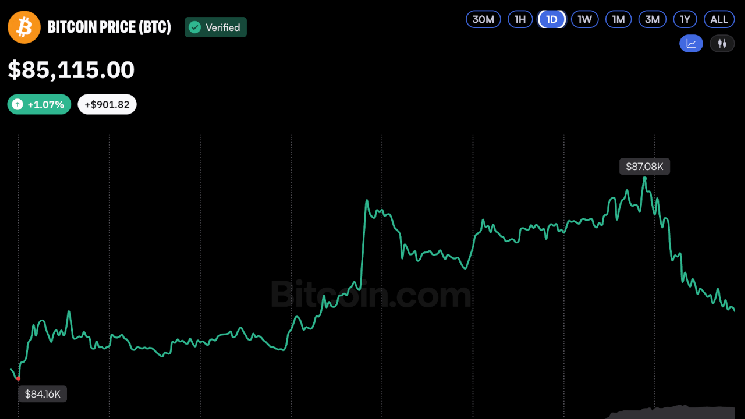
A brief period of relative volatility followed as the price fluctuated between $85,500 and $86,000 before another gradual climb pushed bitcoin to an intraday peak of $87,219. A rejection at $87,000 sent it lower before finding support above $85,000, leaving it with a daily gain of nearly 1% at a recent price of $85,188.
As expected, bitcoin’s sudden upward surge caught traders shorting the cryptocurrency by surprise. Coinglass data shows that in the last 24 hours, $142 million in bitcoin short bets were liquidated versus about $29 million in longs. This is a marked increase from approximately $35 million in leveraged positions liquidated a day earlier.
Bureau of Labor Statistics data released earlier showed nonfarm payrolls grew by just 29,000 jobs in September, well below the 90,000 expected. The downside surprise triggered an immediate pullback in the U.S. Dollar Index (DXY) and Treasury yields as markets repriced expectations for upcoming Federal Reserve interest rate decisions.
A weakening labor market gives the Federal Reserve clear justification to accelerate monetary easing. Lower benchmark interest rates reduce risk-free real yields, diminishing the opportunity cost of holding non-yielding, fixed-supply assets such as bitcoin. Furthermore, the weak payroll data placed immediate downward pressure on the U.S. dollar—and given bitcoin’s historical inverse correlation with the greenback, a softer dollar provides direct tailwinds for bitcoin.
SEC Proposes Modernized Crypto Custody Rules
Beyond the payroll report, bitcoin traders were digesting a new proposal from the U.S. Securities and Exchange Commission (SEC) on how investment advisers and funds can hold digital assets under federal securities laws. In the late Thursday release, the agency explicitly acknowledged that previous custody frameworks created a compliance vacuum by relying on traditional custodians that were largely unavailable or unwilling to hold crypto assets.
The SEC proposal recognizes that third-party qualified custodians may not be available for certain novel digital assets. Rather than prohibiting advisers from managing these assets outright, the proposal permits advisors and funds to hold client crypto directly if no qualified custodian is available, subject to strict guardrails.
The SEC announced a 60-day public comment period following the proposal’s official publication in the Federal Register.
While the defeat of the CLARITY Act deprived the crypto industry of a sweeping federal statute, the SEC’s targeted custody proposal delivers what asset managers need most: legal clarity for fiduciary holdings. Because fiduciaries cannot allocate capital without strict compliance safeguards, the SEC’s action effectively opens the door to institutional participation, even without action from Congress.

 news.bitcoin.com