
 coindesk.com
As global bond yields rise, the usual narrative frames it as bearish for bitcoin
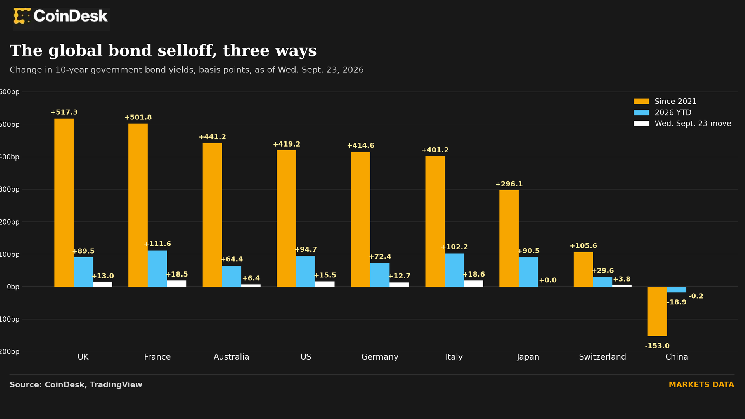
Yields snapped back into focus Wednesday. The U.S. 10-year jumped 15 basis points to its highest level since 2007, topping 5.13%, and pulled yields higher across the globe, as the feature image shows.
The standard interpretation is that as yields climb, the opportunity cost of holding non-yielding assets like bitcoin and gold rises, potentially pulling money toward bonds instead. In short, it’s a headwind, not a tailwind, for crypto.
That logic makes sense on paper. But correlations don't back it up.
The 90-day correlation between bitcoin's daily returns and the U.S. 10-year yield's daily moves is just −0.18, according to data analyzed by CoinDesk. That's close to zero and almost indistinguishable from no relationship at all.
Longer windows show the same thing, with the 180-day correlation at −0.06 and the 1-year figure at −0.03. Bitcoin is equally uncorrelated to yields of other nations.
Being this uncorrelated is actually a benefit. It means bitcoin can serve a similar role to other alternative investments in improving a portfolio's risk-adjusted returns, as investment banks have argued for years. Crypto analysts suggest the same.
“Bitcoin’s near-zero correlation with U.S. Treasury yields is a genuine portfolio advantage because it suggests $BTC is not simply trading as a duration or rates asset. Recent data shows the 90-day correlation between Bitcoin’s daily returns and the U.S. 10-year yield at around -0.17, with the relationship at times moving even closer to zero,” Lacie Zhang, research lead at Bitget Wallet, told CoinDesk.
Bitcoin's broader performance backs this up too. It's up 191% since 2021, and hit a record price of $126,000 last October. That happened even as 10-year yields climbed more than 500 basis points in the U.K. and France, and over 400 in the U.S., Australia, Germany, and Italy over the same stretch.
Japanese and Swiss yields have risen by 296 and 105 basis points, respectively, while China’s have dropped as the country has been battling deflation.
Focus on bond volatility
Being broadly uncorrelated doesn’t necessarily insulate bitcoin from short-term pain, especially when the pain comes from the bond market volatility itself rather than the level of yields.