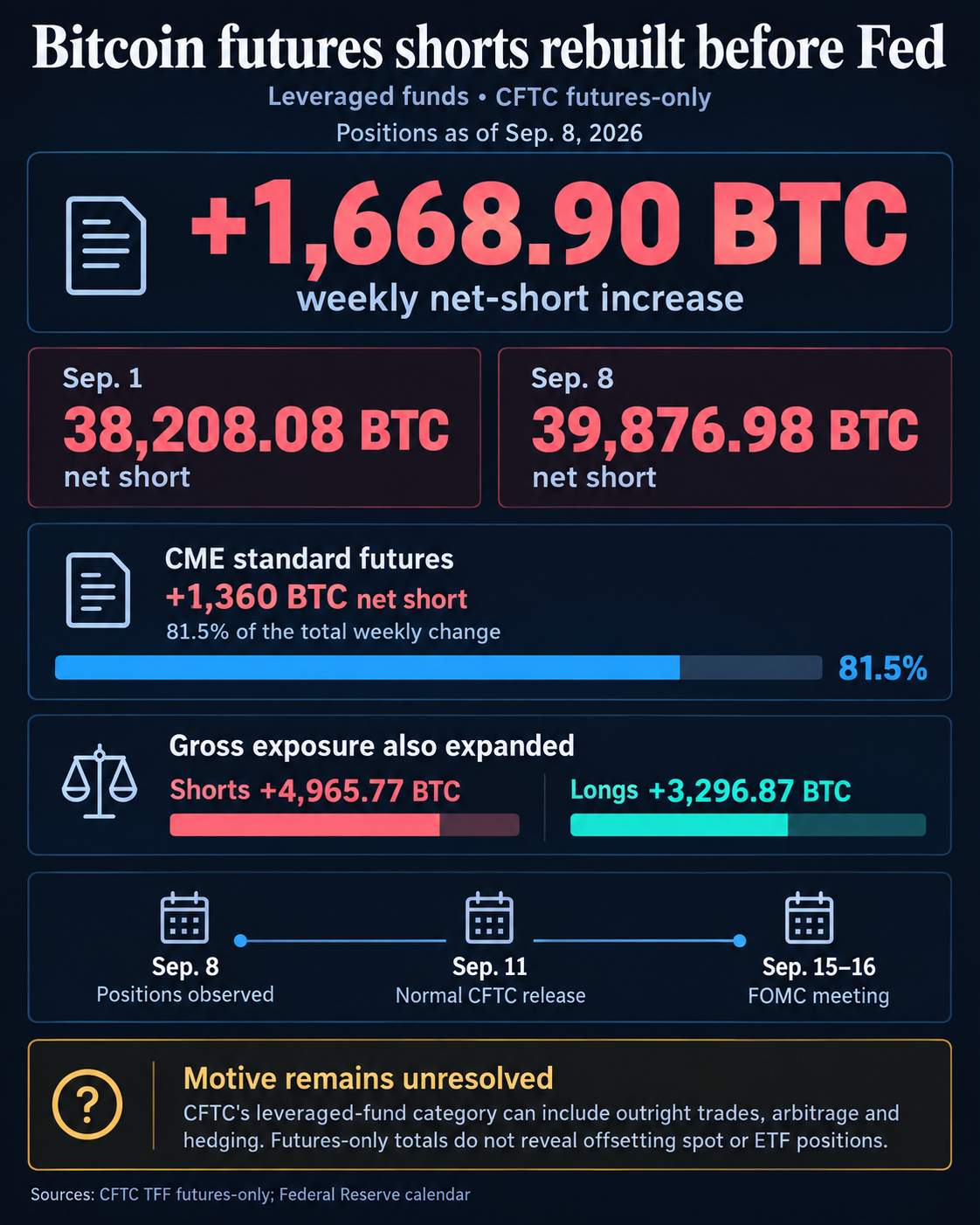
Long and short exposure outside the CFTC’s separate spreading category expanded on both sides. Across the four contracts, short exposure increased by 4,965 $BTC while long exposure rose by 3,296 $BTC. The imbalance widened the combined short, while the simultaneous growth also fits more complex positioning than a single bearish trade.
Why the motive remains unclear
The CFTC’s explanatory notes say leveraged funds typically include hedge funds, commodity trading advisers, commodity pool operators and other money managers. Their strategies can include outright positions as well as arbitrage within and across markets. The category identifies traders by their predominant activity rather than the purpose of each position.
That distinction matters for Bitcoin because a short futures position can hedge a long spot or spot ETF holding. CME has described that structure as a basis trade designed to capture the spread between futures and spot exposure. Public CFTC totals omit links to offsetting legs, leaving directional positioning, basis hedging or a mixture of both as plausible explanations.
CryptoSlate’s Bitcoin market data placed the asset near $77,300 on Sept. 12. The expanded short exposure was therefore in place ahead of the Sept. 15–16 FOMC meeting, which begins seven days after the CFTC position date.
CFTC reports normally publish Friday at 3:30 p.m. Eastern using the preceding Tuesday’s positions. That schedule leaves a four-day gap between the report reaching readers and the start of the Fed meeting.
The Fed decision is still ahead, although expectations for the meeting could have influenced risk-taking. The 1,669 $BTC increase shows that leveraged-fund futures shorts rebuilt before the event. Trade-level intent remains hidden, leaving the data short of proof that traders made an unhedged wager on a post-Fed Bitcoin decline.

 cryptoslate.com