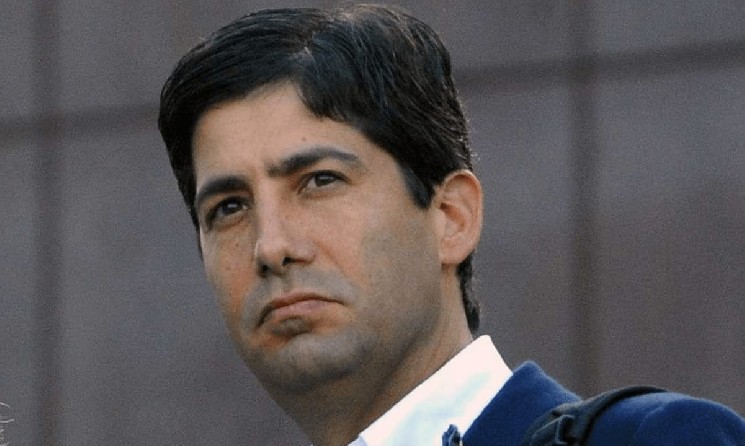
He emphasized that the Fed’s 2% inflation objective is “firm and fixed” and argued that price stability won’t simply restore itself without additional actions from the central bank.
He also dismissed some of the most promising inflation readings this summer, including the June numbers, saying they had not convinced him and his colleagues that the underlying trend had improved significantly. Until the Fed reassures that inflation is moving toward 2% “clearly and at sufficient speed,” policymakers will continue to “have work to do,” he added.
Rate-Hike Odds Rise, $BTC Drops
Traders had assigned a one-third probability to a rate increase in September before the speech, but these odds jumped toward 60% after its conclusion, according to market pricing cited by Reuters. US Treasury yields climbed again, while the dollar strengthened sharply after its decline last week.
That’s essentially the exact opposite of the macro environment that helped $BTC explode higher 10 days ago. Perhaps that’s why the asset went from a then-peak of over $80,000 to under $77,000 in a few hours, dragging most altcoins with it.
Warsh also pointed to business investments growing at roughly 9% per year, the S&P 500 surging by 20%, while unemployment remained at around 4% and credit conditions were relatively easy. In other words, the economy isn’t currently giving the central bank an obvious reason to tolerate elevated inflation.
In general, higher expected policy rates push Treasury yields upward, which increases the return investors can obtain from the assets that are considered much safer. A more hawkish Fed also tends to support the dollar and tighten broader financial conditions. History shows that such an environment is not ideal for $BTC and more speculative altcoins.
Treasury and Fed
Treasury Secretary Scott Bessent’s recent bond-market intervention, which contributed to $BTC’s major rally, helped push long-term yields lower, at least in the short term. However, Warsh reminded investors that the Fed’s mandate is quite different.
The Treasury might want to reduce borrowing costs and improve market liquidity, but the country’s central bank still has to deal with inflation running above its target.
This means that markets are still split between two powerful forces: Treasury support for financial conditions and a Fed that may need to keep monetary policy tighter than investors expected.

 cryptopotato.com