
 decrypt.co

In brief
- Crypto-margined Bitcoin futures now make up about 12% of open interest, down from nearly 100% around 2019–2020.
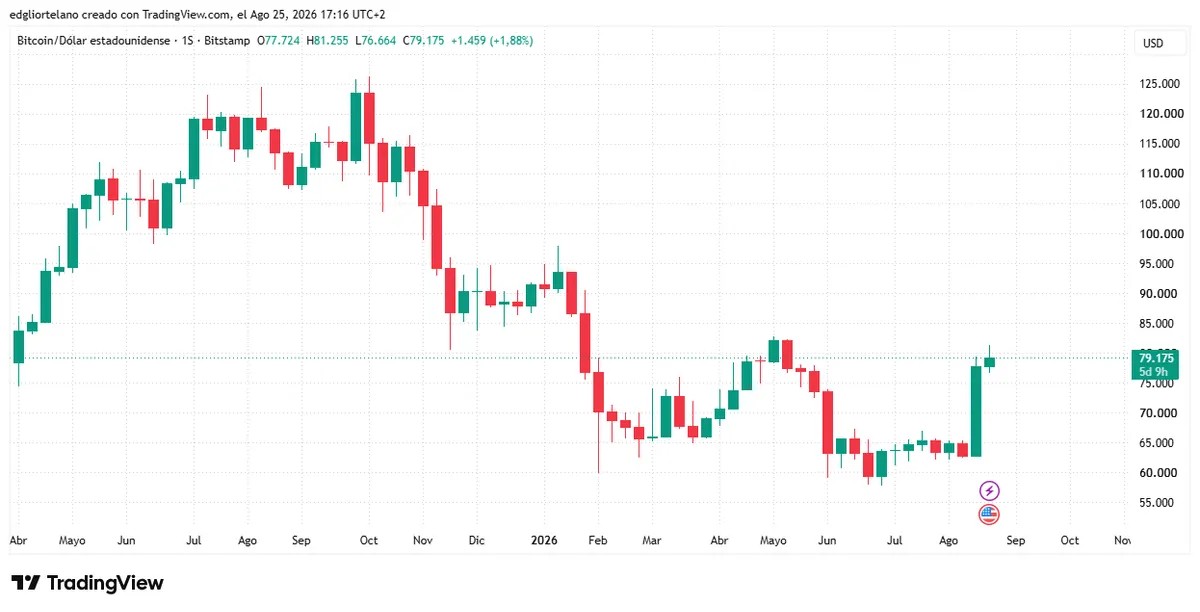
- Bitcoin rebounded from around $57,000 to a weekly close near $79,175, today up about 1.88%.
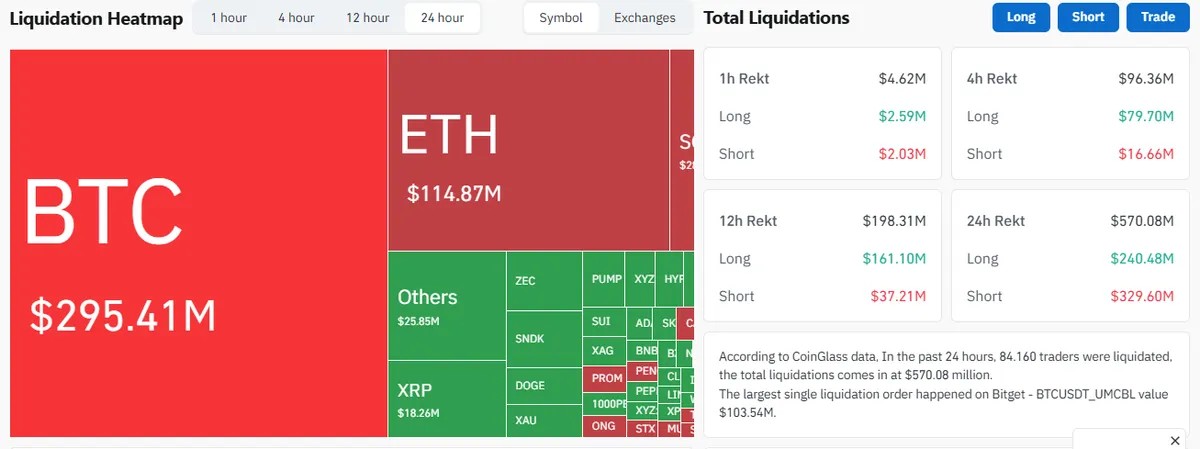
- In the past 24 hours, $570.08 million in positions were liquidated, with shorts hit harder than longs.
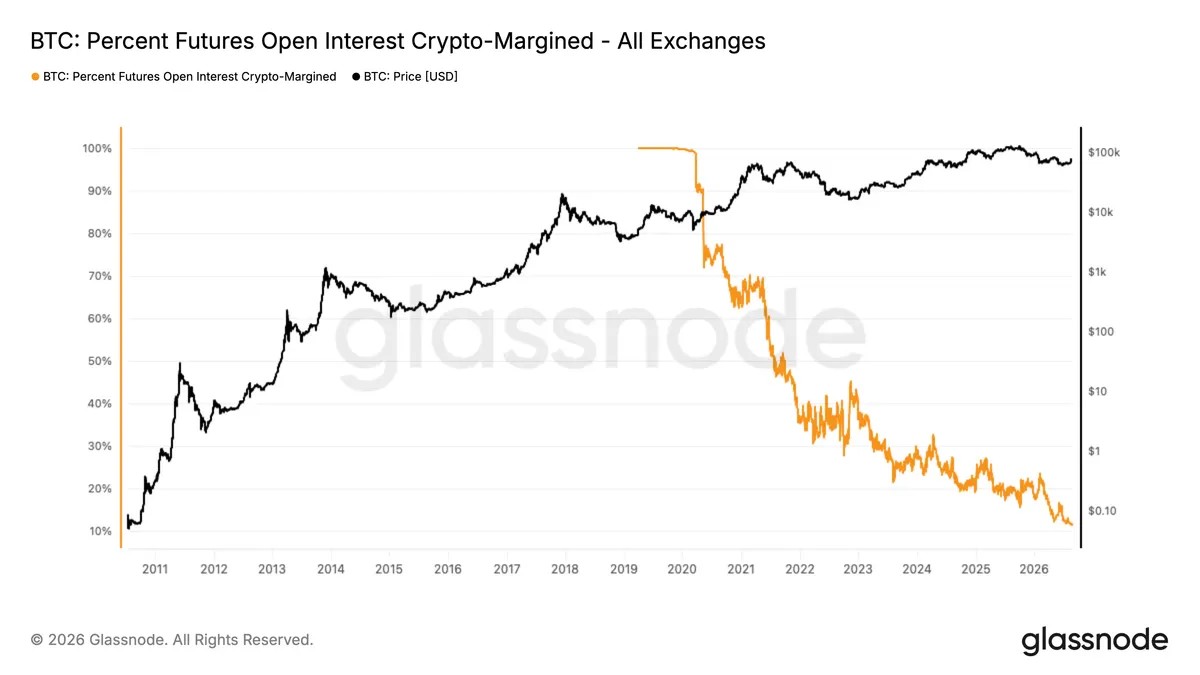
Bitcoin futures traders have all but abandoned crypto as collateral. The share of Bitcoin open interest that is crypto-margined—positions backed by Bitcoin itself rather than a stablecoin—is now about 12% across all exchanges, according to Glassnode's long-run metric.
That's a long way from where it sat in 2019 and 2020, when crypto-margined contracts made up close to 100% of the market. For most of the last decade, if you opened a $BTC futures position, your margin was almost always denominated in $BTC.
A crypto-margined position is collateralized in the asset you're trading, so a price drop shrinks your buffer at the exact moment the trade is going against you—a feedback loop that can trigger a margin call just as the market is moving fastest. Stablecoin-margined positions, by contrast, sit in dollars, so the collateral keeps its value while the trade swings.
Traders have simply chosen the steadier float.
The move toward stablecoins mirrors how the broader derivatives market has matured. Coinbase opened U.K. derivatives trading through Hyperliquid with up to 50x leverage this month, Bitcoin ETFs drew $854 million over five days as rate-hike bets faded, and Strategy trimmed its own Bitcoin stack—all signs of institutional flow that tends to settle in dollars, not coins.
None of this cooled spot demand this week. Bitcoin rebounded from around $57,000 to a weekly close near $79,175, up about 1.88% today after months of low-volatility drift between $60,000 and $68,000.
That said, these events are not in a causal relationship.
The 24-hour liquidations are a textbook short squeeze: $570.08 million wiped, shorts hit harder at $329.60 million versus $240.48 million in longs, and the losses snowballed as price climbed, with Bitcoin's $295.41 million slice the largest and a $103.54 million $BTC position on Bitget the single biggest blowup, per CoinGlass data.
But that squeeze and the collateral shift are not the same story, even if they show the current state of the crypto market. Stablecoin margin has been the dominant structure for years but the trend has been moving one way the whole time: dollar collateral steadily displacing crypto as the backing for leveraged bets.
A broader access to fiat markets simply increases the exposure of investors looking for ways to trade crypto, which in turn makes the coin less susceptible to major price movements after disrupting trades.
However, for the markets, leverage is leverage no matter what backs it—dollar margin didn't cause this week's liquidations, and it won't prevent the next ones. Based on this data alone, the Bitcoin squeeze may not be over. The two data points back this up, even if they are independent. One is the slow architecture of the market, the other the noise of its daily movements.