
 decrypt.co

In brief
- Bitcoin gained 23.2% over seven days as gold climbed and the dollar weakened.
- The Treasury said it would at least double planned purchases of longer-term government debt.
- Analysts said sustained pressure on the dollar and long-term Treasuries would strengthen the case for a fiscal-credibility trade.
Bitcoin gained 23.2% over seven days as gold climbed and the dollar weakened, reviving the “debasement trade”–-buying scarce assets to protect against inflation and the declining purchasing power of currencies such as the dollar.
Bitcoin broke out of a weeks-long $62,000-to-$67,000 range after the U.S. Treasury announced expanded buybacks of long-dated bonds, climbing above $77,000 on Friday. Meanwhile, gold climbed to $4,661, according to CME Group data.
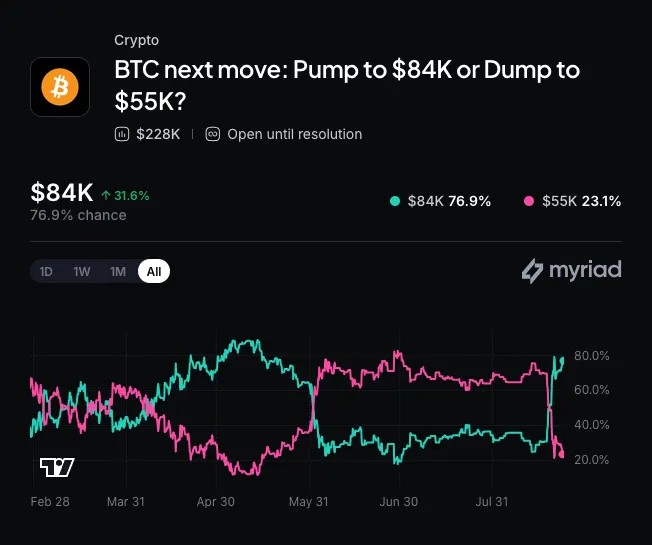
“Bitcoin’s 23% rally alongside gold during a period of U.S. dollar softness and elevated Treasury yields reflects a subtle shift in institutional sentiment,” Lacie Zhang, research analyst at Bitget Wallet, told Decrypt.
Zhang said the unusual pairing of elevated bond yields with gains in Bitcoin and gold points to growing concern about the U.S. fiscal outlook.
“Rather than trading purely as a high-beta risk asset, Bitcoin is increasingly sharing narrative space with gold as a digital hedge against structural fiat debasement,” she added.
Jake Kennis, senior research analyst at Nansen, said the moves are consistent with concerns about debt and the dollar, but are not conclusive.
“$BTC and gold rising together while the dollar weakens is consistent with debasement and fiscal-credibility concerns, i.e. the classic 'hard asset' hedge trade,” Kennis told Decrypt. “But a weaker dollar alongside elevated yields can also reflect higher term premium, inflation uncertainty, or changing growth expectations rather than a pure loss of faith in Treasuries, so the correlation is suggestive rather than proof as of now.”
Crypto-friendly developments in Washington last week have also supported sentiment, with President Donald Trump urging Congress to pass a “fair version” of the Clarity Act. At the same time, CFTC Chair Michael Selig said the agency was preparing crypto market structure rules in case the legislation stalls.
Bitcoin’s break above $67,000 also triggered a short squeeze as bearish traders were forced to buy back the asset. More than $4 billion in short positions were liquidated during the rally, according to CoinGlass.
However, Zhang cautioned that the rally could still reflect short-term positioning rather than a lasting shift away from the dollar.
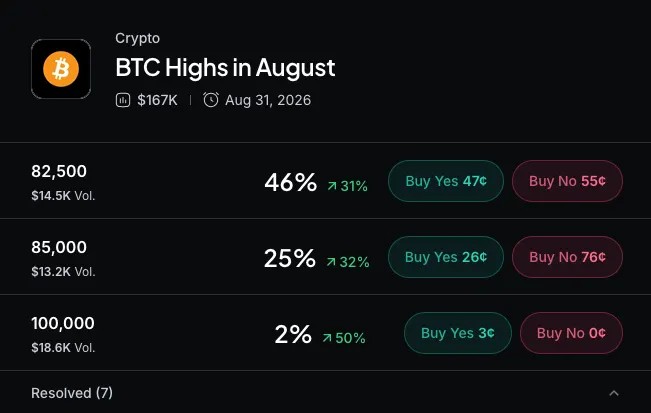
“Distinguishing a true systemic 'vote against the dollar' from a liquidity-driven rally requires close observation of real yields and derivatives positioning,” she said.
“If real [Treasury Inflation-Protected Securities] yields remain elevated while futures open interest leads spot demand, the movement may reflect tactical positioning rather than a permanent structural retreat from fiat,” she added. “Nonetheless, as institutional access expands, Bitcoin's dual identity as both a macro hedge and a technology play continues to solidify.”
For Kennis, a true fiscal-credibility trade would involve sustained gains in Bitcoin and gold, continued dollar weakness, rising long-term risk premiums, and underperformance in long-dated Treasuries, potentially alongside higher inflation expectations.
“A liquidity-driven rally would instead track Fed easing expectations and broader risk assets such as equities and credit, while institutional or crypto-specific demand would show up through $BTC ETF inflows, on-chain accumulation, and $BTC outperforming other macro hedges rather than simply moving in lockstep with gold,” he said.