coindesk.com
Bitcoin's BTC$63,565.04 price has been eerily calm for weeks, locked in a narrow range below $65,000. Options, or derivative contracts offering insurance against wild price swings, should be cheap in a market this quiet. They aren't.
That may sound counterintuitive, but it really isn't, and it matters for traders considering options to hedge against, or profit from, a potential volatility boom. Volatility is mean-reverting and often spikes suddenly after a prolonged stretch of dull, range-bound trading.
It comes down to the fact that these options contracts are priced based on what the market expects to happen in the coming days or weeks, not on what has already happened recently.
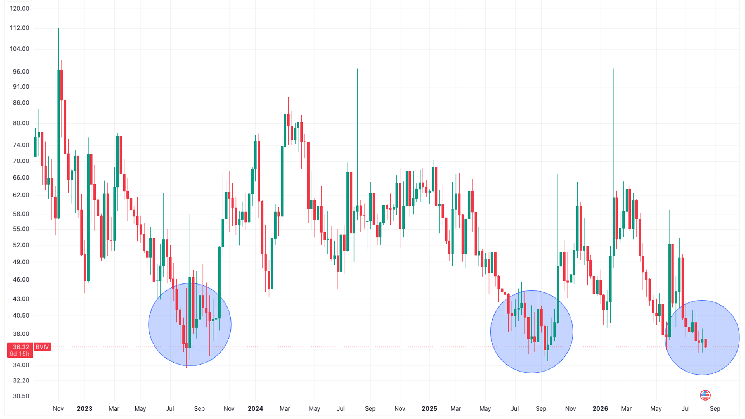
The present calm is real. Bitcoin's 30-day realized volatility, the price volatility seen over the past four weeks, has dropped to an annualized 21.80%, the lowest since October 2025. However, the forward-looking measure, the 30-day implied or expected volatility, represented by Volmex's BVIV index, currently sits at 36%, about two-thirds higher than realized volatility.
This gap matters because flat markets and low realized volatility can pull in option buyers who assume they are getting a bargain. The logic is that in a quiet market, premiums for protection against price swings should be low, and therefore a sudden burst of movement could bring a windfall gain.
But given the elevated implied volatility, options cost more today than the recent calm in the spot market would suggest. That higher price matters directly for anyone buying options: you need bitcoin to move enough to cover what you paid for call or puts (or both) before you see any profit, and a pricier option means a bigger move is needed to break even.
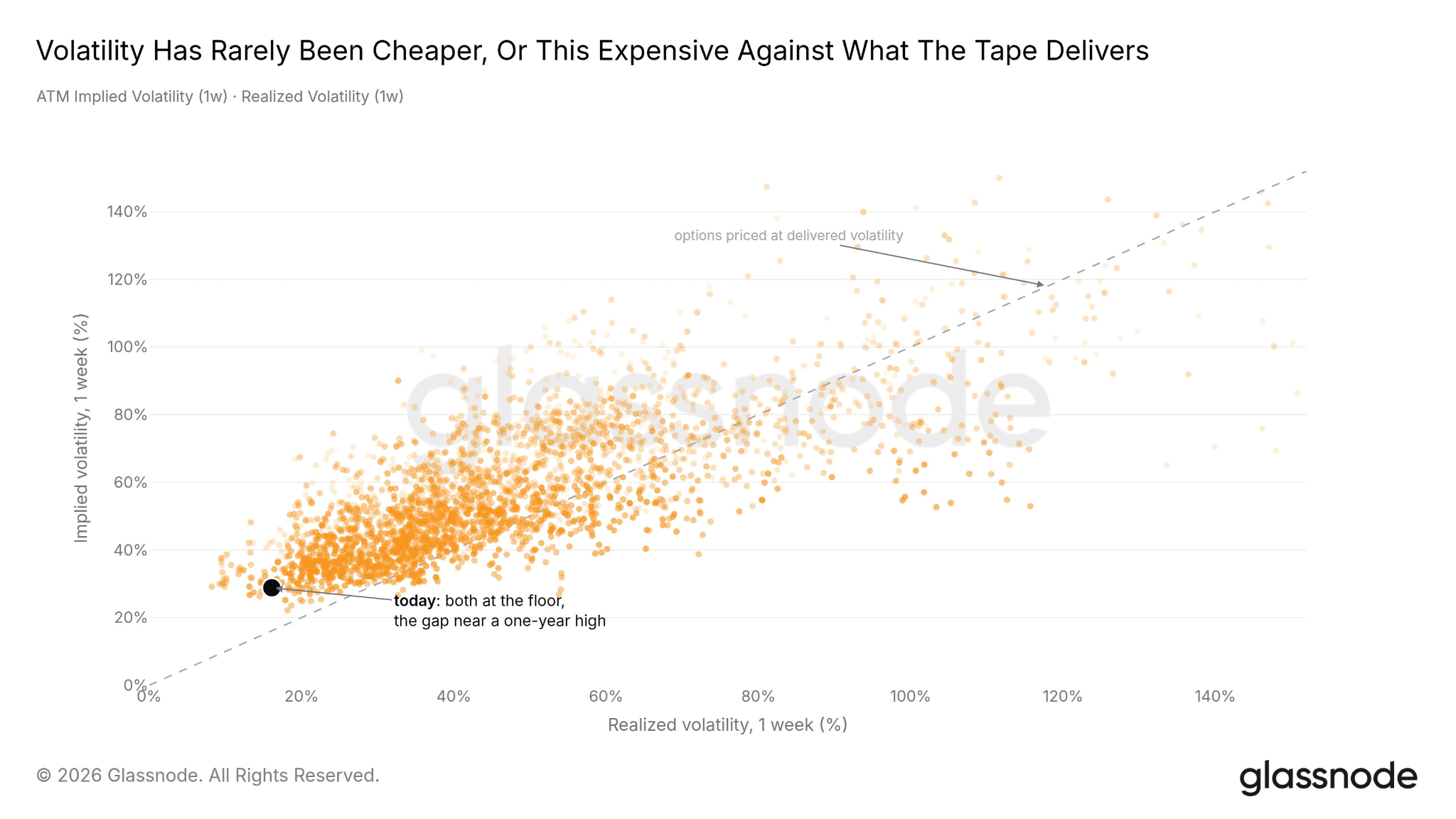
The same disparity shows up on shorter time frames. Glassnode data puts one-week at-the-money implied volatility near 29%, against realized volatility of roughly 16%. Both figures sit near historical lows individually, but the gap between them is close to a one-year high, reinforcing that options remain rich relative to how little the spot market is actually moving.
The takeaway for traders: bitcoin's realized volatility may be near a seasonal floor, but insurance against the next big move isn't cheap.