
 news.bitcoin.com
Crypto Liquidations Top $227 Million
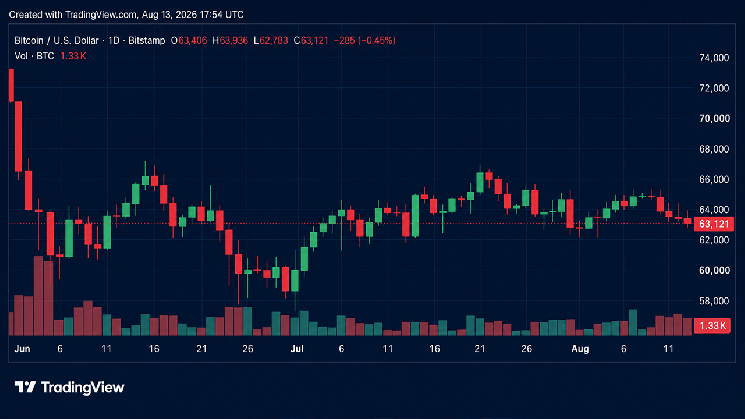
Following a virtually flat Wednesday close, bitcoin moved lower alongside an uptick in volatility. After spending much of Wednesday afternoon bound between $63,300 and $63,500, a brief late-night surge lifted the asset to $63,900 around 1:25 a.m. EST.
However, about two hours later, bitcoin began a descent that dragged it back below the $63,400 mark. The leading cryptocurrency repeated the pattern shortly after, rising to $63,900 before paring gains in another sell-off. Unlike the first round, however, bitcoin dipped to $62,912 at 12:44 p.m., pushing its market capitalization down to $1.26 trillion. Although it quickly reclaimed $63,000, the digital asset remained down 0.5%.
Bitcoin’s elevated volatility on Thursday spurred an uptick in liquidations. Long positions accounted for nearly $34 million of the total, up more than $13 million from the previous day. Across the broader crypto market, liquidations hit $227 million, split between $122 million in long bets and roughly $105 million in short bets.
Bitcoin’s price action diverged from U.S. equity indexes, which traded marginally higher. Stocks were buoyed by declining oil prices along with strong earnings and revenue reports from major hardware and chipmaking companies.
Some economists attributed the equities rally—including the S&P 500’s surge to another record high on Aug. 13—to a marginal drop in the U.S. consumer price index in July. Paired with cooling labor market metrics, the benign inflation data seemingly gives the Federal Reserve more leeway to consider interest rate cuts heading into autumn.
However, institutional research suggests the broader macro framework shifted markedly in July 2026. According to a macro analysis by AMINA Research, the monetary policy backdrop globally has grown substantially less supportive of rate cuts as central banks shift toward holding rates steady or weighing further tightening.
The report highlighted how geopolitical tensions around the Strait of Hormuz drove temporary energy spikes, adding to inflationary risks and triggering a hawkish split within the Federal Reserve, where three regional presidents dissented during the July 29 meeting in favor of a quarter-point rate hike.
While a permanent ceasefire in the Middle East would simplify the Federal Reserve’s path forward, the likelihood of a near-term breakthrough remains slim—particularly as reports indicate both the U.S. and Iran are preparing for further escalation. Extended uncertainty surrounding the Strait of Hormuz bodes ill for bitcoin, which still lacks the macroeconomic catalyst needed to spark a recovery and end the second half of the year on a high note.