
 bitcoinworld.co.in
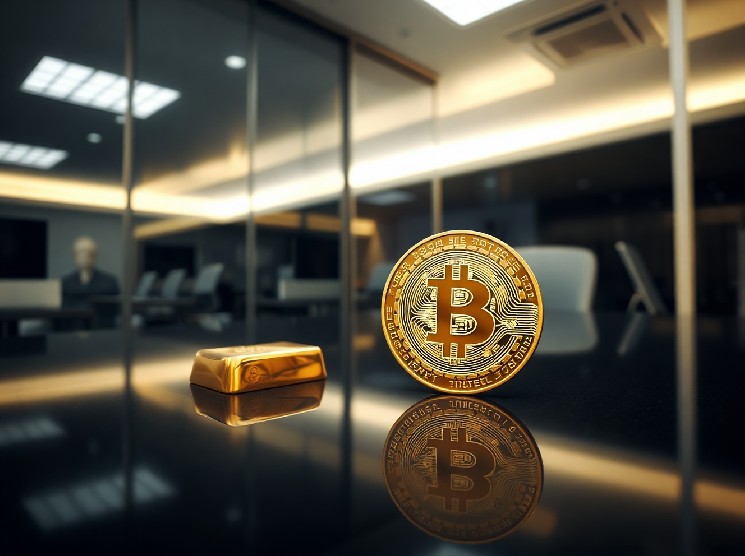
Robin Brooks, a senior fellow at the Brookings Institution, has publicly challenged the narrative that Bitcoin functions as a safe-haven asset or a reliable store of value. In a recent post on X (formerly Twitter), Brooks argued that Bitcoin does not belong to the asset class that benefits from currency debasement, a claim that has reignited debate among crypto proponents and traditional finance analysts.
Brooks’s core argument: Bitcoin’s underperformance vs. precious metals
Brooks’s reasoning centers on observable market behavior. He pointed out that since investment flows tied to debasement themes began in earnest, Bitcoin has consistently underperformed precious metals. This, he argues, is a key indicator that Bitcoin is not functioning as a hedge against fiat currency devaluation in the way gold and silver are. Brooks emphasized that while this is partly a matter of perception, it is also reflected in actual price moves, providing a concrete, data-driven basis for his stance.
The economist’s comments come at a time when global investors are increasingly scrutinizing assets that can withstand inflationary pressures and currency depreciation. While Bitcoin is often dubbed ‘digital gold’ by its proponents, Brooks’s analysis suggests that, in practice, it has not lived up to that moniker during periods of heightened debasement concerns.
Context: The ongoing debate over Bitcoin’s role in portfolios
Brooks’s position adds to a long-running and often polarized discussion. On one side, crypto advocates argue that Bitcoin’s fixed supply and decentralized nature make it a natural hedge against government monetary expansion. On the other, critics like Brooks point to its high volatility and correlation with risk assets as evidence that it is not a reliable store of value.
Historically, gold has been the go-to safe haven during economic uncertainty, with a track record spanning centuries. Bitcoin, by contrast, has only existed for about 15 years and has yet to demonstrate the same stability or reliability. Brooks’s emphasis on actual price moves rather than theoretical attributes underscores a pragmatic approach to evaluating asset classes.
Why this matters for investors
For investors, the distinction between a safe-haven asset and a speculative investment is crucial. Safe-haven assets are expected to preserve capital during market turmoil, while speculative assets carry higher risk and potential for higher returns. If Brooks’s analysis is correct, investors looking for protection against currency debasement may be better served by traditional precious metals rather than Bitcoin.
However, it is also worth noting that Bitcoin’s role in portfolios is still evolving. Institutional adoption, regulatory developments, and market maturity could alter its behavior in future cycles. Nevertheless, Brooks’s comments serve as a reminder that perception alone does not define an asset’s function; market performance is the ultimate test.
Conclusion
Robin Brooks’s assertion that Bitcoin is neither a safe-haven asset nor a store of value is grounded in observed market trends, particularly its underperformance relative to precious metals during debasement-driven investment flows. While the debate is far from settled, his perspective provides a data-informed counterpoint to the ‘digital gold’ narrative, urging investors to weigh actual price action against theoretical attributes.
FAQs
Q1: What is a safe-haven asset?
A safe-haven asset is an investment that is expected to retain or increase in value during times of market volatility or economic downturn. Gold and U.S. Treasury bonds are classic examples, as they tend to be stable and liquid when other markets decline.
Q2: Why is Bitcoin sometimes called ‘digital gold’?
Bitcoin is often referred to as ‘digital gold’ because of its limited supply (capped at 21 million coins) and its decentralized nature, which some believe makes it a hedge against inflation and currency devaluation, similar to gold.
Q3: How has Bitcoin performed compared to gold during recent economic uncertainty?
According to Robin Brooks, Bitcoin has consistently underperformed precious metals during periods when debasement themes drove investment flows. This suggests that, in practice, Bitcoin has not acted as a reliable store of value compared to gold.
Disclaimer: The information provided is not trading advice, Bitcoinworld.co.in holds no liability for any investments made based on the information provided on this page. We strongly recommend independent research and/or consultation with a qualified professional before making any investment decisions.