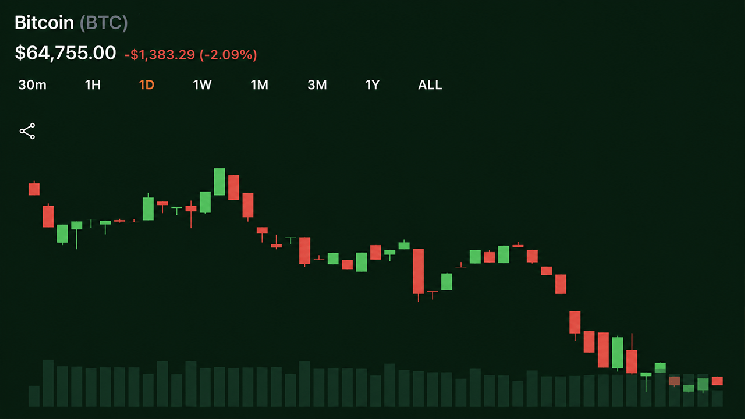
Just before 7 a.m. EST, bitcoin collapsed again as a fresh sell-off wiped off nearly $1,000 over the following six hours. At the time of writing, bitcoin traded just below $64,700, reflecting a daily loss of nearly 2%. The decline dragged its market capitalization down from just over $1.32 trillion on Wednesday afternoon to $1.3 trillion.
The drop triggered $42.3 million in long position liquidations, a sharp increase from the $18 million observed 24 hours earlier. Short position liquidations reached $6.2 million, roughly half the amount wiped out on Wednesday.
As legislative momentum on the CLARITY Act stalled amid renewed partisan friction between Senate Republicans and Democrats, macro headwinds took center stage. Surging crude oil prices—rebounding to multi-month highs—swiftly dragged broader markets lower. Market data highlighted the pressure, with global benchmark Brent crude briefly piercing the $101-per-barrel threshold while U.S. West Texas Intermediate (WTI) leapt past $92 per barrel.
Market intelligence linked the oil surge directly to rising geopolitical friction in the Middle East. Energy traders reacted sharply to statements from U.S. President Donald Trump signaling potential military escalations against Iranian targets. Compounding those fears, ongoing Houthi maritime attacks against commercial vessels in the Red Sea continued to disrupt vital shipping corridors, adding a heavy risk premium to global crude supplies.
The sudden spike in energy costs immediately sent shockwaves through broader financial markets, rekindling fears of persistent, sticky inflation. According to Bitunix analyst Dean Chen, macro forces are firmly in the driver’s seat: liquidity conditions, energy volatility, and shifting Federal Reserve policy expectations represent the critical triad that will dictate risk-asset trajectory—including crypto—in the weeks ahead.

 news.bitcoin.com