
 coindesk.com
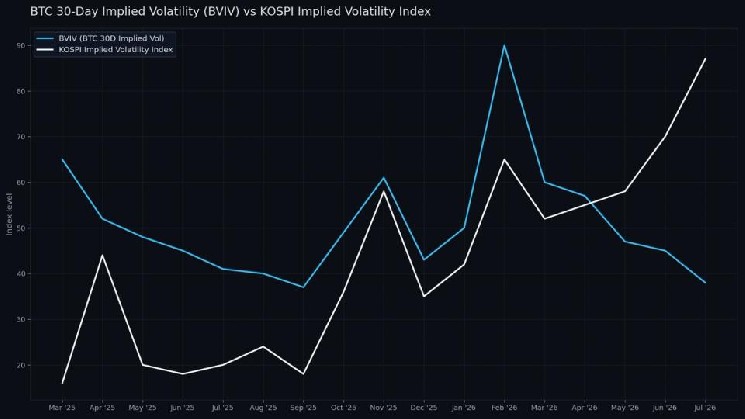
While geopolitical tensions are pressuring bitcoin $BTC$63,291.05 and the broader crypto market, a compelling data point has surfaced, highlighting the side effects of this year's AI frenzy.
South Korea's Kospi index, a primary beneficiary of the AI boom, has slumped nearly 25% in just four weeks. Options markets show the index is now viewed as at least twice as risky as bitcoin, a decentralized cryptocurrency frequently criticized for its extreme volatility.
Kospi’s options-based 30-day implied volatility (IV) index has surged to an annualized 81%, more than double BVIV, the bitcoin equivalent, at around 38%, data from Bloomberg and Volmex show. Implied volatility is determined by demand for options, or hedging contracts; greater demand indicates a greater perceived need for protection from price swings.
Many Korean retail traders chasing high returns through margin trading and leveraged ETFs have faced forced liquidations, now totaling more than $2 trillion in less than three months. The fact that a major economy’s stock index is exhibiting more volatility than bitcoin may serve as a warning to other global markets where the AI frenzy has fueled unprecedented risk-taking.
For bitcoin supporters, the reality that $BTC is steadier than the Kospi is a notable victory. Still, the largest cryptocurrency remains twice as volatile and risky as the S&P 500 index, whose 30-day volatility index (VIX) sits below 20%. Perhaps the true milestone for bitcoin bulls will be the day when the VIX becomes more expensive than the BVIV.
In the meantime, bitcoin’s price remains under pressure, trading below its widely followed 50-day moving average, though there is a glimmer of optimism. According to analytics firm Nansen, the wallets that typically move first and in the largest size during geopolitical flare-ups have not meaningfully shifted into stablecoins.
"This is consistent with prior Middle East flare-ups: Short-term leveraged longs get flushed, and then accumulation resumes," Nicolai Sondergaard, a research analyst at Nansen, said in an email.
Other market observers are urging a focus on the forthcoming hearings in Washington D.C.
"The Clarity Act faces what could be its final test today, the industry insisting its gets done while the bill snags on Trump conflict of interest provisions and fresh Senate hurdles before the August recess. This is the regulatory clarity the institutional bid has been waiting for," analysts at Marex said.



