
 u.today

Galaxy Digital Head of Research Alex Thorn presented fresh on-chain data showing that the two-year period of selling marathon by Bitcoin's oldest holders, dubbed the "Great Distribution", is over — in 2026, market veterans sharply reduced their activity, while the rate at which old wallets "woke up" fell by more than half compared with last year.
Galaxy Research's historical charts going back to 2016 show a clear cyclical pattern. Every time Bitcoin enters a major rally — whether in 2017, 2021, or during the 2024–2025 period — clusters of old coins become active.
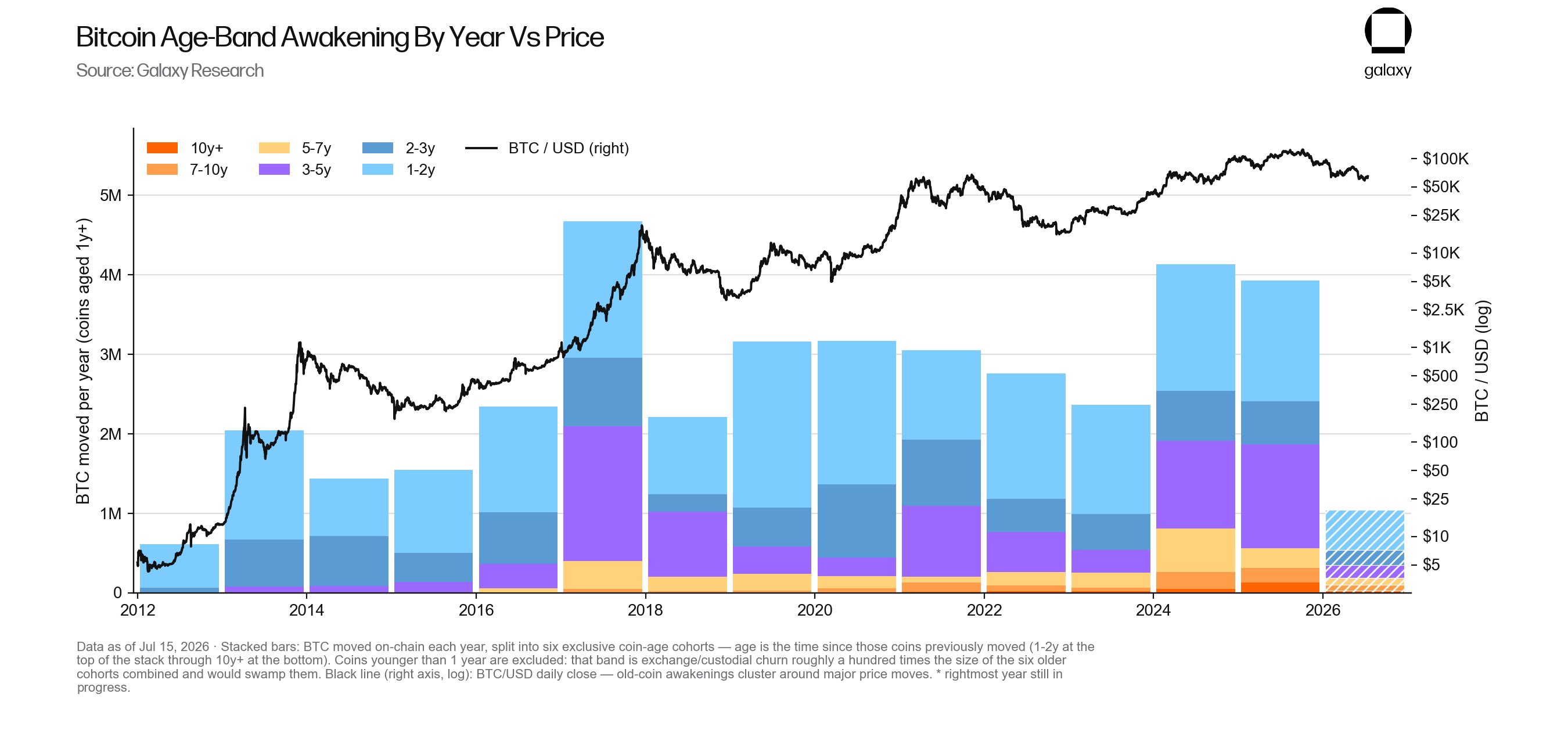
Investors who have held the asset for between one and ten years begin moving large amounts of cryptocurrency, often to sell. According to Thorn, the current distribution cycle reached its peak in late 2025, when the monthly volume of coins moved by just one cohort — Bitcoin aged between one and two years — surged to nearly 900,000 BTC.
However, this flow dried up in 2026. Veteran wallets entered a deep sleep, which suggests one thing — everyone who wanted to lock in profits at high prices during the two-year rally has already done so, and the local selling pressure from long-term holders has disappeared.
Fact-checking the quantum panic
Within this context, Thorn also addressed the main behind-the-scenes concern that the media had linked to the actions of large holders — Bitcoin's vulnerability to quantum computers. There had been speculation that whales were selling their coins specifically because of technological risks.
we work with a lot of whales and none has mentioned quantum as a reason for selling
— Alex Thorn (@intangiblecoins) July 15, 2026
have heard quantum fears as a reason not to buy from institutional investors, though
but work is being done on quantum and more work is coming, so i think those fears will assuage
Galaxy Digital said it works with a large pool of institutional investors, and not one of the selling whales cited the quantum threat as a reason for closing their positions. According to Thorn, the quantum factor currently works only in the opposite direction, as it scares some outside investors and prevents them from entering the market.
Meanwhile, Bitcoin's developer community has already begun working on quantum-resistant network upgrades, which should fully address the issue in the future. At this stage, the market has finally been freed from selling pressure from its oldest holders and has entered a stabilization phase.