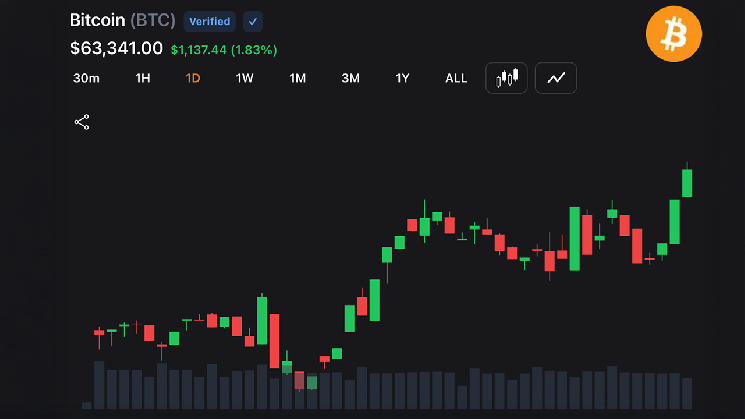
While bitcoin later oscillated between $62,500 and $63,000, at the time of writing, it traded just above $62,700—a gain of 1% over the last 24 hours. The marginal gain lifted bitcoin’s market capitalization to nearly $1.26 trillion and helped maintain its positive start to July.
On the derivatives market, bitcoin’s Thursday price action resulted in suppressed liquidations compared to 24 hours earlier. Coinglass data show bitcoin liquidations for both long and short positions nearly topped $52 million, compared to $65 million in long positions alone wiped out a day earlier.
Although the sudden clash between U.S. and Iranian forces initially jolted global markets, the latest escalation had a muted impact on equities. Key indices in Asia and Europe defied the geopolitical headwinds to close in the green, while U.S. markets posted modest gains at the time of writing.
Energy markets followed a similar trajectory, with Brent crude oil retreating from its Wednesday peak of just over $80 per barrel to settle below $76. However, the calm may be fragile. While the Trump administration has ruled out full-scale combat, observers warn that the intensity of the U.S. strikes could compel Iran to retaliate by targeting oil infrastructure in the Gulf.
Macro Squeeze vs. Sovereign Hedge
On social media, market sentiment surrounding the latest U.S.-Iran escalation and its impact on bitcoin is split into two distinct camps: macro-focused pragmatists who view bitcoin as a temporary casualty of a stronger dollar, and structural bulls who are using the dip to emphasize the long-term sovereign hedge thesis.
Some analysts note that bitcoin’s initial 3% slide below $62,000 was not an isolated cryptocurrency decline, pointing out that gold also took a hit on the headline news. The market narrative, they argue, is that energy price spikes trigger hawkish Federal Reserve anxiety, causing the dollar to absorb safe-haven flows and temporarily squeezing risk assets, including bitcoin.
However, because derivative funding rates have reset to neutral and bitcoin managed to rapidly reclaim the $63,000 level during the European session, many structural bulls are calling the brief drop a bear trap. They argue that the broader macro backdrop—marked by escalating conflict and rising global debt—ultimately strengthens the thesis for fixed-supply assets once the initial liquidity shock wears off.

 news.bitcoin.com