
 ambcrypto.com

At press time, Bitcoin traded around $62,400 after yet another wave of selling pressure on the market. The decline was accompanied by a significant decrease in derivatives exposure for major exchanges.
Binance experienced the largest move, with a 7-day Open Interest decline of over $1 billion. However, the comparison between the reported decline and the cited Open Interest figure requires verification.
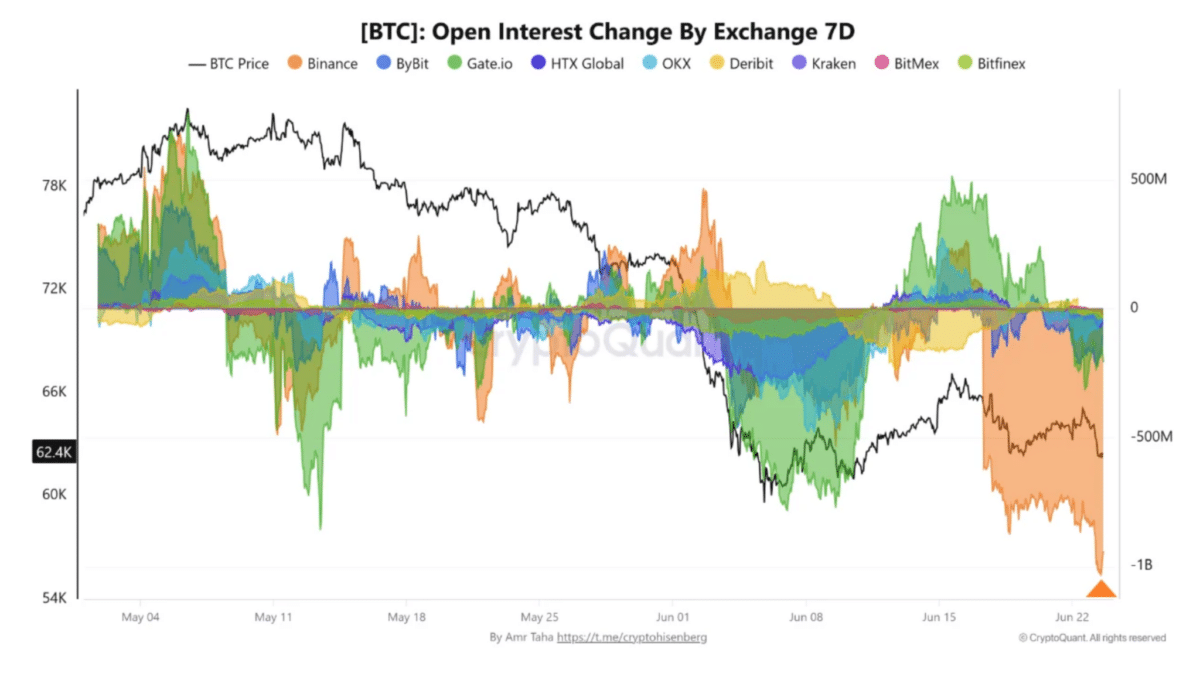
Meanwhile, Gate.io previously recorded a low near -$777 million, highlighting how concentrated the latest deleveraging has become. Yet the flush has cleared much of the speculative excess beneath the price.
Most downside liquidity clusters have already been swept, reducing immediate downside attraction.
Nevertheless, Coinbase Premium remained negative near -0.13, showing U.S. Spot demand had not returned decisively.
Therefore, while leverage pressure has eased, Bitcoin still lacks the buying conviction needed to sustain a broader recovery toward overhead liquidity zones.
Spot volume fails to confirm demand
The decrease in Exchange Inflows aligned with a downturn in overall trading on Binance. Although Bitcoin is currently consolidating at levels near $62,000 – $63,000, there has been a significant increase in market participation.
Notably, Binance’s spot-to-perpetual ratio Z-score has declined to -1.67, which historically represents an extremely high level for spot demand. Nevertheless, activity behind this indicator suggests otherwise.
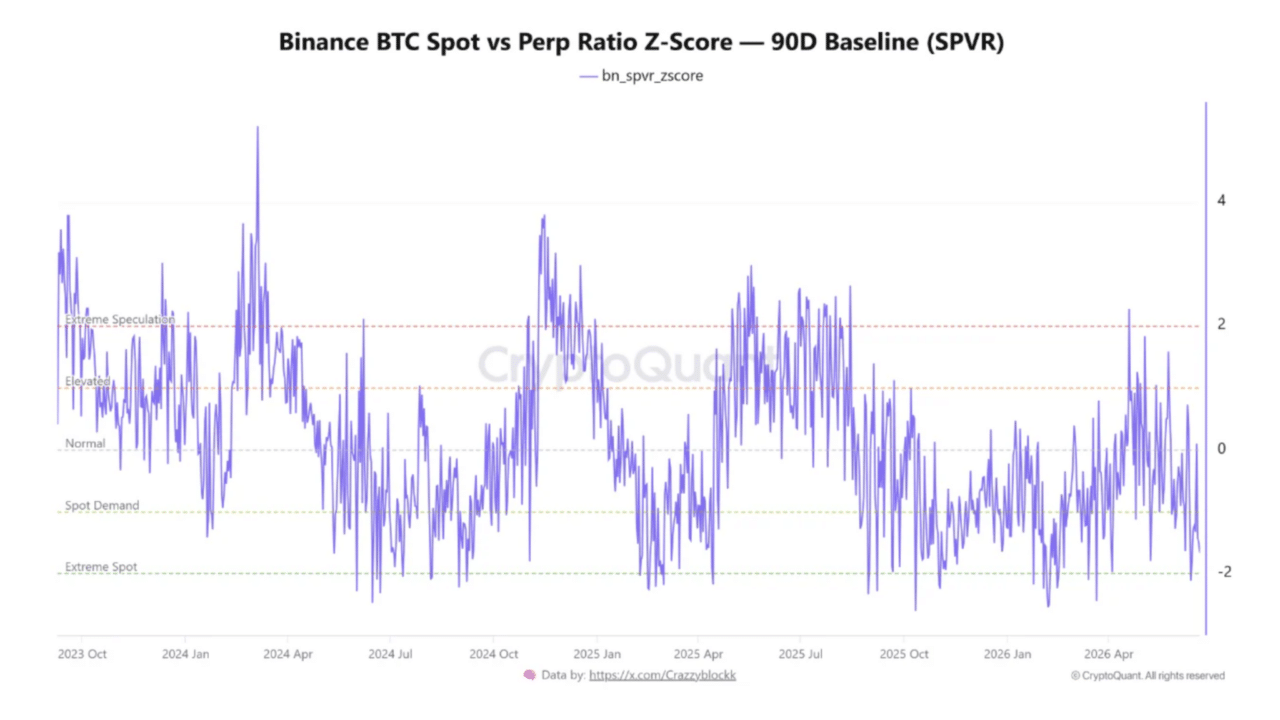
Spot volume stood near $510 million, placing it among the lowest readings in the exchange’s history. Meanwhile, perpetual futures activity contracted even faster, declining roughly 22% week-over-week compared to a 12.7% drop in spot volume.
These distinctions are relevant as the ratio has increased primarily due to declining derivatives activity rather than increasing spot demand.
In addition, earlier, when Bitcoin moved towards $62,000, there was a dramatic rise in exchange inflow to Binance, causing Binance’s 30-day average to increase to 7,600 $BTC, worth approximately $479 million in potential sell-side supply.
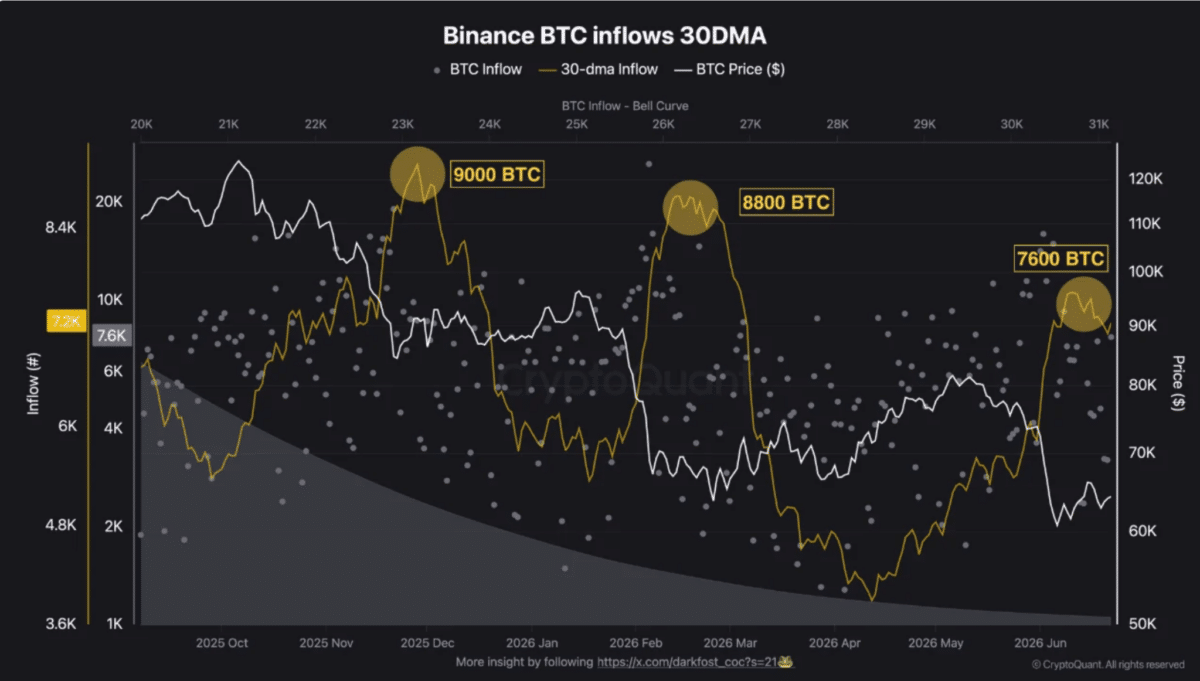
Those inflows are slowly easing, indicating that panic selling is beginning to slow. Now, derivative traders are stepping back and thus reducing speculative pressure throughout the market.
Therefore, bitcoin appears to be shifting away from being forced to deleverage into low-activity consolidation mode.
Thus, this transition should reduce the risk of liquidation and immediately reduce downside fragility. However, it does not indicate that accumulation has begun.
Until then, the market lacks the conviction needed to facilitate a prolonged recovery or break out.
Final Summary
- Bitcoin [$BTC] has flushed significant leverage, yet weak spot demand continues to limit recovery momentum near key support levels.
- Bitcoin remains in consolidation mode as easing sell pressure fails to translate into meaningful accumulation.