
 coindesk.com
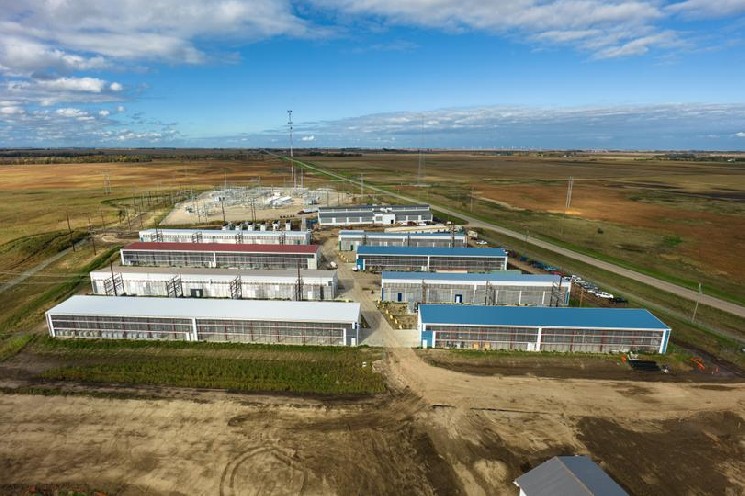
- Bitcoin miners pivoting to AI infrastructure face a roughly $50 billion near-term funding gap and as much as $221 billion in long-term capital needs, according to a new VanEck report.
- VanEck says investors are shifting focus from splashy AI contract announcements to whether miners can actually finance, build and operate data centers, with only about a quarter of leased AI and HPC capacity currently delivered.
- The firm expects valuations to hinge on energized power and tenant quality, favoring miners with investment-grade hyperscaler clients and warning that companies missing construction milestones could face lasting valuation hits.
Bitcoin miners that have spent the past two years reinventing themselves as AI infrastructure providers may be entering a more difficult phase of their transformation: proving they can actually deliver.
In a new report, VanEck argued that the market is beginning to move beyond the excitement surrounding AI-related contract announcements and toward a more fundamental question of whether miners can build and finance the massive data center projects needed to serve AI customers.
The asset manager estimates that the sector faces a combined near-term funding gap of roughly $50 billion, with long-term capital needs of about $221 billion if current development plans proceed.
"Execution, not signing, becomes the next premium," said VanEck investment analyst Griffin MacMaster and head of digital asset research, Matthew Sigel, noting that the industry has so far delivered only about 25% of the AI and high-performance computing (HPC) capacity it has leased to customers. Companies that miss construction milestones risk "structural de-ratings" from investors.
The report comes amid a dramatic shift in the bitcoin mining industry. Following the collapse in mining profitability after the 2024 halving, many operators began repurposing their power infrastructure to support AI workloads, betting that technology companies would pay significantly more for electricity and data center capacity than bitcoin miners.
Core Scientific (CORZ) signed a multibillion-dollar hosting agreement with AI startup CoreWeave, helping transform the company from a bitcoin miner into an AI infrastructure provider. TeraWulf (WULF), Hut 8 (HUT), Iren (IREN), and Cipher Mining (CIFR) have all announced plans to lease power and data center capacity to AI and high-performance computing customers, while Marathon Digital (MARA), Riot Platforms (RIOT) and CleanSpark (CLSK) are pursuing hybrid strategies that maintain bitcoin mining operations while exploring AI opportunities.
While bitcoin (down about 24% since January), along with other big public crypto names, have lost significant value so far this year as crypto prices continue to slide amid shifting investor focus to AI, bitcoin miners have seen largely green candles across the sector. RIOT is up nearly 94% year-to-date, while CIFR is 62% higher. Others are showing similar gains over the same period.
The fresh narrative has helped drive some of the biggest stock moves in the crypto sector over the past year, and investors have rewarded many of these companies with valuations that increasingly reflect their AI potential rather than their mining businesses.



