
 ambcrypto.com

Bitcoin’s recent decline has pushed short-term holder whales into the deepest stress phase of this cycle. Their unrealized losses have expanded to roughly $16.4 billion, reflecting the impact of Bitcoin’s [$BTC] slide from above $100,000 toward $60,000.
As prices moved lower, more recent whale positions fell underwater, driving Unrealized Profit and Loss sharply into negative territory.
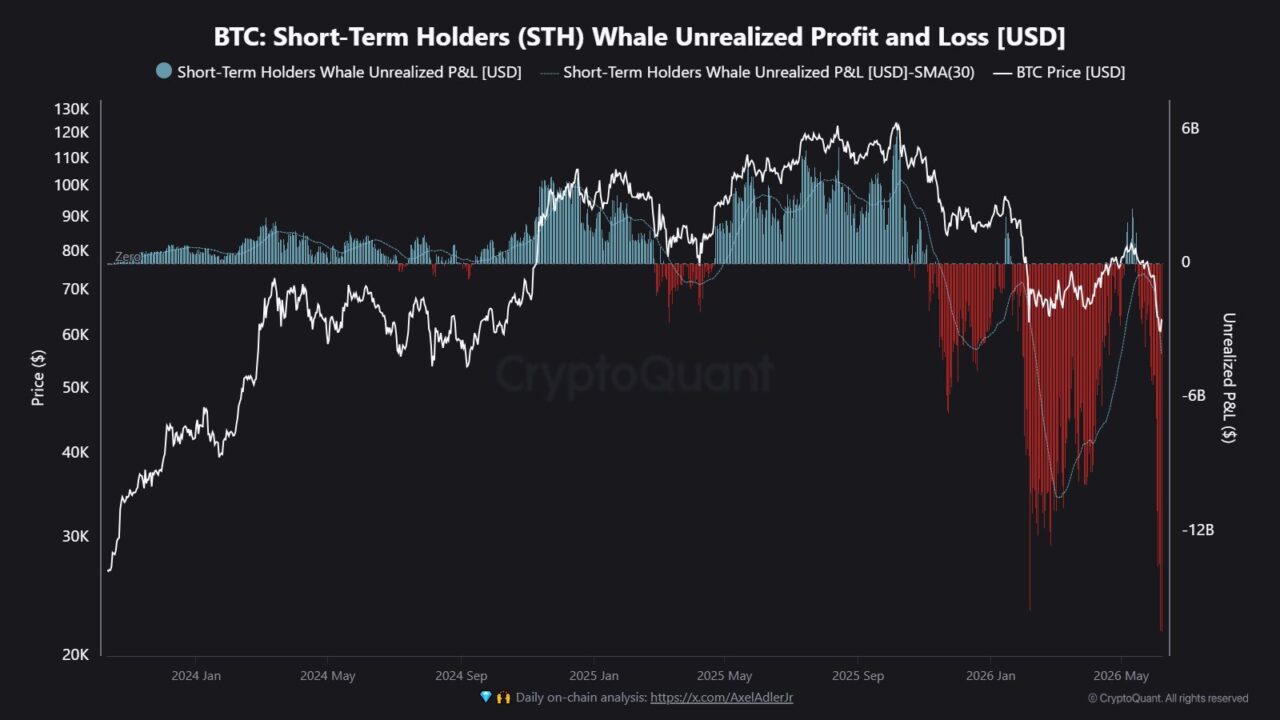
This deterioration matters because Short-Term Holders (STH) tend to react more aggressively during drawdowns. As losses deepen, capitulation risk increases, and weak conviction gets tested.
Yet similar periods have often marked late-stage resets rather than trend conclusions.
The current reading suggests the market is undergoing a transfer of coins from stressed participants to stronger hands. Whether pressure peaks or intensifies next will depend on further STH selling behavior and broader demand conditions.
Bitcoin accumulation remains retail-led
Despite growing losses among STH whales, a divergence is emerging across the market. Over the past two weeks, wallets holding less than 0.01 $BTC increased their holdings by 0.36%, even as Bitcoin struggled near the $61,000 zone.
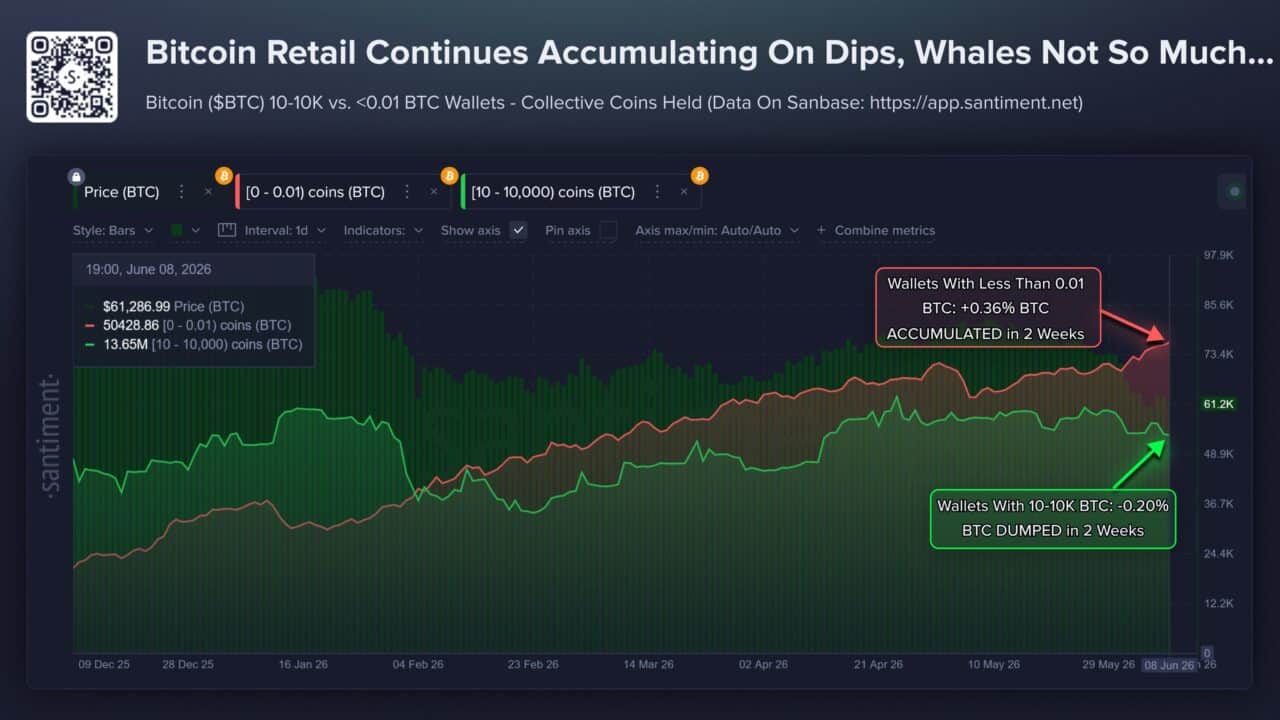
Rather than retreating alongside falling prices, smaller investors continued adding exposure through the downturn. Larger holders took a different approach.
Wallets holding between 10 and 10,000 $BTC reduced holdings by 0.20%, indicating that whale conviction remains limited despite the drawdown.
This divergence suggests recent losses have not triggered broad retail capitulation, while larger capital continues waiting for stronger signs of stabilization before returning aggressively.
$BTC enters discount territory
As retail buyers continued adding exposure and whales remained hesitant, Bitcoin’s valuation profile moved deeper into discounted territory.
According to Grayscale, the recent drop toward the $60,000 region pushed its composite on-chain valuation indicator below zero, suggesting $BTC now trades beneath its long-term valuation range.
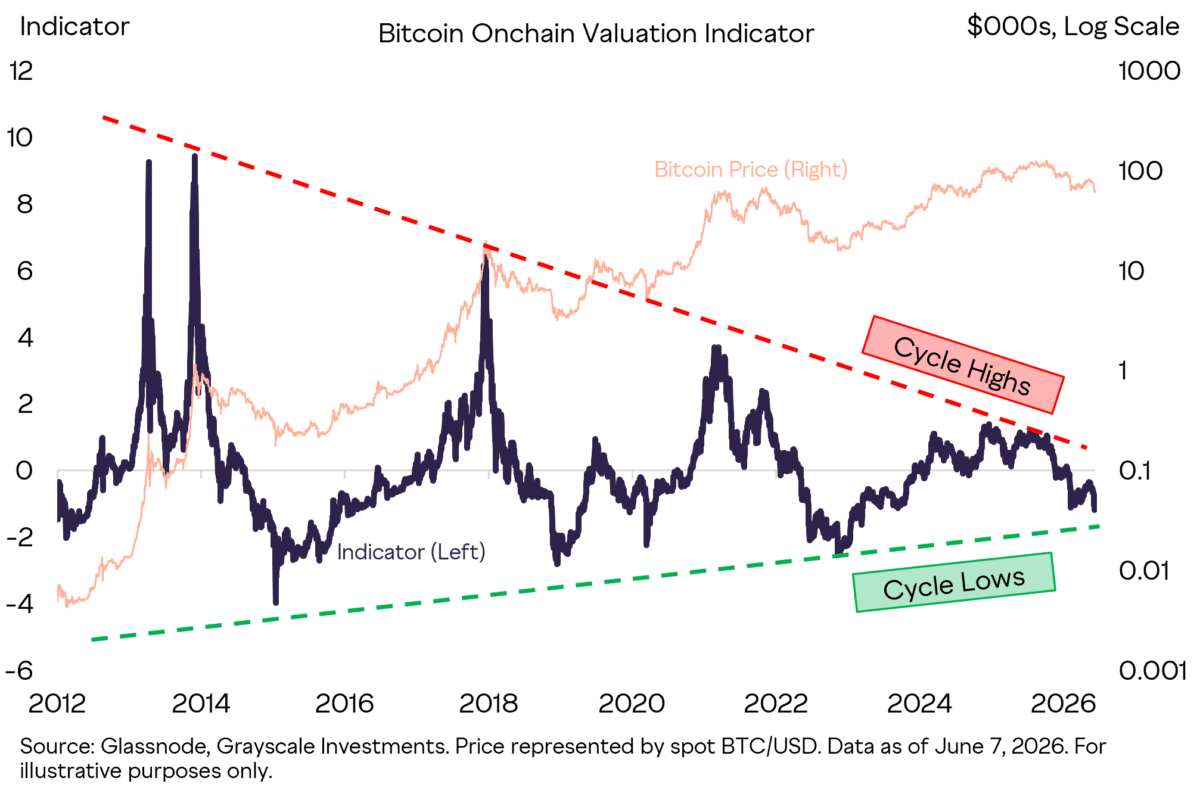
That shift emerged as selling pressure intensified and leveraged positions unwound across the market. Yet the decline still looks different from previous cycle bottoms. During the 2015, 2018, and 2022 bear markets, the indicator fell below -2 and approached -4 as capitulation accelerated.
This time, valuations appear attractive but not extreme. That may explain why accumulation persists while larger investors remain selective, leaving Bitcoin caught between stabilization and further downside pressure.
Final Summary
- $BTC remains under pressure as whale losses deepen, while larger holders continue withholding aggressive accumulation.
- Bitcoin trades in discounted territory, though valuation signals have yet to reach historical capitulation extremes.