Bitcoin’s latest exchange data show a market facing heavier spot-side pressure with Binance inflows staying elevated and reserves rebuilding from April lows. CryptoQuant analyst Darkfost said the shift has unfolded during a broader correction shaped by tense geopolitical conditions and weaker risk appetite.
The data points to three linked signals behind the pressure: persistent Binance deposits, falling apparent demand, and weaker unrealized profits. Together, they explain why traders are watching whether recent inflows reflect profit-taking, lower exposure, or defensive repositioning.
Binance Inflows Show Stronger Exchange Pressure
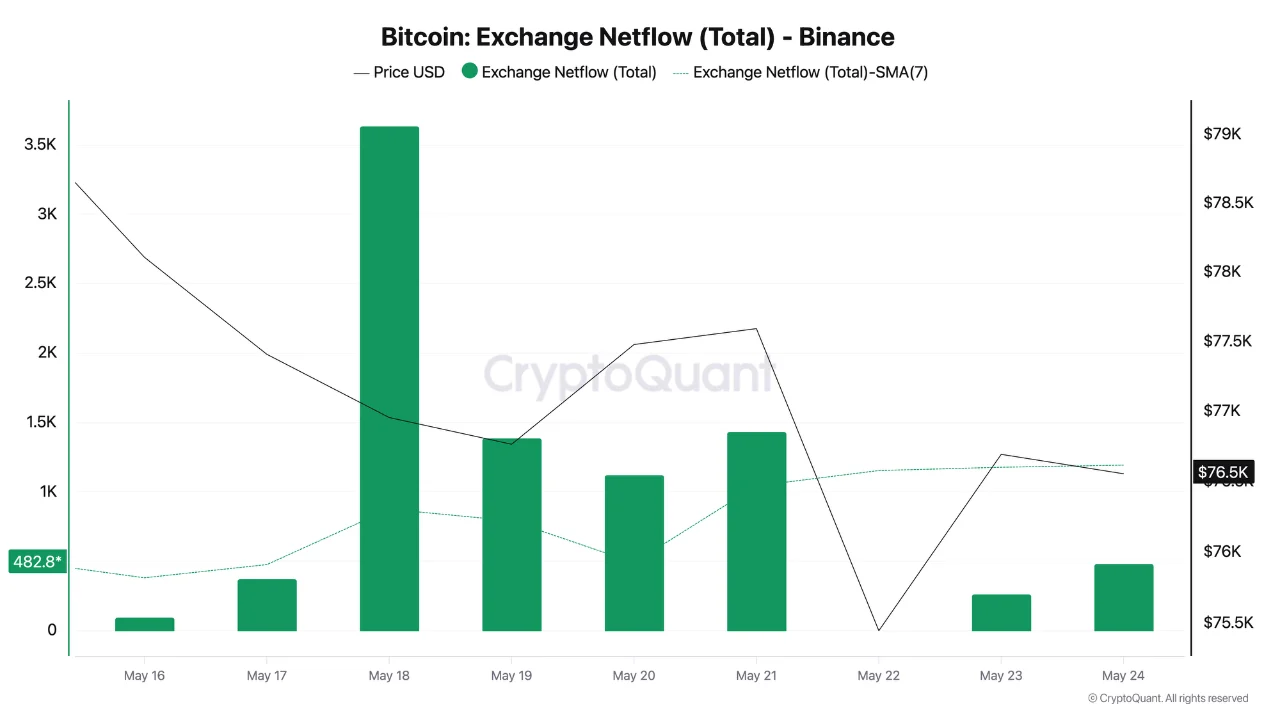
The first signal is the sharp rise in Binance inflows. On May 16, the weekly average stood at 378 $BTC. By the latest reading, that figure had climbed to 1,190 $BTC, marking a more than threefold increase in less than 10 days.
Know when your coins move
Alerts, real-time prices, and market news — all in one app
4.8 based on 40K reviews in the App Store and Google Play
Source: CryptoQuant
The largest single-day inflow came on May 18, when more than 3,600 $BTC moved onto Binance. Darkfost described that level as relatively high for one day and said it showed the intensity of the movement.
Essentially, exchange inflows are closely watched as coins sent to trading platforms are often linked to selling, profit-taking, or defensive repositioning. The signal, however, does not confirm every holder’s intent, but persistent inflows usually indicate rising available supply on exchanges.
The second connected signal is the rebound in Binance reserves. The exchange’s holdings rose from a low of 616,000 $BTC on April 24 to about 632,000 $BTC, an increase of 16,000 $BTC in one month. This increase followed a period when reserves had been lower, making the recent recovery notable.
Demand Falls to its Weakest Level this Year
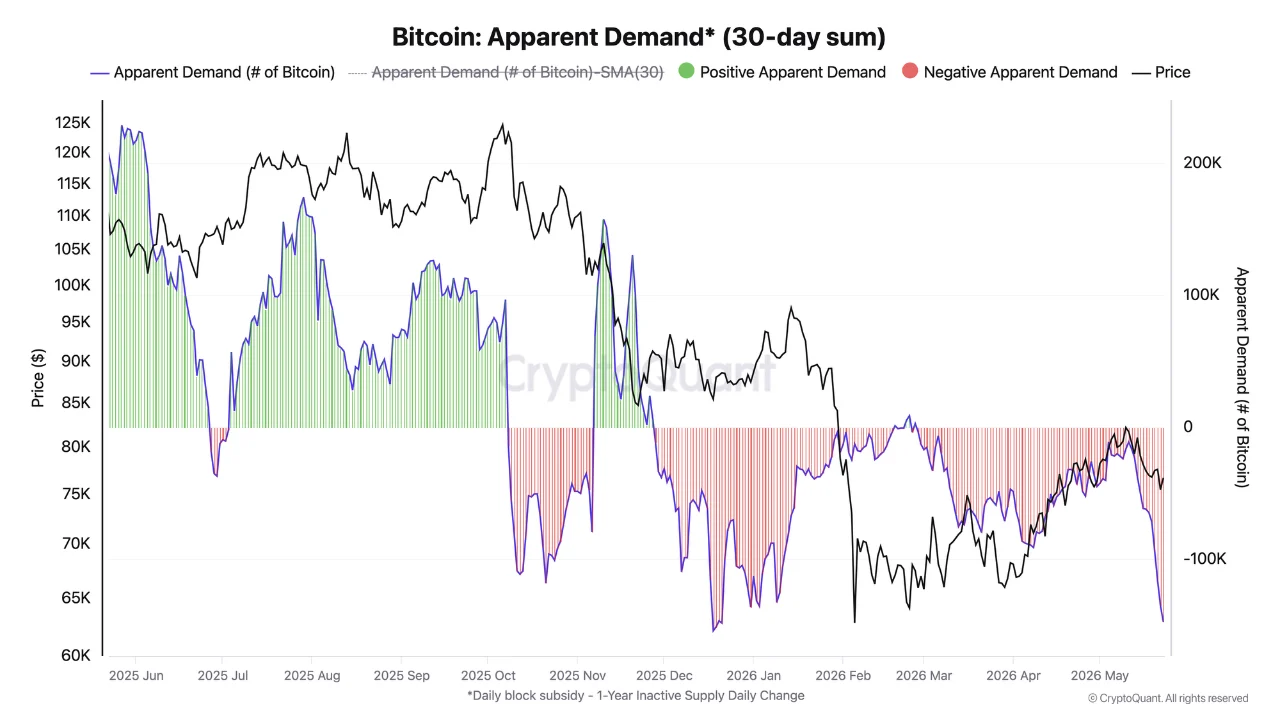
Darkfost also pointed to apparent demand, which has moved to its most negative level since the start of the year. The estimate is now near minus 147,000 $BTC, matching bearish conditions last seen in December 2025.
Source: CryptoQuant
Apparent demand compares new issuance with supply that has stayed inactive for more than one year. The metric is used to gauge whether structural accumulation can absorb fresh supply entering the market.
Nevertheless, the latest reading shows demand continuing to contract. According to Darkfost, durable rallies usually need genuine spot demand, while futures-driven momentum can only support short-term movements.
Profit Supply Remains Below Bull-Market Norms
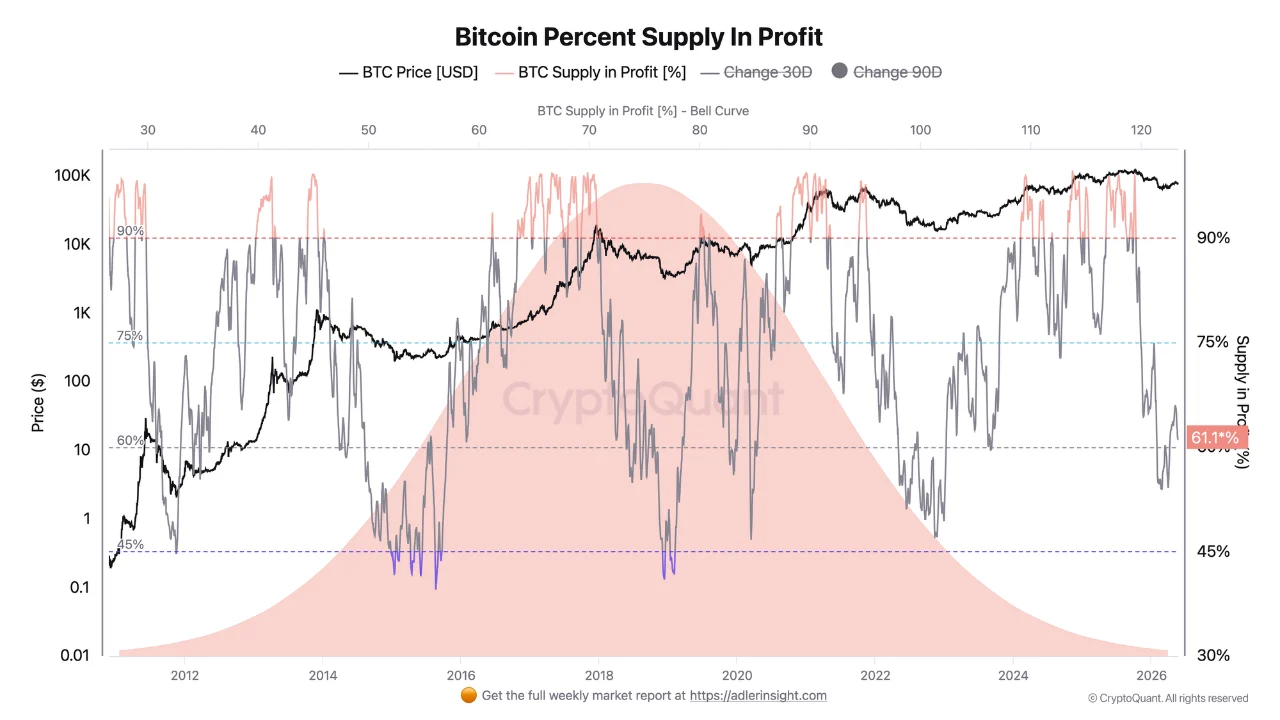
The third signal comes from the supply of profit. Around 61% of the total supply is currently held at a profit, which Darkfost said remains weak compared with typical bull-market conditions.
During stronger bull phases, the share of profitable supply has usually stayed above 75%. By contrast, bear-market periods have been linked to deeper loss dominance, with roughly 45% of supply held at a loss.
Source: CryptoQuant
When the price dropped below $60,000, profitable supply fell near balance at 51.1%. The current 61% reading leaves holders with less unrealized profit than is usually seen during stronger market phases.
Together, the three signals show why selling pressure has become a key focus. Binance inflows have risen, reserves have recovered, demand has weakened, and profit cushions remain below historical bull-market levels.
Related: Bitcoin Price Prediction: $BTC Momentum Fades as Bears Target Key $76K Support

 coinedition.com