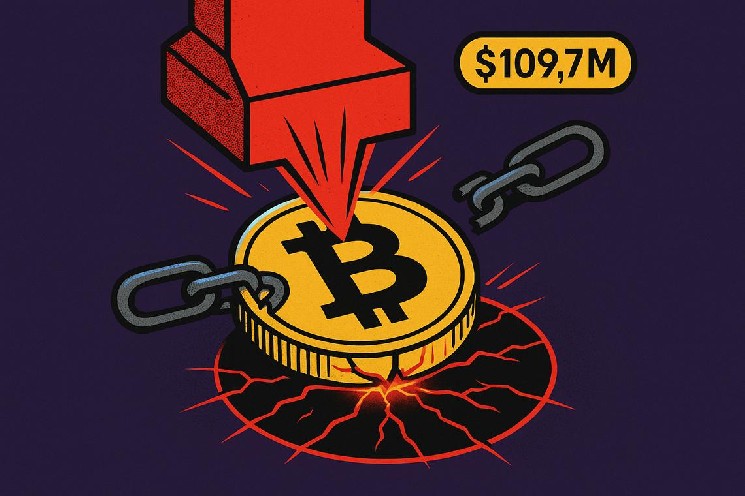
What triggered the Bitcoin crash
The Bitcoin crash intensified as market weakness met a bad macro backdrop.
U.S. CPI and PPI data released around the same period added fresh inflation concerns and weighed on sentiment. In a healthier market, that kind of macro pressure might have caused a pullback. Here, it hit when on-chain and derivatives indicators were already pointing to instability.
That matters because the selloff did not appear to come from one isolated event. The market was already vulnerable. Weak exchange outflows suggested less aggressive accumulation, while derivatives data showed traders leaning heavily to one side. The inflation-related shock simply arrived at the worst possible time.
Exchange outflows weakened as balances shifted
Bitcoin exchange outflows dropped to 19,995 $BTC on May 11, a notable decline from the 25,600 $BTC daily average for the period. They were also below the early May range of 28,000 to 35,000 $BTC.
Meanwhile, inflows held near 0.99x the average.
As a result, the gap between coins leaving and entering exchanges tightened. Exchange Netflow turned positive, meaning sell-side liquidity began accumulating on trading platforms. In plain terms, more Bitcoin was available where it could be sold.
CryptoQuant analysis from analyst @easy_Vero treated that shift as a structural warning sign. When netflow turns positive in this kind of environment, it suggests the market may be losing some of its ability to absorb downside pressure.
Why weaker outflows mattered for Bitcoin long liquidations
Exchange outflows often help show whether traders are moving coins away from trading venues, which can reflect reduced immediate selling pressure. A drop in outflows does not guarantee a decline, but in this case it arrived alongside steady inflows and worsening derivatives positioning.
That is why this metric mattered beyond the headline number. It pointed to a market where buyers were not pulling supply off exchanges fast enough, even as broader conditions grew more tense.
Short positioning amplified the liquidation wave
The derivatives backdrop made the move more violent.
Between May 8 and 10, open interest climbed to 1.04x the period average. At the same time, funding rates stayed negative throughout, signaling a strong short bias. On May 10, that negative funding margin deepened further, showing that bearish leverage was building rather than fading.
When price pressure hit, the imbalance turned costly for bulls. On May 12, long liquidations reached 11.8 times the volume of short liquidations. Across the full three-day stretch from May 11 to 13, approximately $109.7 million in long positions were wiped out.
- Bitcoin exchange outflows fell to 19,995 $BTC on May 11, below the 25,600 $BTC daily average
- Open interest rose to 1.04x average between May 8 and 10 while funding rates stayed negative
- Long liquidations hit 11.8 times short liquidations on May 12 and totaled about $109.7 million over three days
Why this liquidation event drew attention
Bitcoin long liquidations on this scale are not just a derivatives story. They show how quickly market structure can deteriorate when on-chain weakness and leveraged positioning reinforce each other.
For traders, the episode highlighted a simple but important point: negative funding and rising open interest can be a dangerous mix when spot demand is not strong enough to counterbalance it. For the broader market, the shift to positive Exchange Netflow suggested that downside pressure was building before the liquidation wave became obvious.
That is also why the CryptoQuant analysis stands out. It did not rely on price alone. It tied the correction to changing exchange behavior, leveraged positioning, and macro stress arriving together. When those signals align, even a modest external shock can trigger a much larger unwind.
What traders will be watching next
The next phase depends on whether the market’s internal signals improve.
A reduction in the pace of Bitcoin long liquidations would suggest that the forced unwinding phase is cooling. Just as important, a move back to negative Exchange Netflow would indicate that outflows are once again dominating, a sign of stronger buyer confidence than the market showed on May 11.
Until that happens, the lesson from this Bitcoin crash is hard to miss: when outflows dry up, exchange balances rise, and shorts stay in control, the market can unravel fast.

 en.cryptonomist.ch