
 news.bitcoin.com

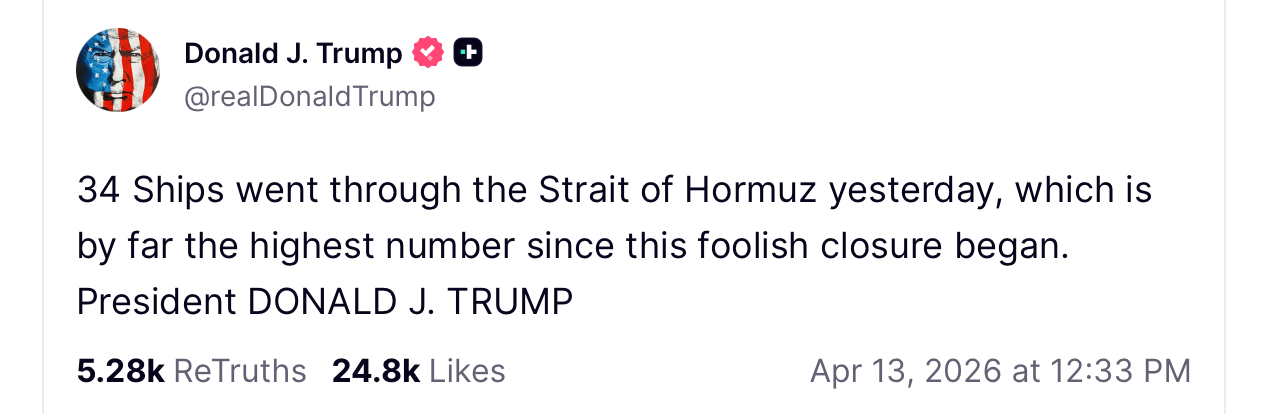
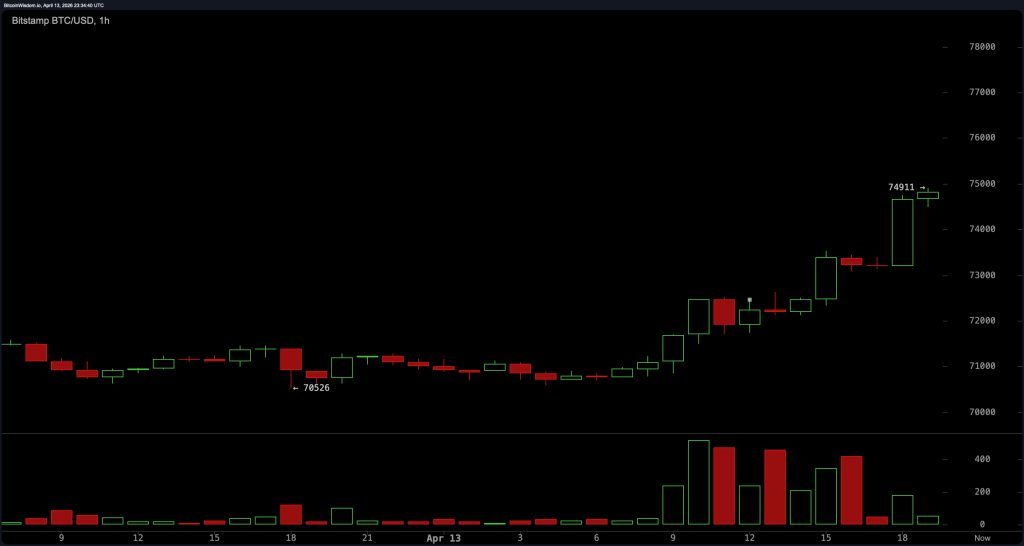
Bitcoin pushed toward the $75,000 level on Monday, April 13, 2026, as traders covered short positions following President Trump’s order to blockade the Strait of Hormuz, sending the price from a morning low of $70,741 to intraday highs above $74,900.
Key Takeaways:
- Bitcoin climbed toward $75,000 on April 13 after millions in short positions were liquidated within hours.
- U.S.-Iran Strait of Hormuz tensions drove traders back into $BTC, testing the top of a two-month consolidation range.
- Analysts set $75,000 to $80,000 as near-term targets, but pre-April 15 tax selling and oil-driven inflation fears remain risks.
$BTC Tests 2-Month Consolidation High Near $75,000
The move played out quickly. Within hours of the blockade announcement, millions in short positions were liquidated as buyers stepped in at support near $70,000, accelerating the climb. Funding rates had turned negative in the days prior, a signal that short positioning had grown crowded heading into the weekend.
Trump ordered the Strait of Hormuz closure after ceasefire talks between the U.S. and Iran collapsed over the weekend. The Strait is a critical passage for global oil shipments. The news initially pressured risk assets before traders shifted toward bitcoin and other hedges.
The price action tested the upper boundary of bitcoin‘s two-month consolidation range, which has held roughly between $65,000 and $75,000 since February. The range represents a period of choppy trading that followed bitcoin’s all-time high above $126,000 in October 2025.
Spot bitcoin exchange-traded funds (ETFs) have also seen renewed inflows during March and April, providing some demand beneath the leverage-driven moves. Institutional buying through ETF vehicles has been, at least one reason, support near $68,000 to $70,000 has held across multiple retests.
Broader macro conditions have complicated bitcoin’s path higher. Rising oil prices tied to Middle East tensions have reinforced inflation concerns, which could push back Federal Reserve rate cuts. Any easing of geopolitical pressure or shift in Fed expectations has tended to lift $BTC within days.
Earlier in April, bitcoin posted a gain near $70,000 on reports of a potential U.S.-Iran ceasefire before the weekend breakdown reversed that momentum. Traders have been reacting sharply to each development in the conflict, with $BTC moving several percentage points within hours of major headlines.
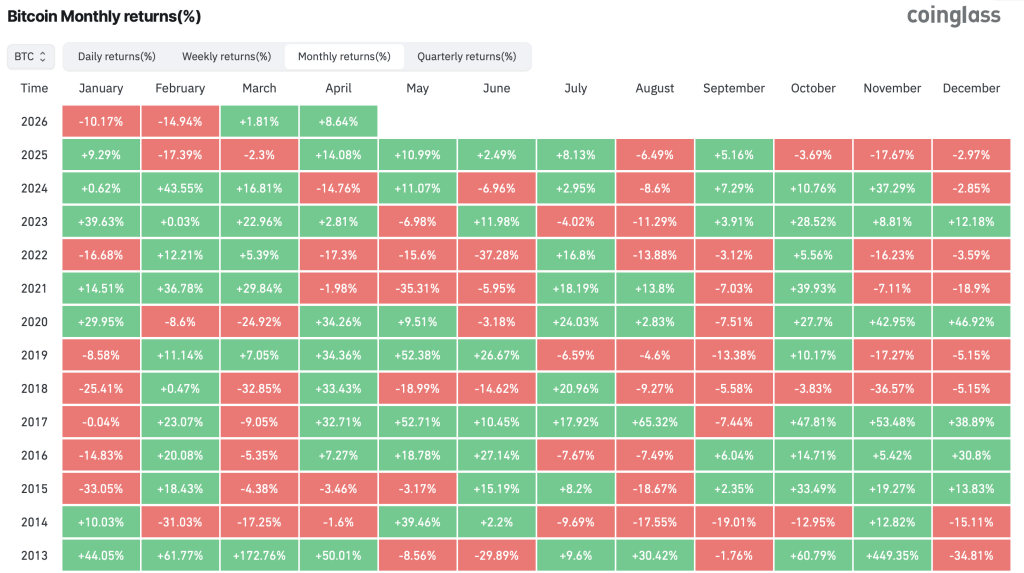
April has historically been a positive month for bitcoin. Since 2013, bitcoin has closed April higher roughly 69% of the time. The 2026 edition has been inconsistent, weighed down by persistent macro headwinds and the aftereffects of last year’s price decline. So far in Q2 2026, bitcoin is up by 8.64%.
The $75,000 level carries technical significance. Heavy short interest has been stacked near $73,000 to $75,000, making any sustained move above that zone a potential catalyst for additional squeezes. Several trading desks have cited $75,000 as a resistance level that, if cleared on strong volume, could open a path toward $80,000. Prediction markets have seen this track as well.
Tax Season Selling Could Dampen Things
Downside risks remain in place. A failure to hold above $72,000 to $73,000 could pull prices back toward $68,000. Tax-season selling ahead of the April 15 deadline may also reduce spot demand in the short term. A broader equity selloff driven by geopolitical shock remains a risk that traders are watching.
Strategy, the largest corporate bitcoin holder, has continued adding $BTC to its treasury this year. The company loaded up on 13,927 bitcoin this week and now holds 780,897 $BTC. That type of institutional accumulation, alongside ETF inflows and legislative discussions around the CLARITY Act for clearer crypto rules, forms part of the structural case that longer-term holders cite.
At current prices at 7:30 p.m. ET, bitcoin sits roughly 40% below its 2025 peak at $74,766 per unit. Analyst targets for year-end 2026 range from a conservative base near $75,000 to more optimistic projections above $100,000 if inflation cools and the macro backdrop improves.
Traders are watching the $70,000 support level overnight and the $75,000 resistance band as the most immediate signposts for where bitcoin heads next.