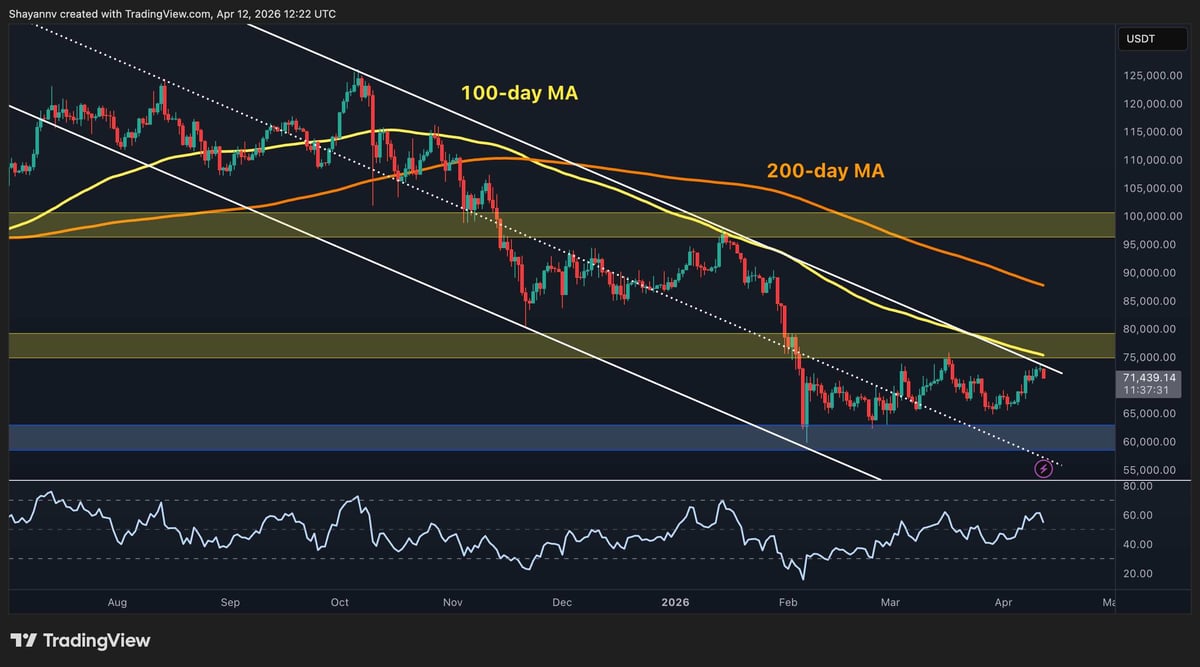
That said, the RSI has been trending higher since the February lows and is now hovering above 50. This indicates that the momentum is still dominated by buyers, but only marginally. The support area at $60k continues to be the most important level buyers need to defend, as a breakdown could push the price toward the $55k area. On the other hand, a push above $75k-$80k on strong volume would be the first meaningful signal that the trend is shifting.
$BTC/USDT 4-Hour Chart
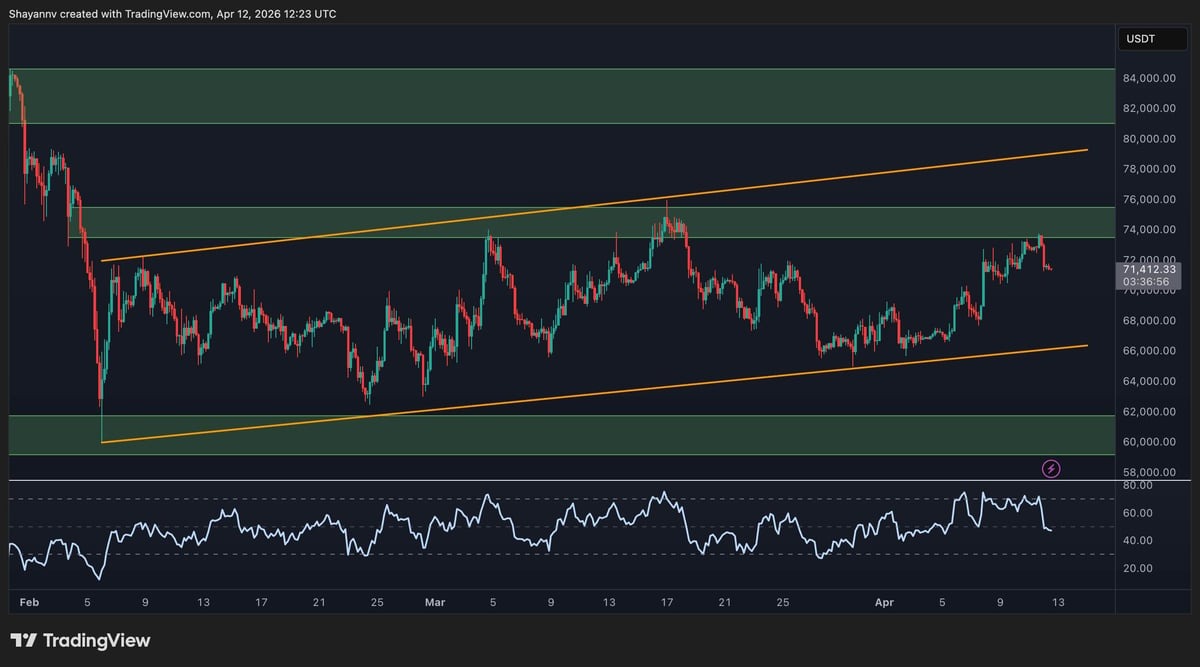
The short-term rising channel that has been forming since the February lows remains the dominant structure on the 4-hour chart, with the asset currently at $71k. The $74-$76k area has recently rejected lower, and the market is at risk of a revisit to the lower boundary of the pattern, currently around $67k.
The RSI on this timeframe, however, has dropped significantly lower and is now below 50. While still not deeply into bearish territory, this suggests a potential short-term shift in momentum to bearish.
A confirmed close above $75k would invalidate the bearish scenario and lead to the price making a run toward the $80k level. On the other hand, a deeper drop and breakdown below the lower trendline would be more concerning, and could shift focus back to the $60k daily support zone.
On-Chain Analysis
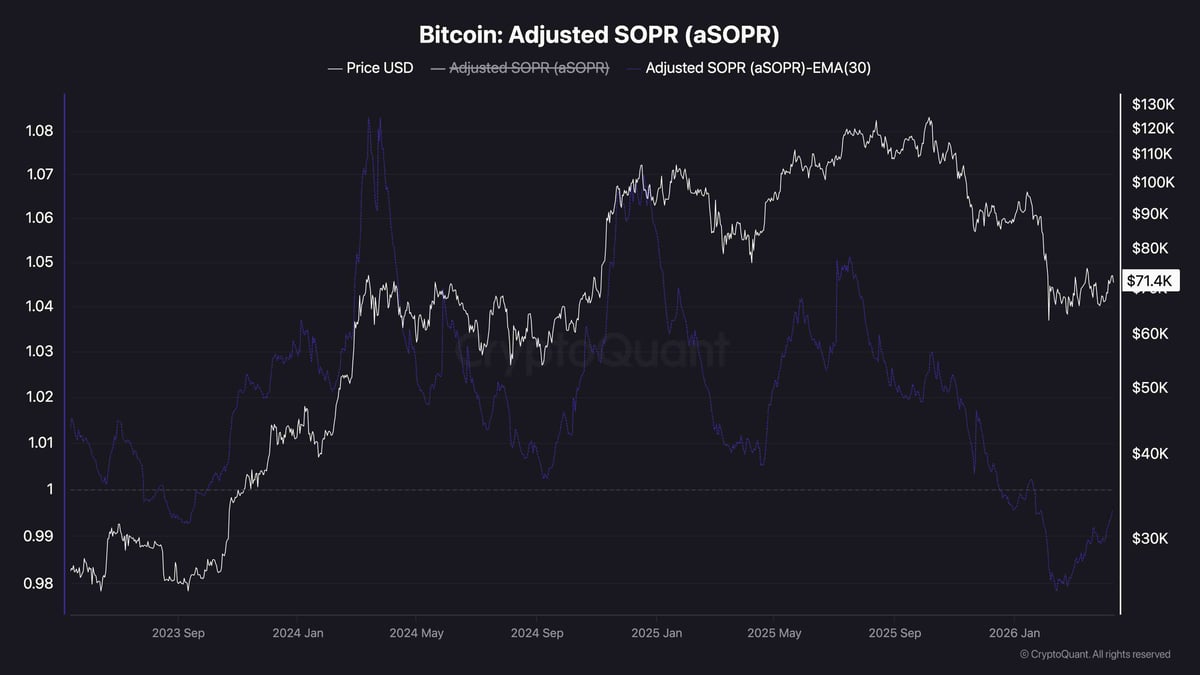
The Adjusted SOPR (aSOPR) is currently printing values below 1.00 — a level that indicates coins are, on aggregate, being spent at a loss. What makes the current reading particularly striking is that the aSOPR’s 30-day EMA has declined to levels last seen when Bitcoin was trading around $25k during the final stages of the previous bear market.
In other words, the on-chain realized loss behavior at current prices is mirroring the capitulation intensity seen at cycle lows nearly three years ago at a fraction of the price.
Historically, sustained aSOPR readings below 1.00, particularly when the EMA confirms the trend, have marked late-stage capitulation phases rather than the beginning of new downtrends. However, considering the overall geopolitical and economic environment, this does not guarantee a reversal is imminent, but it does suggest that sellers may be exhausting themselves at these levels, which is what analysts want to see to call a bottom forming.

 cryptopotato.com




