
 u.today
While the crypto community was enjoying Bitcoin at $75,000 and expecting new highs, the U.S. economy released figures that forced many participants in the crypto market to quickly reassess. The issue was not a technical failure but the fact that inflation in the United States decided to stage a second round.
Speaking about the numbers that spoiled the party for the bulls, U.S. producer price data for March came in truly hot — the PPI index jumped by 0.7% against a forecast of 0.3%. This is the sharpest increase since last summer. The annual PPI reading rose to 3.4%, giving the market a clear signal that price pressure has not gone anywhere.
How latest PPI jump could reshape Bitcoin’s 2026 path
For Bitcoin, this is the worst-case scenario because it completely destroys the illusion of a soft landing at the moment and of imminent rate cuts. Instead of flooding the market with cheap money, the Federal Reserve will now be forced to think about whether it may need to raise rates again.
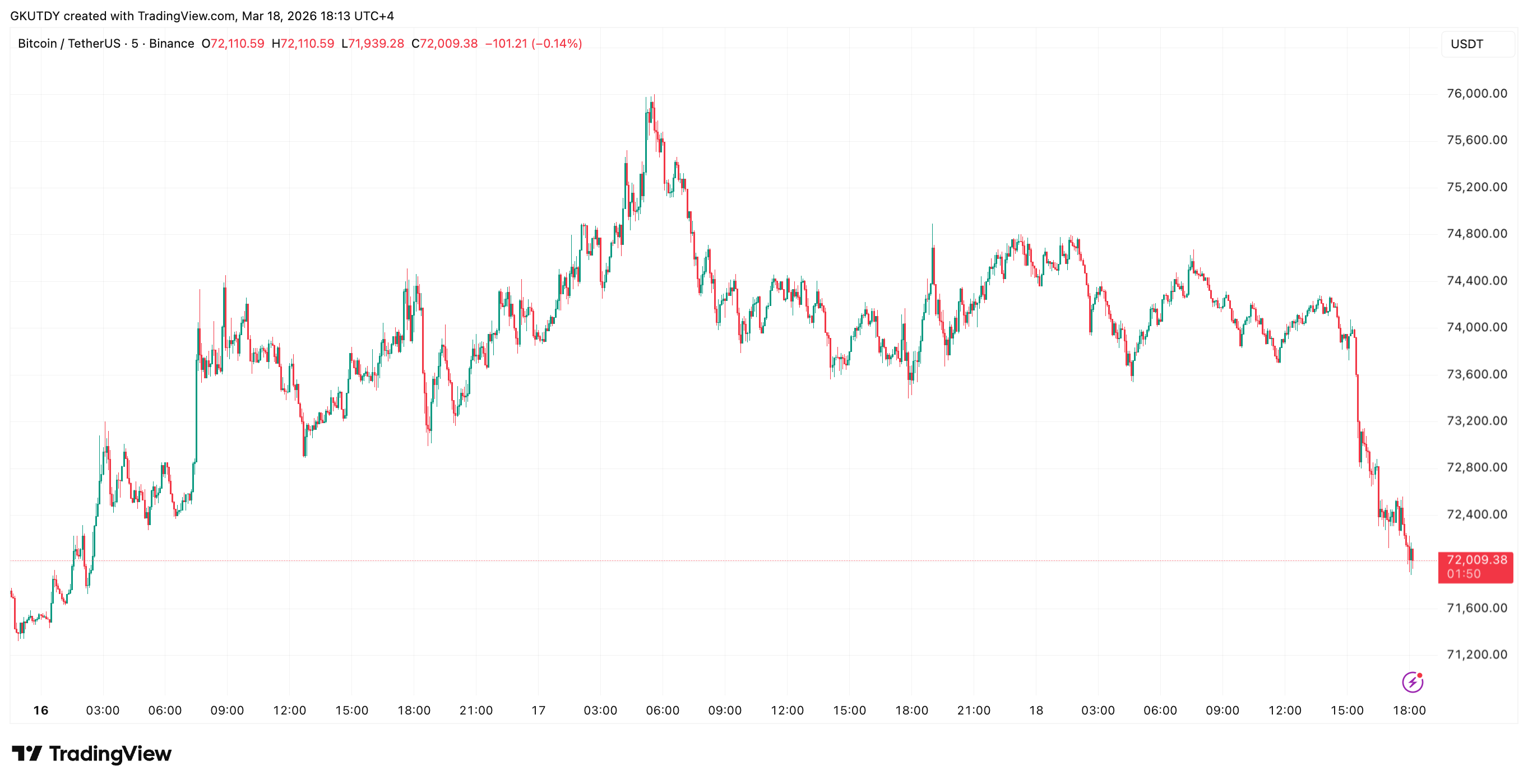
Why did Bitcoin go under the knife first? As soon as the data was released, investors switched to risk-off mode, and BTC is a litmus test of liquidity. If PPI beats expectations, the dollar will move higher and risk assets lower. It can now be said that the $74,000-$76,000 zone has turned into heavy resistance.
There are still two FOMC meetings ahead, one of them today and another at the end of April. If the market had previously hoped for softer rhetoric, it is now more likely to see a hawkish turn from Jerome Powell at the podium.
To sum up, markets are entering a phase of systemic risk. Rising producer prices will inevitably pass through to consumer prices, which may mean that inflation will remain elevated for longer. For Bitcoin optimists, this means one thing: an easy walk back to $100,000 and beyond will not happen.