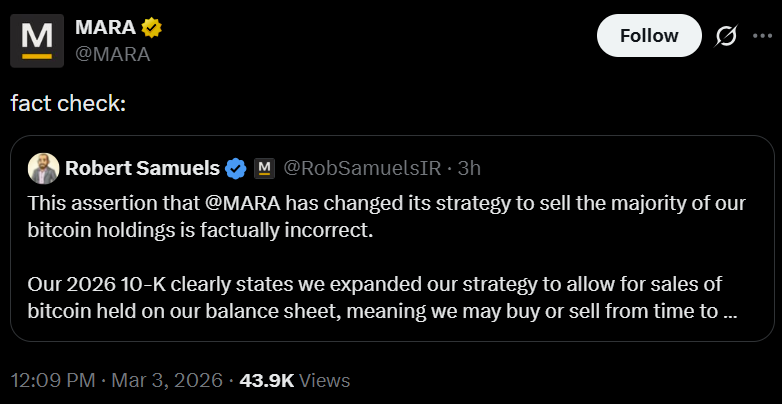
Samuels pointed to the company’s 2026 10-K filing, which states that MARA expanded its policy to allow for potential sales of Bitcoin held on its balance sheet.
Source: MARA
“Our 2026 10-K clearly states we expanded our strategy to allow for sales of bitcoin held on our balance sheet,” Samuels wrote.
As Cointelegraph initially reported, the filing authorizes discretionary transactions based on market conditions and capital allocation priorities, rather than mandating a reduction in reserves.
The distinction, Samuels argued, is between preserving optionality and committing to a material drawdown of Bitcoin treasury holdings.
MARA has historically positioned itself as a long-term Bitcoin holder, making any perceived shift in its treasury strategy closely watched by investors and market participants.
Related: Bitcoin mining’s 2026 reckoning: AI pivots, margin pressure and a fight to survive
MARA doubles down on diversification while maintaining a large $BTC treasury
While MARA has broadened its operational footprint in recent years, its balance sheet remains heavily tied to Bitcoin exposure.
That diversification accelerated last month when MARA acquired a 64% stake in Exaion, a France-based computing infrastructure company focused on high-performance computing and blockchain services.
Even so, Bitcoin remains central to MARA’s balance sheet. The company holds 53,822 $BTC, valued at about $3.7 billion, making it the largest publicly traded Bitcoin miner by treasury size.
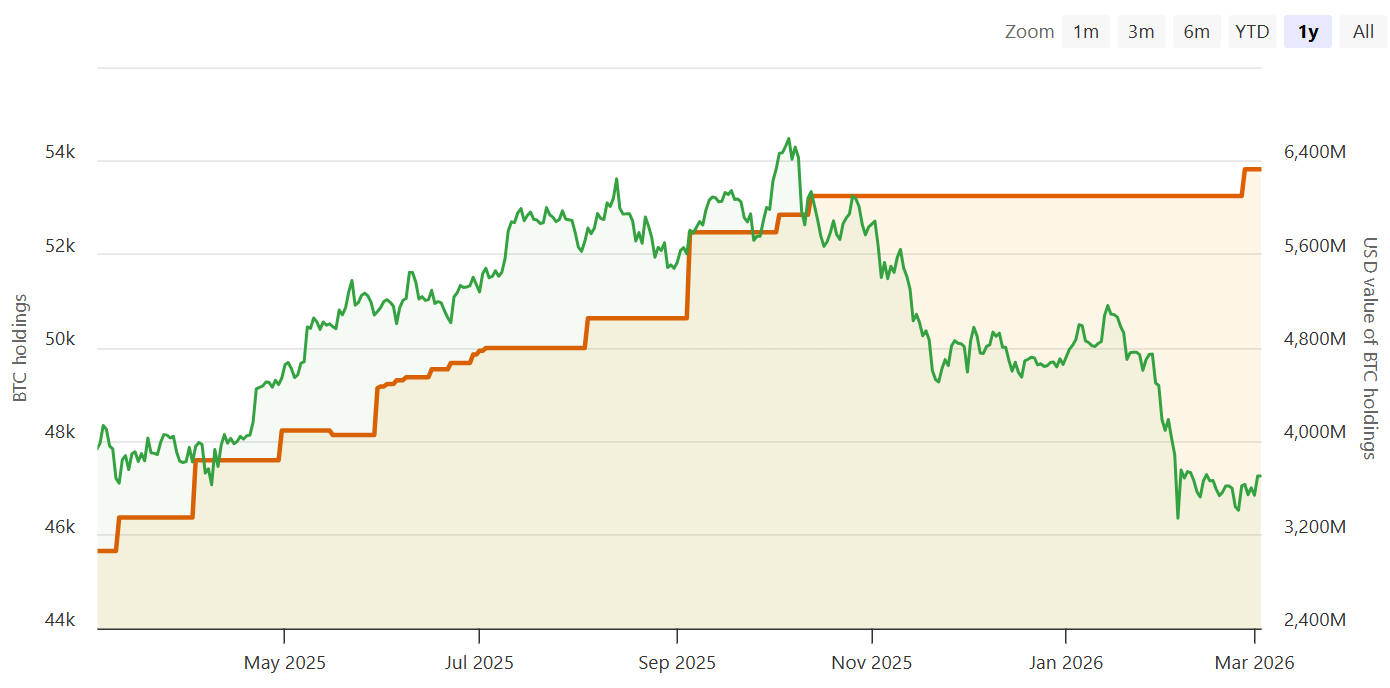
A one-year history of MARA’s Bitcoin holdings. Source: BitcoinTreasuries.net
Among public companies overall, only Michael Saylor’s Strategy holds more, with over 720,000 $BTC accumulated to date.
Related: American Bitcoin boosts hashrate with 11,298 new mining machines

 cointelegraph.com