
 beincrypto.com

Bitcoin ($BTC) has been struggling with sideways movement recently, trading between $70,000 and $65,000. The market has not seen the bullish momentum required to break out of this consolidation, leaving Bitcoin in a holding pattern.
This stagnation has continued for months, with no clear direction in sight. However, the market conditions could change in the coming days as factors such as institutional behavior and geopolitical tensions could drive the next move for the crypto king.
Bitcoin’s Longest Bearish Streak Since 2018-19
Bitcoin has now closed five consecutive months in the red, marking the longest bearish streak since 2018-2019. During this time, $BTC posted six months of losses, largely due to external factors like the crypto ad ban and the bursting of the ICO bubble.
Fast forward to today, and Bitcoin is once again facing negative market conditions. The current downturn is primarily attributed to escalating geopolitical tensions and regulatory concerns, both of which have weighed heavily on investor sentiment.
Want more token insights like this? Sign up for Editor Harsh Notariya’s Daily Crypto Newsletter here.
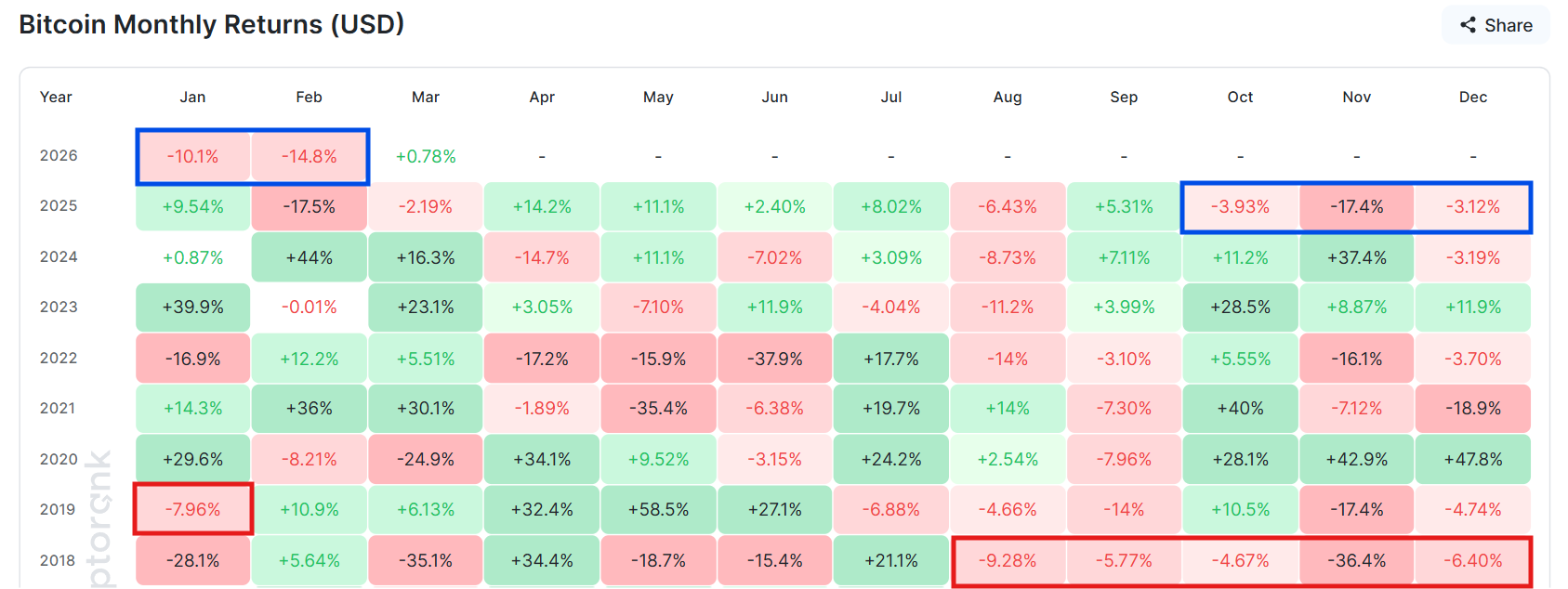
Looking ahead, March could potentially mirror the previous downturns, with geopolitical factors such as the Middle East crisis and the threat of rising energy prices continuing to affect the market. Investors remain wary as these uncertainties affect the broader financial market, which could prevent any immediate breakout for Bitcoin.
Institutional Support For Bitcoin Revived
After weeks of bearish performance, Bitcoin finally saw a shift in institutional behavior. The cryptocurrency experienced five consecutive weeks of outflows, signaling a lack of confidence from institutional investors.
However, the trend reversed with a notable inflow of $881 million during the week ending February 27. This marked a positive change, with Bitcoin closing the month of February with $311 million in inflows.
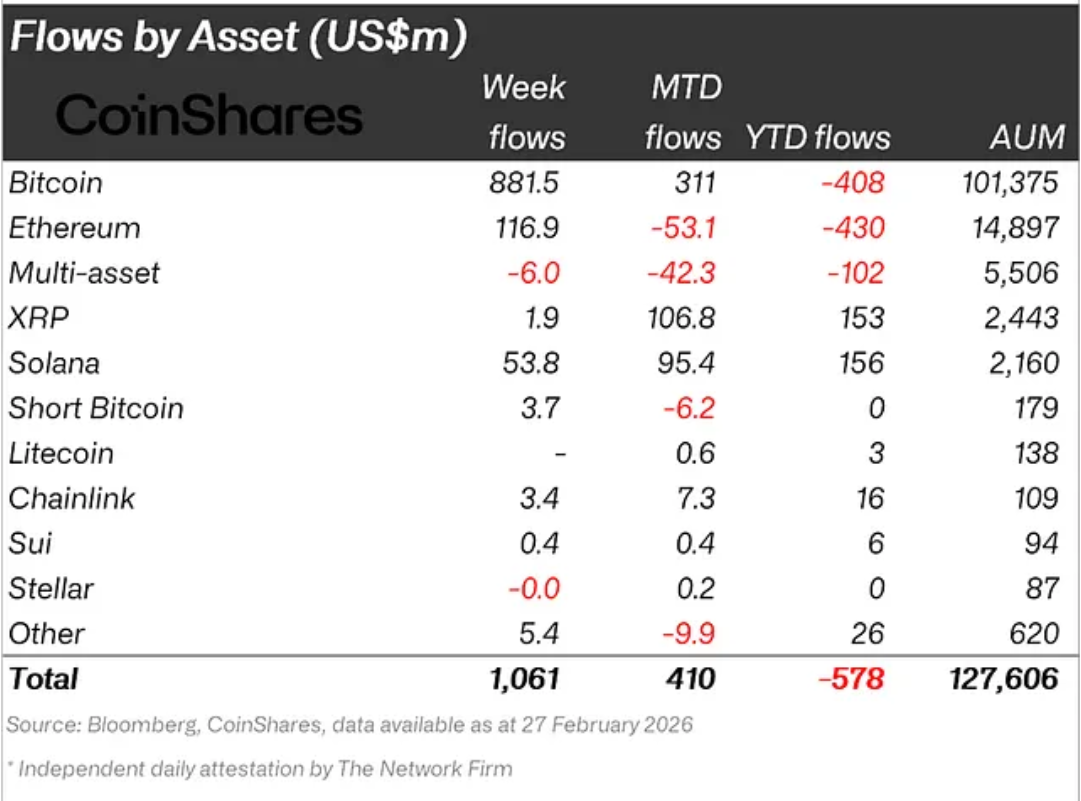
This shift suggests that large wallet holders are once again gaining confidence in Bitcoin, which could serve as a catalyst for a potential market recovery.
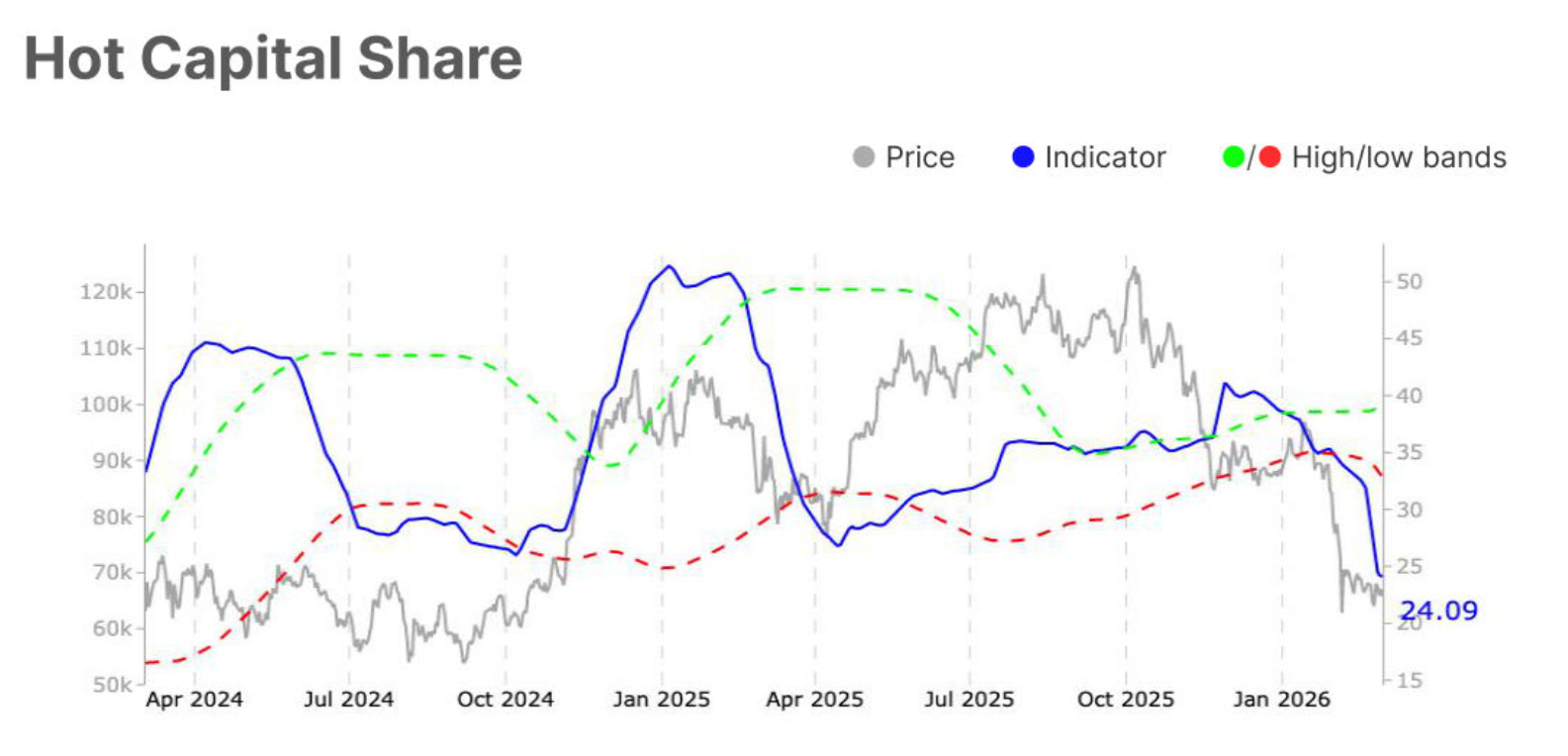
Bitcoin’s hot capital share has decreased significantly, dropping from 27.6% to 24.1%. This shift takes it further below the low statistical band of 32.8%. This decline suggests that speculative and fast-moving capital is retreating from Bitcoin, reducing near-term sell-side liquidity risks.
This development points to a more stable market environment for Bitcoin, with reduced volatility and less pressure on the sell-side. As speculative capital exits, Bitcoin could experience a calmer market backdrop, offering more stability for potential upward movements in the future.
$BTC Price Awaits Breakout
Bitcoin price has remained range-bound for the past month, trading between $70,000 and $65,000. The cryptocurrency needs to break out of this consolidation phase to start moving upwards. If Bitcoin can push beyond the current range and gain upward momentum, it could signal the end of the bearish streak and potentially mark the beginning of a recovery.
The institutional support and reduced sell-side liquidity risk are key factors that could drive Bitcoin’s price upward. If Bitcoin can secure $72,294 as a support level, it would validate the bullish shift and suggest the potential for further gains.
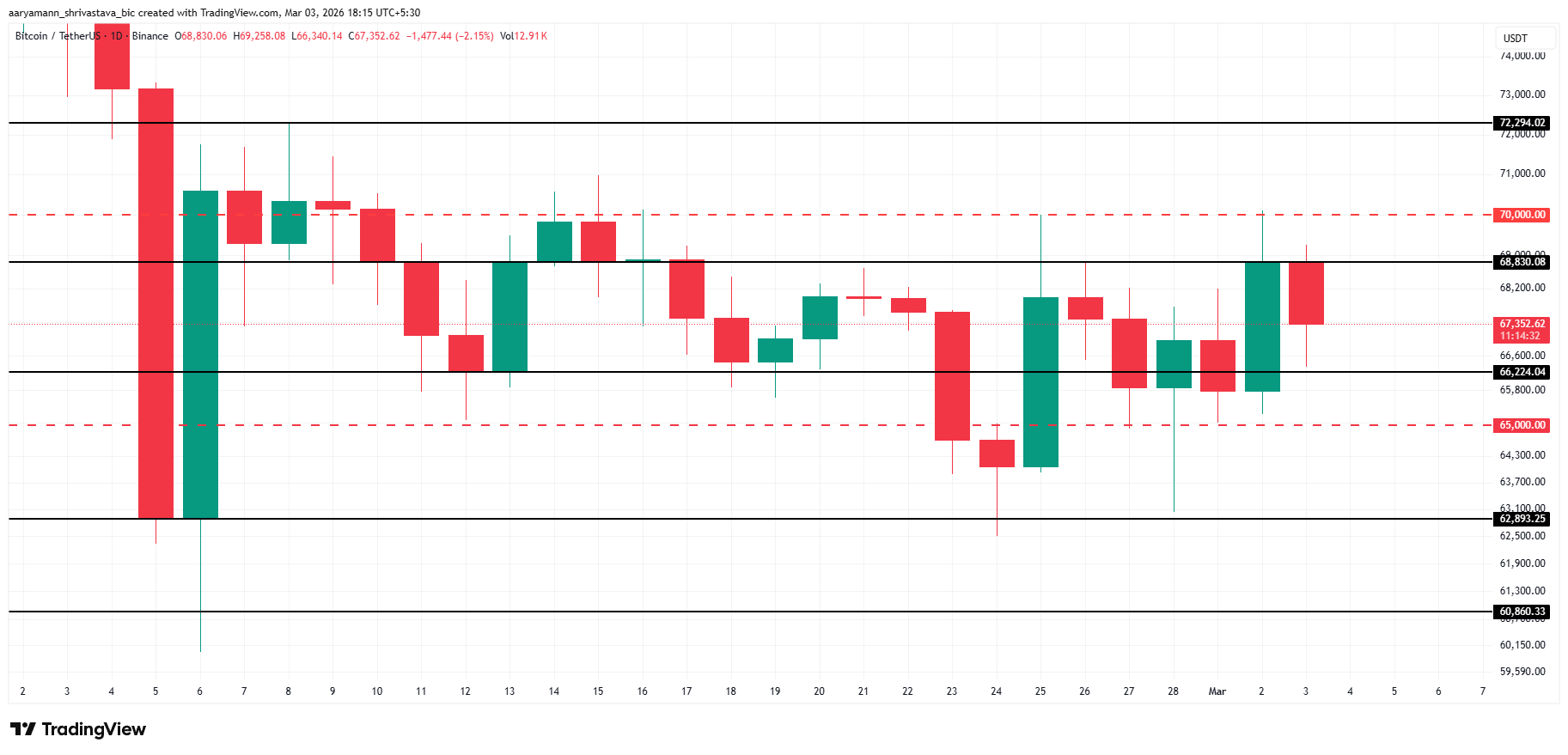
However, if geopolitical tensions escalate, Bitcoin may continue its consolidation and extend its bearish streak. This would invalidate any bullish predictions, prolonging the current stagnation for Bitcoin.
The post Bitcoin Breaks 7-Year Record with 5-Month Loss Streak – What’s Next for Price? appeared first on BeInCrypto.