
 coindesk.com
Bitcoin’s $BTC$68,541.73 violent selloff earlier this month may be giving way to a late-stage bear market phase, but investors shouldn’t expect a quick recovery, according to Vetle Lunde, head of research at K33.
"Current conditions closely resemble late September and mid November 2022, periods near the bear market bottom that were followed by extended consolidation," he wrote.
At that time, bitcoin languished between $15,000 and $20,000, some 70% below its 2021 peak.
Now, bitcoin has settled into a quieter range between $65,000 and $70,000, and K33 Research’s regime model — which combines derivatives data, ETF flows, technical signals and macro signals — suggests the market is approaching a cyclical trough.
The quiet grind
One of the signs of the quiet consolidation period is that trading activity has dropped markedly, with speculative excess thoroughly flushed out.
Spot volumes fell 59% week-over-week, the K33 report noted. Meanwhile, perpetual futures open interest slid to a four-month low, and funding rates remained negative across the board.
That kind of cool-off period is typical after heavy liquidation cascades as market participants digest losses and reset positioning, Lunde said.
Meanwhile, U.S.-listed bitcoin ETFs have seen a record peak-to-trough decline in exposure of 103,113 $BTC since early October. Even so, Lunde noted that, given $BTC has retraced nearly 50%, more than 90% of the peak exposure in bitcoin terms remains.
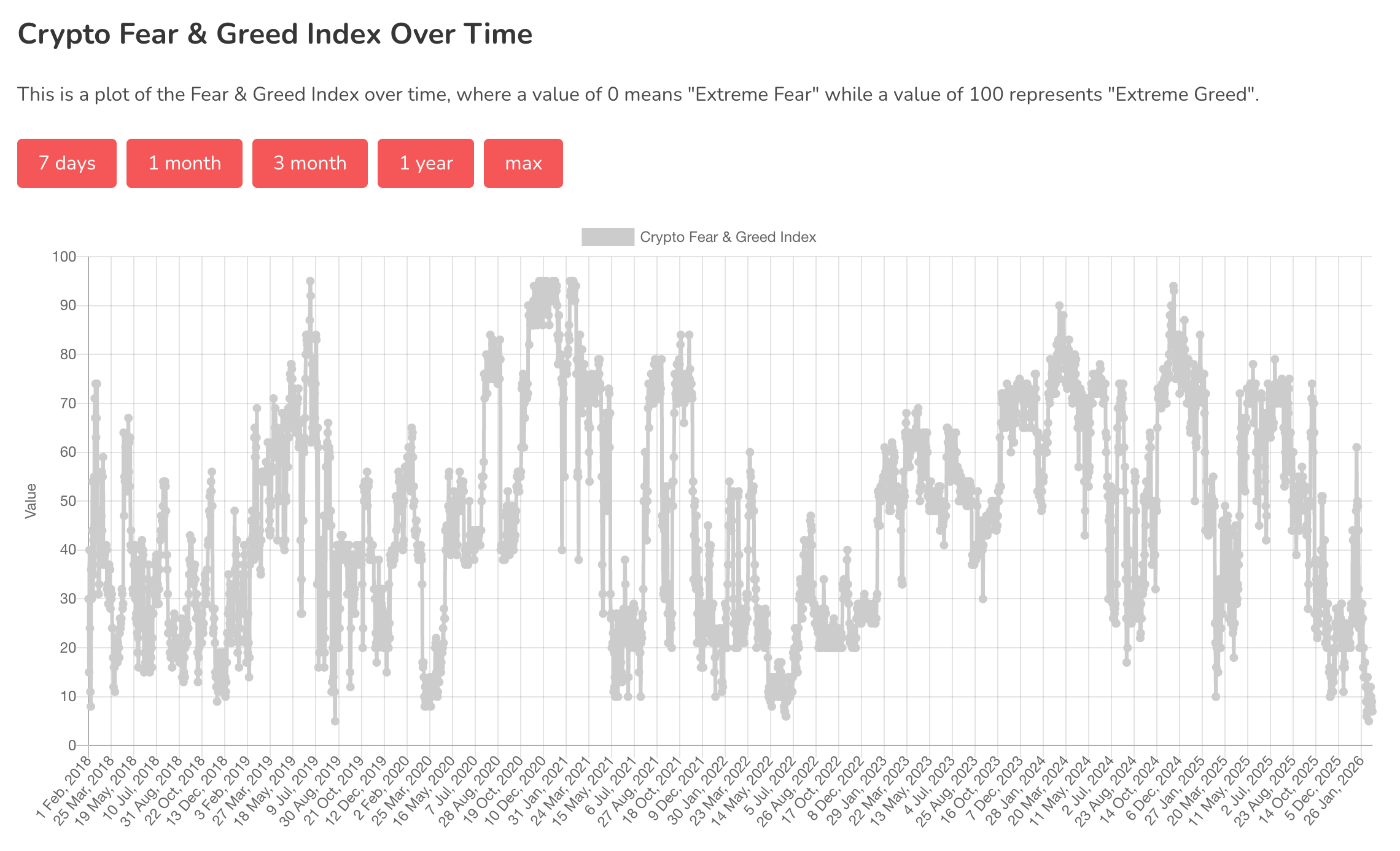
Sentiment gauges also paint a bleak picture, with the "Crypto Fear and Greed" Index plunging to an all-time low of 5 last week and languishing below 10 for most of this past week.
Long-term value area
What does this all mean? Bitcoin is "likely near, or at, a global bottom but set for a prolonged consolidation between $60,000 and $75,000," according to Lunde. Similar historical regimes have delivered muted returns
Still, for investors with a long-term view, the current levels are attractive for accumulation, though patience may be required, he argued.
James Check, an onchain analyst and co-founder of Checkonchain, also noted that bitcoin's sideways periods are an opportunity for positioning.
He said that bitcoin, most of the time, "does nothing," and then tends to move in sharp repricing bursts rather than steady trends. Those explosive phases are often concentrated in a handful of trading days, frequently early in a bull cycle and again toward the later stages.
"It does nothing most of the time, and then sometimes it goes up 100% in a quarter, and if you're not there for that quarter, you kind of miss the whole run."
He cautioned investors against trying to perfectly time tops and bottoms as they often miss the initial surge.
In other words, prolonged consolidation may feel frustrating, but historically the market has rewarded patient positioning rather than nailing the timing.