
 beincrypto.com

Bitcoin price action cooled after failing to secure a sustained breakout above $100,000 in January. The rejection triggered short-term profit-taking and pushed $BTC into a consolidation phase.
Since then, price behavior has shifted toward stabilization rather than aggressive selling. On-chain and macro indicators now suggest improving conditions. Investor positioning points to a cautiously bullish setup for February.
Bitcoin Profit Booking Highlights a Pattern
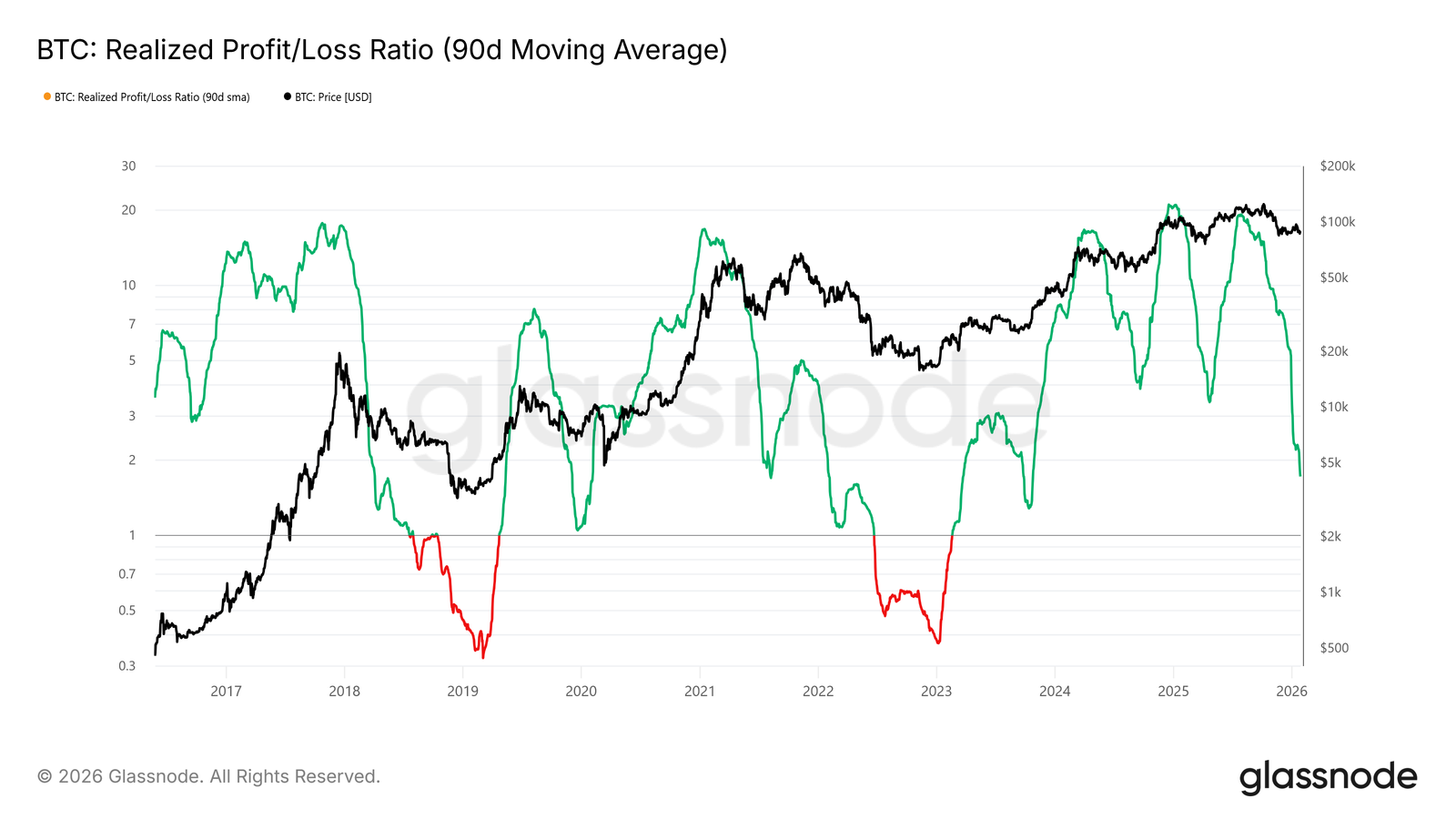
A meaningful transition into a sustained Bitcoin rally must be reflected in liquidity-sensitive indicators. One of the most important metrics is the Realized Profit/Loss Ratio based on the 90-day simple moving average. Historically, strong upside phases only emerged once this ratio rose above the 5.0 threshold.
Past mid-cycle recoveries over the last two years followed the same structure. When the ratio failed to hold above this level, rallies quickly lost momentum. A renewed move above 5.0 would indicate fresh capital entering the market. It would also suggest that profit-taking is being absorbed by new demand rather than suppressing price.
Want more token insights like this? Sign up for Editor Harsh Notariya’s Daily Crypto Newsletter here.
Federal Reserve’s Decision Could Impact Price
Macro conditions remain supportive following the Federal Reserve’s latest policy decision. The Fed left interest rates unchanged at its first meeting of the year. Chair Jerome Powell described rates as sitting within a “neutral range.” This statement signals a potential extended pause rather than renewed tightening.
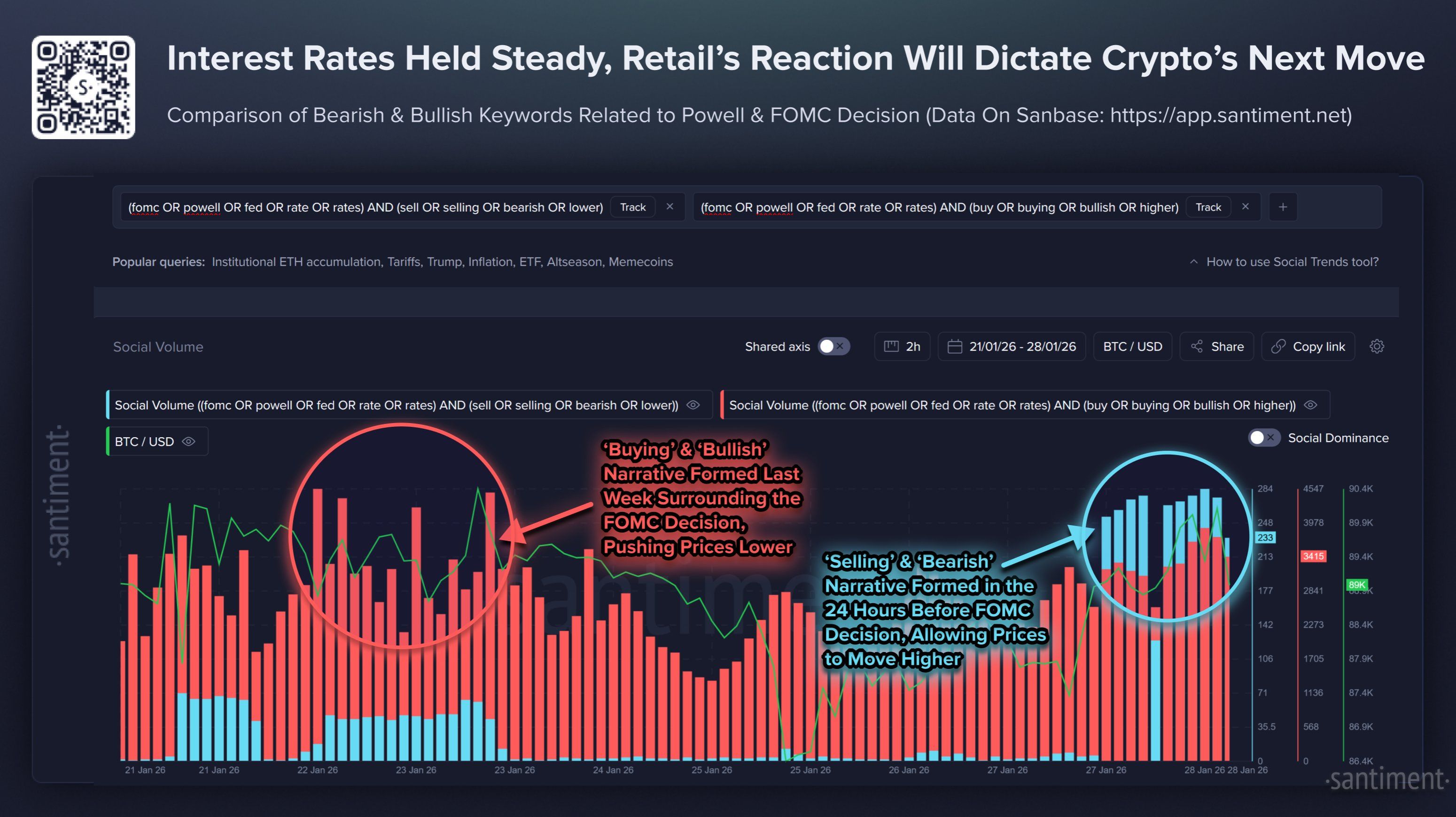
Market psychology further reinforces this backdrop. According to Santiment data, extreme sentiment often coincides with inflection points. Bullish and greedy sentiment tends to appear near market tops. Bearish and fearful sentiment has historically preceded rebounds. Current sentiment remains cautious, which often favors gradual upside continuation.
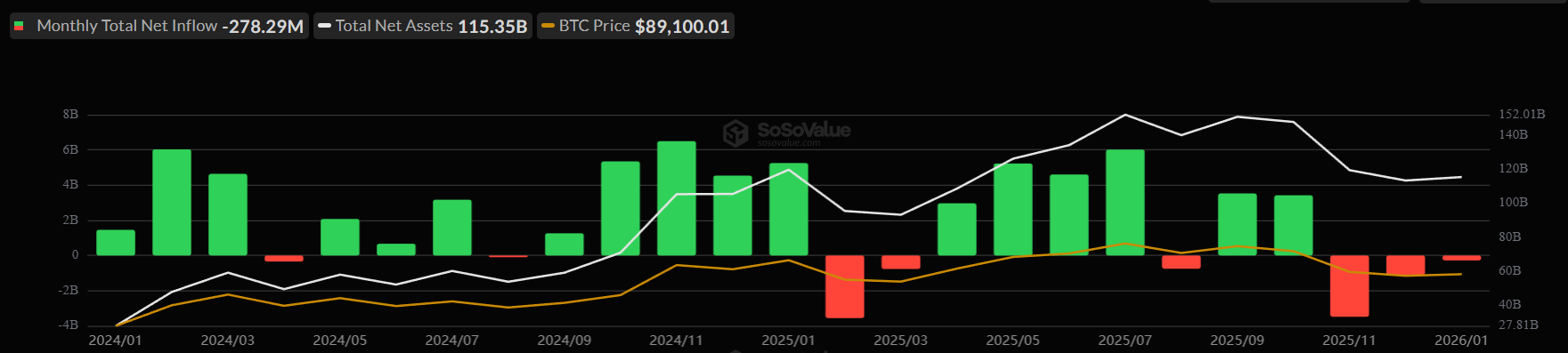
Spot Bitcoin ETFs could become a decisive factor in February. Over the last three months, these products recorded persistent net outflows. In November 2025, ETFs saw $3.48 billion exit the market. December followed with an additional $1.09 billion in outflows.
January 2026 showed a notable slowdown, with outflows reduced to $278 million. This deceleration suggests institutional selling pressure is weakening. If flows turn positive in February, ETF demand could reinforce market stability. Renewed inflows would provide structural support and improve upside probability.
$BTC Price Has An Ambitious Target
From a technical perspective, the Bitcoin price continues to trade within an ascending broadening wedge. Price recently rebounded from the lower boundary of this structure. Bitcoin is currently changing hands near $88,321. Bulls must clear $89,241 and reclaim the psychological $90,000 level. Acceptance above $90,000 would confirm strengthening momentum.
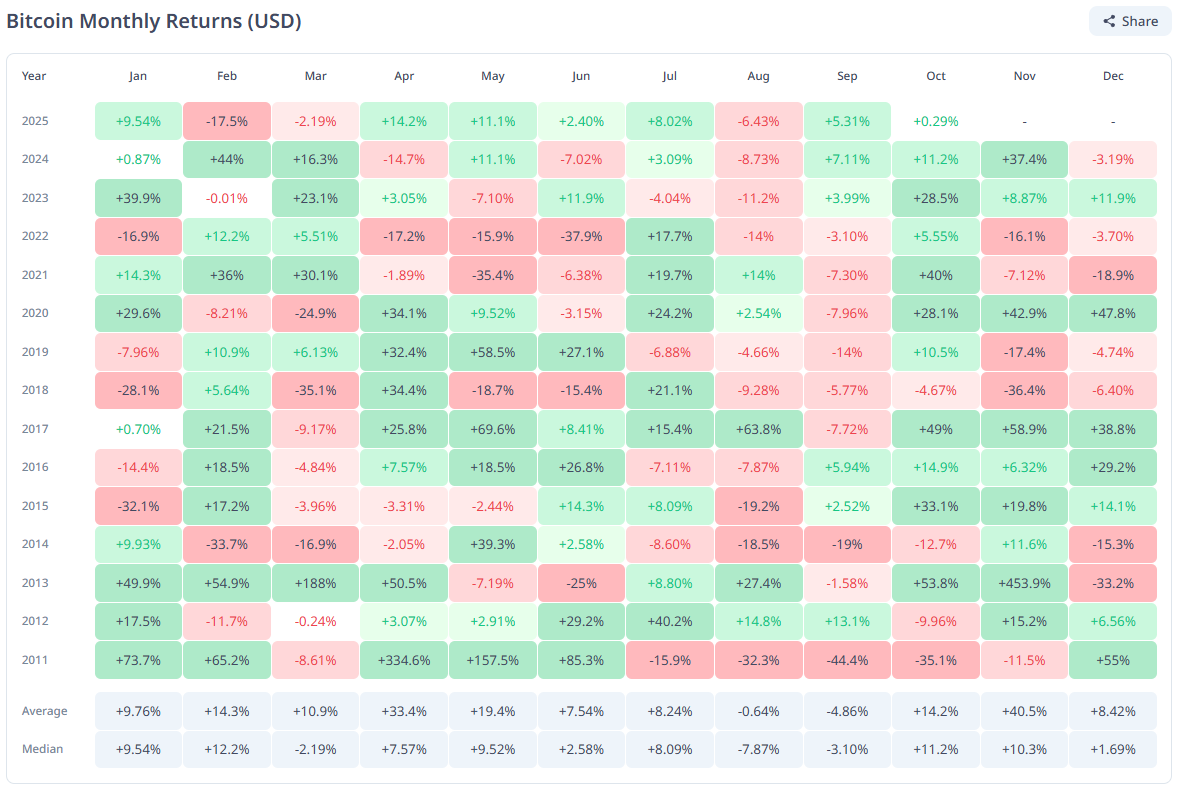
February has always been a bullish month for Bitcoin price, with historical average returns sitting at 14.3%. The above-mentioned factors present a similar bullish outlook for $BTC, which suggests a 14% rise would send $BTC to $101,000.
A confirmed breakout from the wedge would open the door to higher objectives. The first major upside target sits near $98,000. Reaching that level would likely be followed by a controlled pullback toward $95,000. This consolidation zone would be critical for establishing durable support. Such a structure often precedes larger continuation moves.
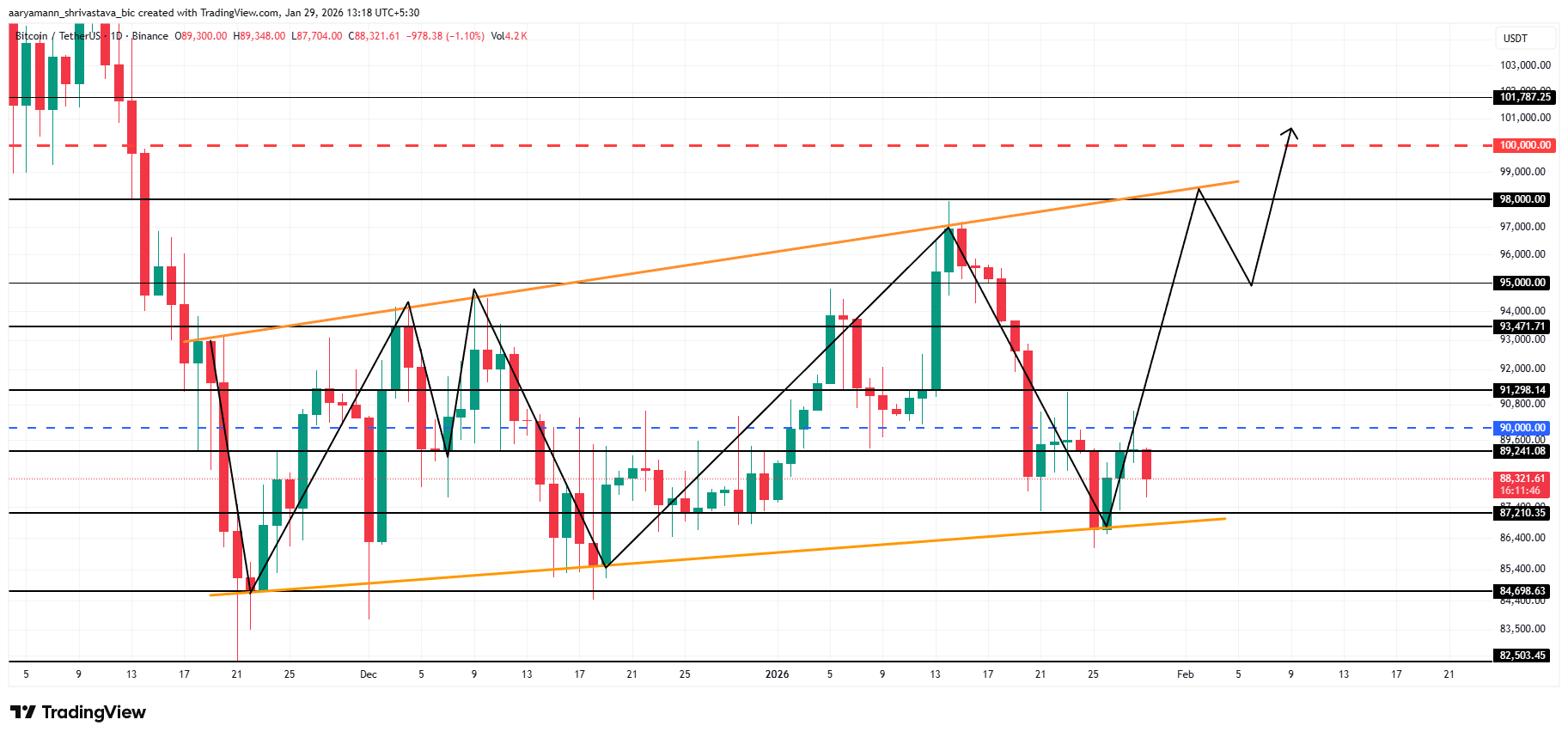
Downside risk remains a key consideration. If selling pressure returns or macro conditions deteriorate, Bitcoin could fail to hold current levels. A breakdown below $87,210 would increase downside exposure. In that scenario, a retracement toward $84,698 becomes likely. Such a move would invalidate the bullish setup and delay the breakout thesis.
The post Bitcoin Price Prediction: What To Expect From $BTC In February 2026? appeared first on BeInCrypto.