
 en.cryptonomist.ch
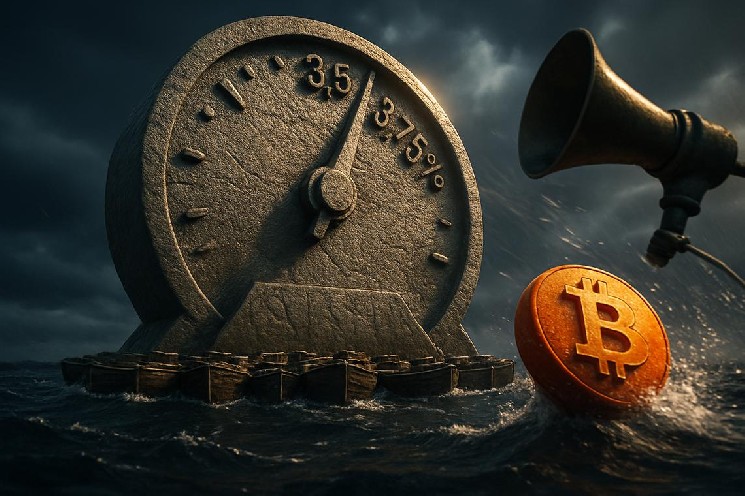
Traders across crypto and equity markets are positioning for Wednesday’s closely watched federal reserve decision on interest rates, with bitcoin particularly sensitive to the outcome.
Summary
Fed set to hold rates as markets price in a pause
The Federal Reserve will unveil its latest rate call on Wednesday, January 28, after three consecutive quarter-point cuts. Markets overwhelmingly expect the central bank to pause with the target range unchanged at 3.5%–3.75%.
As of Friday, CME FedWatch futures implied a 96% probability that rates remain on hold. Moreover, prediction platform Polymarket put the odds even higher at 99.3%, leaving less than a 1% chance of any surprise move.
This pause follows a series of easing steps that lowered borrowing costs from previous highs. However, traders are now focused less on the current level and more on how policymakers describe the path for the rest of 2026 and into 2027.
Powell’s message: hawkish or dovish pause for bitcoin
For risk assets such as bitcoin and U.S. stocks, Chairman Jerome Powell‘s remarks may matter more than the statement itself. His post-meeting comments will shape expectations for how long the Fed stays at 3.5%–3.75% and when cuts might resume.
Some participants expect policymakers to keep language about “considering the range and timing for further adjustments.” That phrasing would preserve options for future cuts, supporting the idea of a tentative, potentially dovish pause rather than the end of the easing cycle.
A more hawkish tone would emphasize inflation risks and strong activity data. That said, such an approach could dampen fed rate expectations, push Treasury yields higher and weigh on bitcoin, which tends to struggle when real yields and the dollar rise.
By contrast, if Powell signals that rate reductions could restart in the coming months, traders would likely interpret the move as a friendly backdrop for risk. A convincing dovish pause could lift both bitcoin and equities, particularly if the Fed stresses concerns about growth.
Dissent inside the Fed and outlook for 2026–2027
Internal debate will also be in focus. Stephen Miran, a Trump appointee to the Board, is widely expected to dissent in favor of a 50-basis-point cut. His stance underscores a minority view that policy remains too tight and that faster easing is warranted.
More than one dissent would amplify the signal that some officials want a steeper cutting path. Moreover, a cluster of dissenters would likely be interpreted as a sign that the current fed interest rate pause could be short-lived, encouraging buyers of bonds and high-beta assets.
Most economists anticipate one or two additional cuts over the balance of 2026. However, a few institutions stand apart, arguing there may be no further moves this year followed by a possible hike in 2027. The recent trio of quarter-point reductions already marked a material shift from the prior tightening cycle.
In public remarks, Minneapolis Fed President Neel Kashkari recently argued it is “way too soon” to cut again. His comments bolster the case for holding policy steady, even as markets search for clues on when the next move will come.
Trump’s housing agenda complicates Powell’s message
Beyond the rate call, politics and housing policy will shape the jerome powell press conference. President Donald Trump unveiled a plan for the government to purchase $200 billion in mortgage bonds, promising lower mortgage rates and monthly payments for households.
Trump also signed an executive order aimed at large institutional investors that limits their ability to acquire single-family homes. However, analysts warn that curbing institutional buying while pumping demand through cheaper financing could add upward pressure to already elevated home prices.
Some investment managers argue that massive mortgage bond purchases risk pulling forward demand. They say the plan may primarily benefit existing homeowners via higher valuations rather than improving affordability for new buyers in 2026.
Powell will have to explain how the Fed’s stance interacts with these fiscal and housing measures. Moreover, if he frames the unchanged rate as consistent with robust demand and a tight labor market, that could reinforce a stronger U.S. dollar, a backdrop that has historically been challenging for bitcoin.
Inflation, tariffs and political pressure on the Fed
Trump’s tariff program already influences the inflation outlook. Markets expect delayed price effects through 2026 as higher import costs filter to consumers. However, Powell may choose to downplay those risks if incoming data remain mixed.
The chairman may also be asked about a Justice Department investigation referenced by critics. Trump has repeatedly attacked him for not cutting rates faster, while Powell has described the probe as political vengeance, raising questions about institutional independence.
This political backdrop adds another layer of uncertainty for investors trying to interpret the current federal reserve decision as either a one-off pause or part of a defined strategy for the next two years.
Dollar–yen intervention risk and bitcoin’s reaction
Currency markets represent a second major theme around this meeting. Reports suggest the Fed could coordinate yen dollar intervention with Japanese authorities in response to persistent yen weakness and elevated Japanese bond yields.
The New York Fed has already conducted rate checks, a step often taken ahead of joint operations. In a coordinated move, authorities would likely sell dollars and buy yen, aiming to stabilize the exchange rate and relieve pressure on Japan’s financial system.
Solo yen-support interventions in 2022 and 2024 had limited impact, but historically, combined actions with the U.S. have proved more effective. That said, pairing foreign-exchange measures with a major policy meeting could complicate market reactions and create short-term volatility for multiple asset classes.
Bitcoin has shown sensitivity to currency swings over the years. The cryptocurrency tends to move inversely to the U.S. dollar while often displaying a positive relationship with the yen. A Bank of Japan rate hike in August 2024 strengthened the yen and coincided with a notable bitcoin downturn, highlighting this linkage.
What it means for bitcoin traders
For digital asset markets, the combination of the federal reserve decision, potential currency intervention and U.S. political pressure creates a complex backdrop. Traders must assess not only the policy statement but also subtle cues from Powell’s language and any signals about international coordination.
Moreover, shifts in the bitcoin dollar correlation could emerge if the Fed’s communication surprises markets on growth, inflation or intervention plans. In the near term, volatility around Wednesday’s announcement is likely to remain elevated as participants recalibrate positions.
In summary, with rates expected to hold at 3.5%–3.75%, the real story for bitcoin will hinge on forward guidance, the strength of the dollar and any follow-through on U.S.–Japan coordination in foreign-exchange markets.