
 u.today
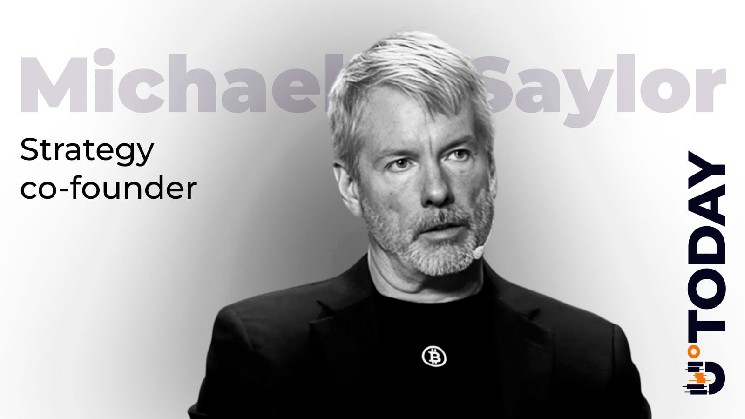
In a recent social media post, Strategy CEO Michael Saylor has identified protocol mutability (specifically, the push for complex new features ) as the "greatest risk" facing Bitcoin.
The provocative social media implies that"ambitious opportunists advocating protocol changes" could potentially undermine the main value proposition of the world's flagship cryptocurrency, which is immutability.
Targeting activist Bitcoiners
The co-founder of the leading BTC treasury firm specifically took aim at a growing faction of developers and "activist" Bitcoiners who advocate for ambitious changes.
He is likely referring to controversial upgrades like BIP110, which is meant to aggressively limit arbitrary data storage.
The proposal was authored pseudonymous developer named Dathon Ohm in late 2025. It is widely viewed as a proxy war for Luke Dashjr’s long-standing "anti-spam" philosophy. The main software implementing BIP-110 is Bitcoin Knots, which is the client maintained by the controversial Bitcoin developer.
The soft fork has so far gained support from more than 2% of all of the Bitcoin nodes.
The tension between the two escalated in 2024–2025, surrounding MicroStrategy’s launch of "MicroStrategy Orange," a decentralized identity protocol built directly on Bitcoin using Inscriptions
Saylor has defended the right of users to inscribe data (JPEGs, IDs, text) on Bitcoin as long as they pay the required fees.
Dashir labeled Inscriptions and Ordinals as an "attack" on Bitcoin. He has advocated for strict code updates.
"Nobody in the Knots/BIP-110 is an opportunist, because none of us make any money from reckless protocol development. We simply want to keep our savings safe and preserve Bitcoin as sound money for future generations," a proponent of Dashir wrote in response to Saylor's latest social media post.
There are also those who explicitly advocate for ossification. "Stop changing Bitcoin. It isn't broken," Manna founder Adam Simecka said.