In December 2025, the Bitcoin Policy Institute, a non-profit policy advocacy organization, sounded the alarm on the lack of a de minimis tax exemption for small Bitcoin transactions.
The lack of a de minimis tax exemption means that every time $BTC is transferred to another party for payment, it is subject to taxes, hindering its use as a medium of exchange.
US lawmakers are considering limiting the de minimis tax exemption to overcollateralized dollar-pegged stablecoins, which are tokenized US dollars, backed 1:1 by fiat cash deposits or short-term government securities, which sparked backlash from Bitcoiners.
The Bitcoin community reacts to the lack of de minimis exemptions for $BTC
In July 2025, Wyoming Senator Cynthia Lummis, an ally of the crypto industry, introduced a bill proposing a de minimis tax exemption on digital asset transactions of $300 or less.
The bill placed a $5,000 annual limit on exemptions and also included provisions to exempt cryptocurrencies used for charitable donations.
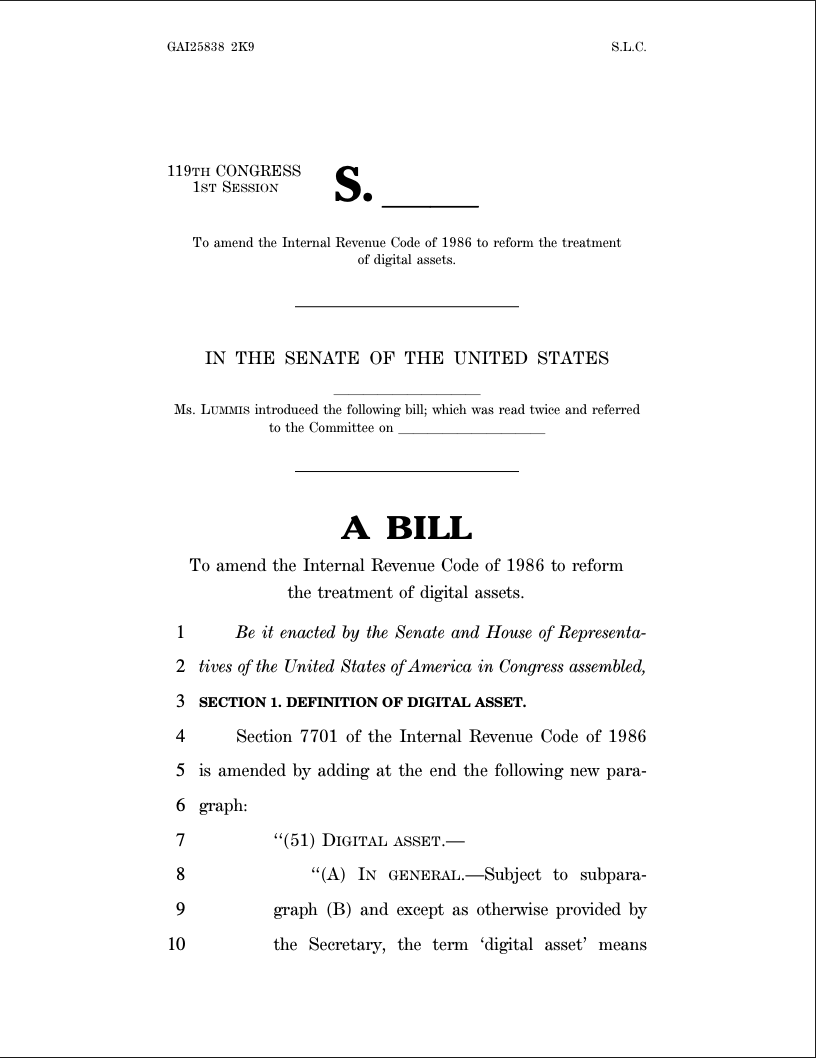
Senator Cynthia Lummis’ bill proposal for crypto tax exemptions. Source: Senator Cynthia Lummis
Lummis’ bill proposed deferring income from staking crypto to secure proof-of-stake blockchain networks or income earned from mining proof-of-work cryptocurrencies until those assets were sold.
Jack Dorsey, the founder of payments company Square, which integrated Bitcoin payments into its point-of-sale systems in October, called for a tax exemption on small $BTC transactions.
“We want $BTC to be everyday money ASAP,” Dorsey said. Meanwhile, others like Bitcoin advocate and co-founder of the Truth for the Commoner (TFTC) media outlet, Marty Bent, said the proposed tax exemption for stablecoins is “nonsensical.”

 cointelegraph.com