A little history behind Casascius coins
Casacius coins are physical metal coins or bars created by Utah-based entrepreneur Mike Caldwell, which were minted between 2011 and 2013.
Caldwell would take Bitcoin and mint it into physical coins, and they are considered one of the most sought-after physical collectibles related to Bitcoin.
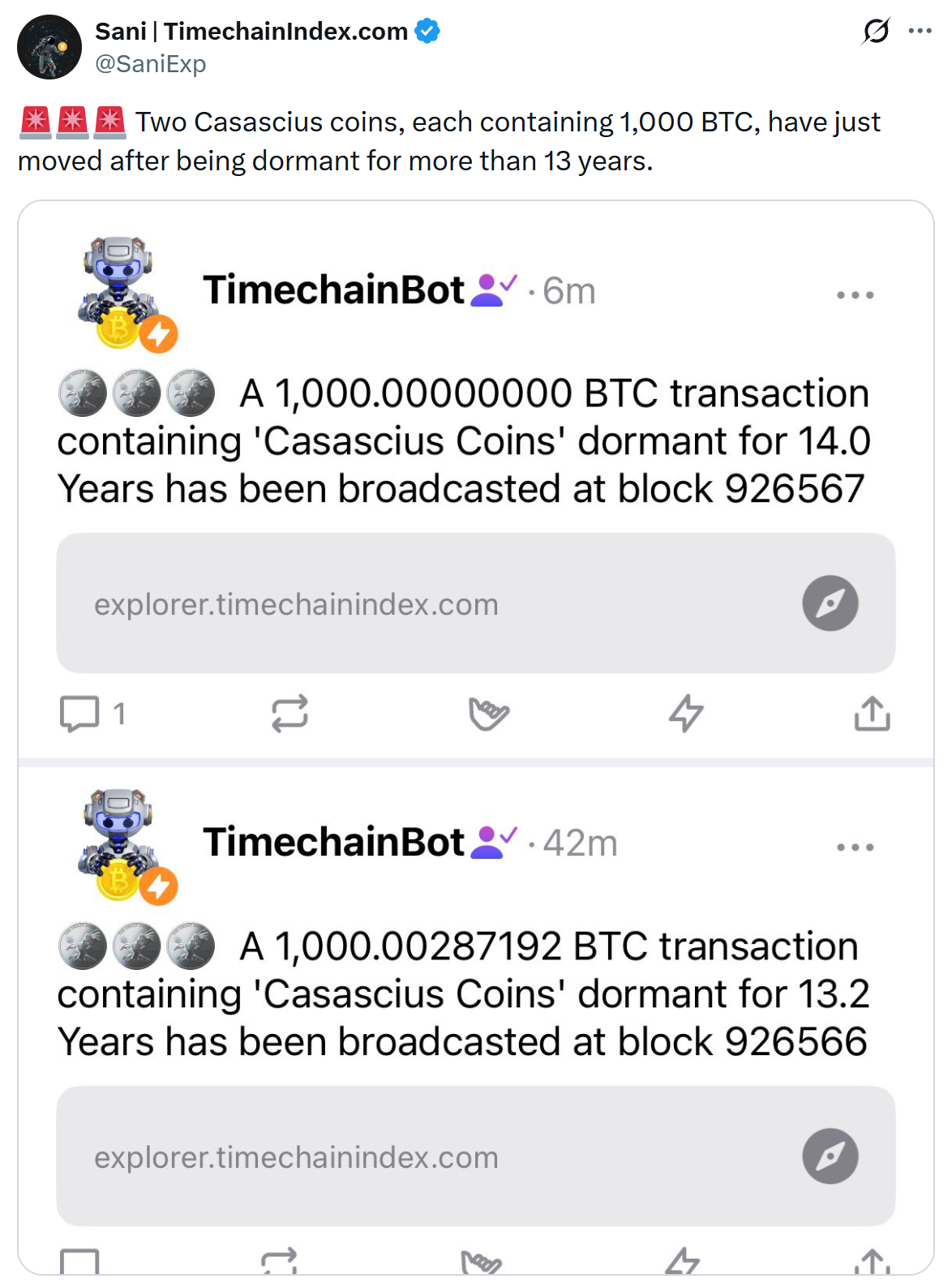
Source: Sani
Each Casacius coin contains an embedded piece of paper with a digital Bitcoin value and is covered in a tamper-resistant hologram. The coins and bars ranged from 1, 5, 10, 25, 100, 500 and 1,000 $BTC denominations.
However, Caldwell suspended his business after receiving a letter from FinCEN, over concerns that he may have been operating a money transmitter business without a license.
How do Casacius coins work
Only 16 of the 1,000 $BTC bars and 6 of the 1,000 $BTC coins were ever made, according to some records.
The first person to redeem the private key by lifting the holographic sticker will receive the full value of the coin; after this, the coin will no longer have any Bitcoin value.
However, redeeming a Casascius coin for its equivalent in Bitcoin doesn’t necessarily mean that a bunch of Bitcoin is about to flood the market.
In July, a 100 Bitcoin Casascius coin owner, “John Galt,” who had moved his stash from a physical coin to a hardware wallet, told Cointelegraph that he did so because his funds would be more easily accessible. He had no immediate plans to cash out.
“Having 100 $BTC is life-changing for anyone. But the thing is, I’ve had it for so long that this was more about staying safe than suddenly getting rich,” he said.

 cointelegraph.com