
 beincrypto.com

Bitcoin slipped under $90,000 this week as liquidation pressure, weak ETF demand, and macro uncertainty converged.
The fall erased gains from earlier attempts to reclaim the $94,000–$95,000 zone, marking the second major breakdown this month.
Forced Liquidations Across the Market
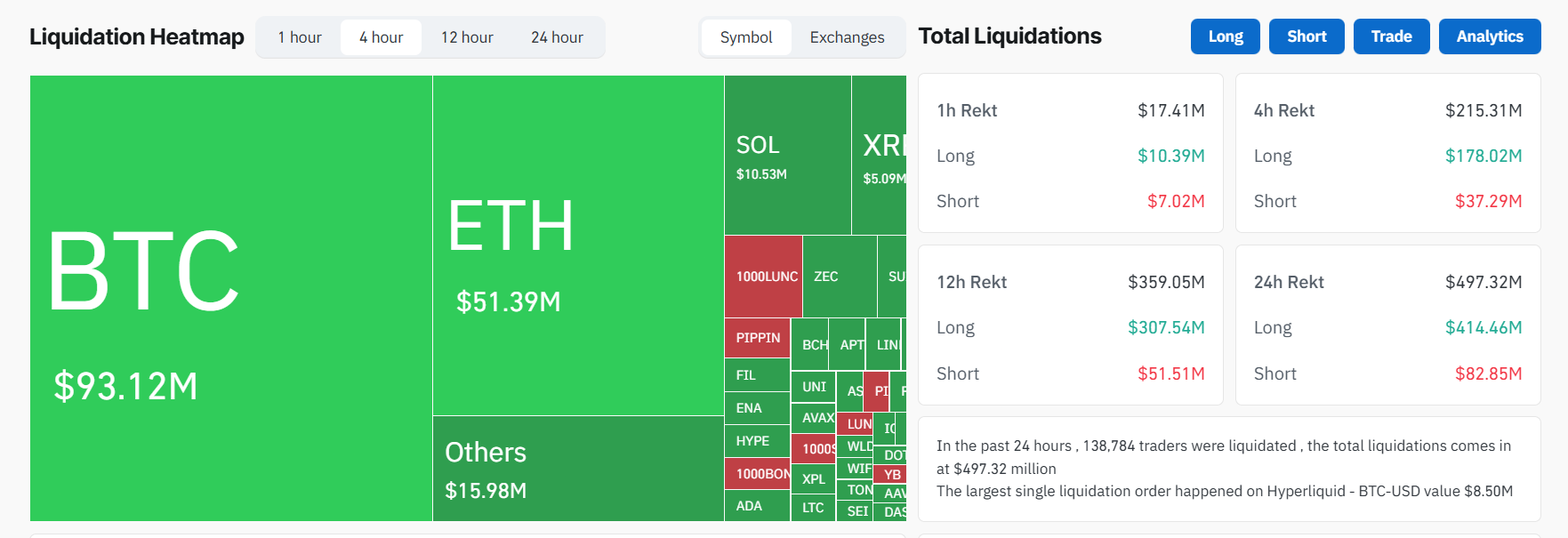
The catalyst was a cascade of forced long liquidations. Nearly $500 million was wiped out across exchanges, including around $420 million in long positions, and over 140,000 traders were liquidated in a 24-hour window.
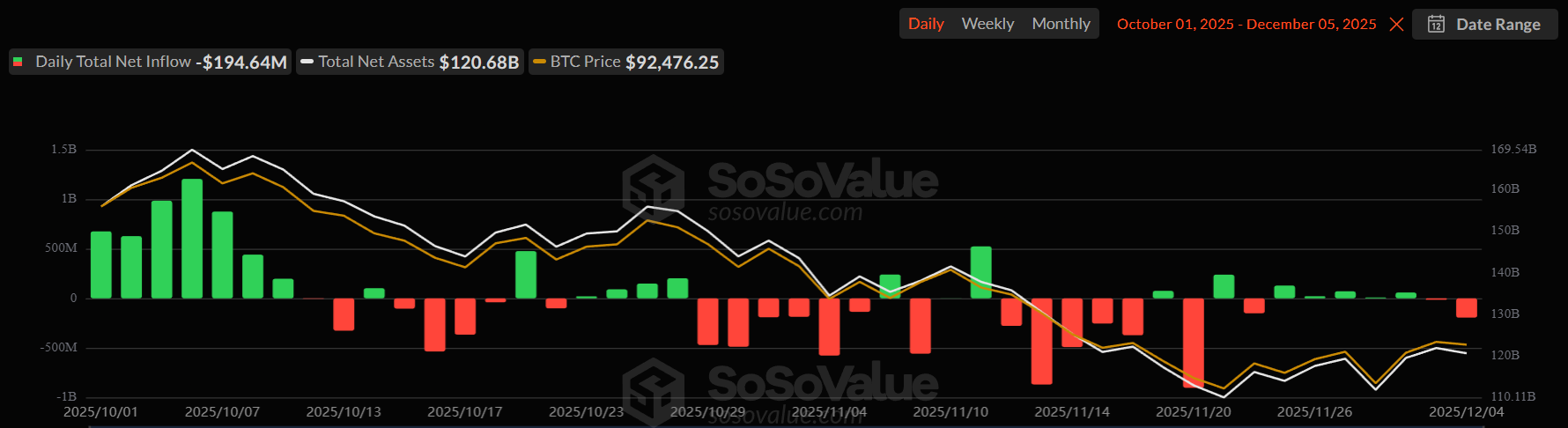
ETF flows failed to absorb the selling. BlackRock’s iShares Bitcoin Trust recorded six straight weeks of outflows totaling more than $2.8 billion.
US ETF inflows fell to just $59 million on December 3, signalling fading appetite from institutions.
Macro Pressure Added Fuel to the Drop
The macro backdrop turned hostile. The Bank of Japan signaled a possible rate hike, threatening the carry-trade liquidity that helped sustain global risk assets.
Traders also derisked ahead of the US PCE inflation release, forcing Bitcoin into a cautious $91,000–$95,000 holding pattern.
BREAKING: Bitcoin pumped $1500 on the lower than expected PCE data. But then it crashed -$3500 in 60 minutes.
— Bull Theory (@BullTheoryio) December 5, 2025
This wiped out $155 million worth of long positions in last 1 hour.
There is no negative news or sudden FUD which could cause this type of sudden dump.
It appears that… pic.twitter.com/G3twQw0Yud
The latest US PCE data arrived broadly in line with expectations, showing cooling core inflation but still above the Federal Reserve’s target.
Markets reacted cautiously, interpreting the print as evidence that inflation continues to ease, but not fast enough to guarantee rapid rate cuts.
Corporate signals amplified the fear. MicroStrategy warned it may sell Bitcoin if its treasury-valuation ratio weakens, triggering a 10% decline in its stock.
Miner stress increased as energy costs rose, hashrate fell, and high-cost operators began liquidating $BTC to remain solvent.
On-chain flows reflected split sentiment. Matrixport moved more than 3,800 $BTC off Binance into cold storage, suggesting accumulation among long-term holders.
However, analysts estimate that a quarter of all circulating supply remains underwater at current prices.
Matrixport has withdrawn 3,805 $BTC($352.5M) from #Binance over the past 24 hours.https://t.co/GLzqCvlogX pic.twitter.com/54whKSsISy
— Lookonchain (@lookonchain) December 5, 2025
Community Sentiment Shows Fear — With Pockets of Optimism
Traders on social platforms debated whether the move was natural or manipulated. Market analysts largely blamed excess leverage, thin liquidity, and macro-hedging rather than coordinated price intervention.
Others pointed to long-term optimism, citing JPMorgan’s fresh $170,000 price model for 2026.
Bitcoin now trades near a critical pivot. Liquidation clusters between $90K and $86K leave the market vulnerable without renewed ETF inflows or easing macro pressure.
A move back above $96,000–$106,000 is needed to confirm recovery momentum.
For now, volatility rules the tape. Bitcoin has fallen, rebounded, and broken again — and traders are watching for the next decisive move.
The post Why Did Bitcoin Drop Below $90,000 Again? A Breakdown of the Latest Sell-Off appeared first on BeInCrypto.