
 worldcoinindex.com
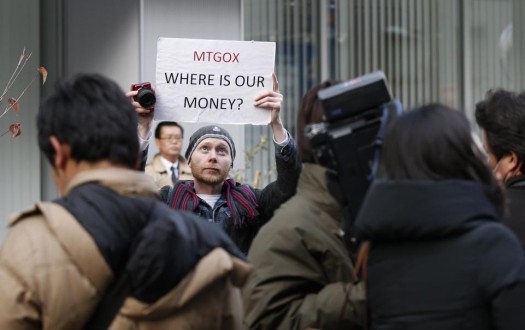
Mt. Gox has once again postponed its long-awaited creditor repayments, securing court approval to shift the completion deadline from October 31, 2025, to October 31, 2026. The extension effectively diffuses near-term sell pressure that many feared could hit the Bitcoin market, transforming what might have been a sharp liquidity event into another year-long administrative cycle.
According to the latest notice, the delay was attributed to incomplete creditor procedures and technical issues in processing claims for base, early lump-sum, and intermediate repayments. The extension pushes an expected supply overhang—estimated around 34,700 BTC—further out on the calendar, giving markets more time to absorb the impact.
Rather than a flood, the eventual Bitcoin distribution is now expected to trickle through exchanges, custodians, and OTC venues in phased releases. Past repayment phases showed that the actual conversion and sale process could span months. Historical data suggests processing windows of roughly 90 days at Kraken, 60 days at Bitstamp, and 20 days at BitGo, meaning even when funds are released, the market impact will remain gradual.
The deferral arrives at a time when institutional demand appears capable of offsetting the entire Mt. Gox inventory. Since their debut, Bitcoin ETFs have attracted nearly $62 billion in cumulative inflows, including $4.2 billion in October alone—roughly equivalent to 36,000 BTC, or the remaining Mt. Gox stack.
Meanwhile, liquidity depth continues to grow. CME Group recorded record crypto futures and options open interest of $39 billion in September, expanding the capacity of dealers and arbitrage desks to manage large spot inflows through hedging and cross-venue trading.
Adding to the structural cushion, BlackRock’s IBIT ETF alone now manages $89 billion in Bitcoin, dwarfing the Mt. Gox estate several times over. This ecosystem of ETFs, futures, and custodial channels provides new absorption mechanisms that didn’t exist when the exchange first collapsed a decade ago.
Beyond Mt. Gox, miners currently produce around 450 BTC per day, or 164,250 BTC per year, following the April 2024 halving—more than four times the total unreleased Mt. Gox holdings. This gives additional context to the size of the pending supply compared to routine market issuance.
Still, the extended timeline shifts the overhang narrative into 2026, intersecting with tax and rebalancing windows in the U.S., U.K., and Japan. These periods, along with CME expiry clusters and potential Bank of Japan rate adjustments, could influence when and how creditors choose to sell.
Scenario modeling suggests that if 25–80% of the Mt. Gox BTC were sold through 2026, the dollar impact could range from $1 billion to $3.2 billion—comparable to a week of ETF inflows rather than a destabilizing shock.
The new repayment deadline of October 31, 2026, transforms a long-standing Bitcoin risk into a slowly unfolding story. The supply risk remains, but now it’s stretched across a much longer and more liquid market structure—one increasingly dominated by institutional buffers capable of absorbing it in stride.