en.coinotag.com

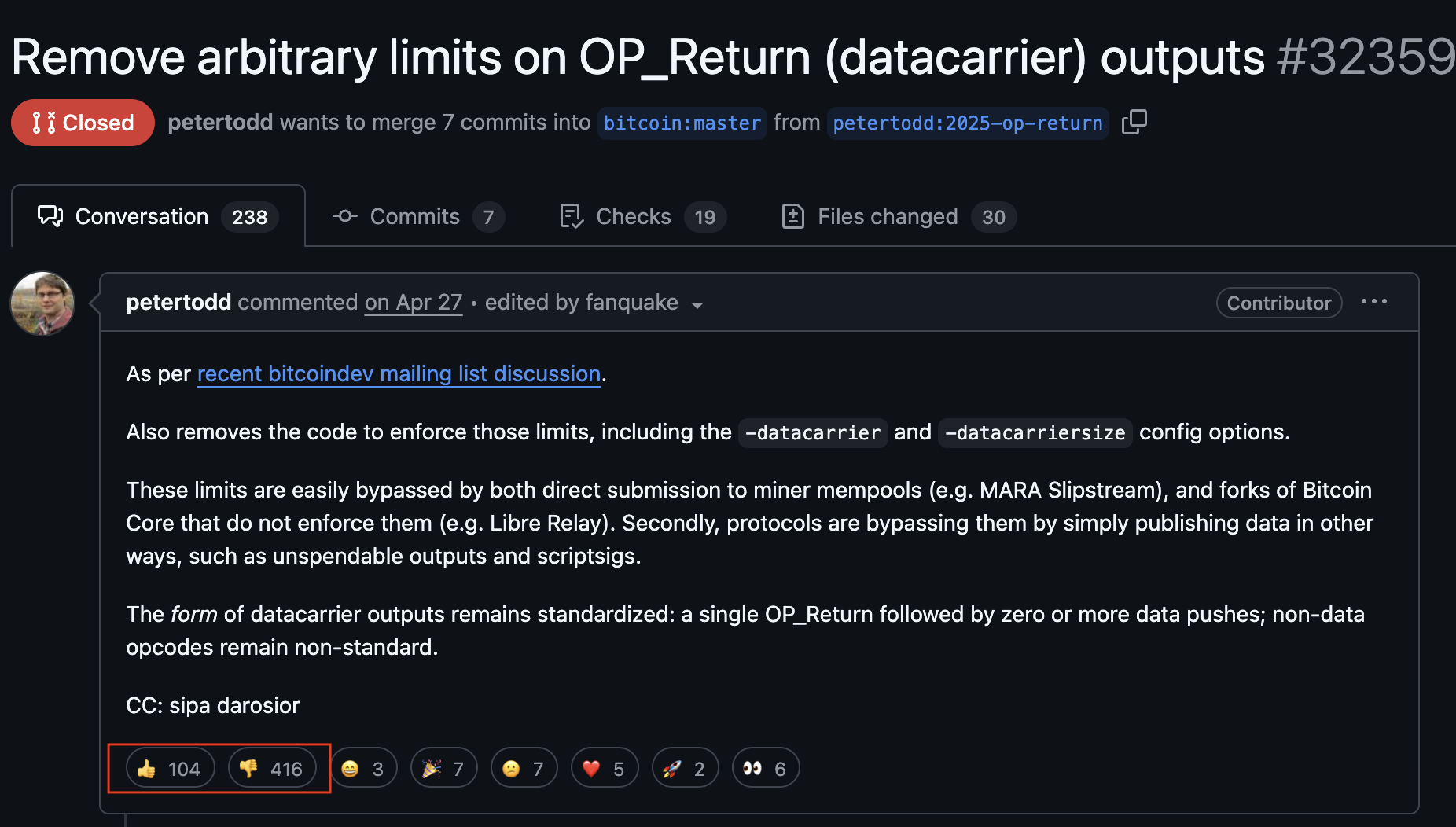
The OP_Return limit removal in Bitcoin Core 30 allows larger non-monetary data on-chain and has sparked widespread community backlash, driving many node runners to Bitcoin Knots to enforce stricter data limits and protect decentralization concerns.
-
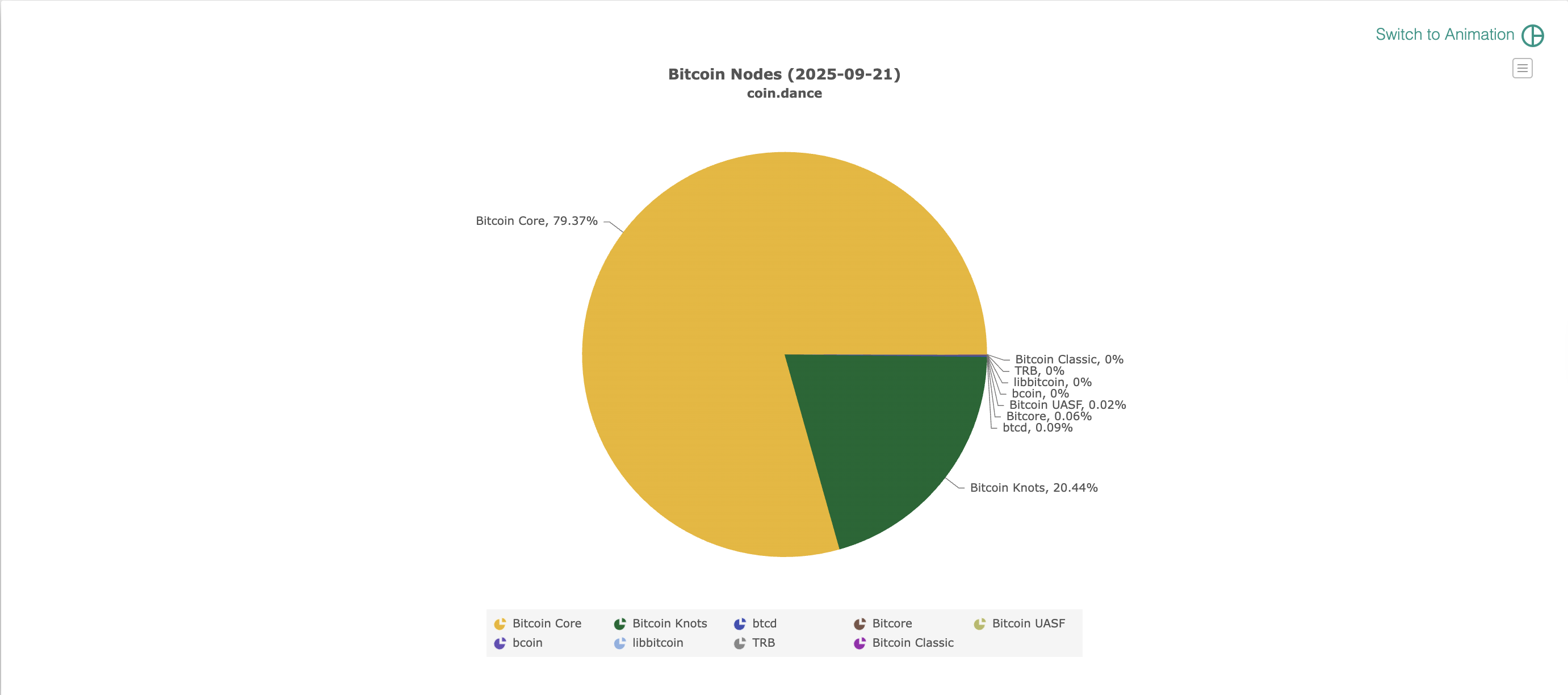
OP_Return limit removal in Bitcoin Core 30 has triggered a surge in node migrations to Bitcoin Knots.
-
Node runners report Bitcoin Knots now accounts for ~20% of nodes versus ~1% in 2024.
-
Bitcoin ledger size ~680 GB since 2009; critics warn larger OP_Return entries may accelerate growth and centralization.
OP_Return limit change: Bitcoin Core 30 sparks node exodus—read expert analysis, community reaction, and steps node runners take. Learn what this means for decentralization now.
What is the OP_Return limit change in Bitcoin Core 30?
The OP_Return limit change in Bitcoin Core 30 removes the fixed 80-byte restriction for non-monetary data, allowing larger arbitrary data to be embedded on-chain. This decision has provoked strong criticism from developers and node runners concerned about long-term ledger growth and decentralization.
Why are developers and advocates divided over the OP_Return change?
Jimmy Song and other critics argue the change treats non-monetary data as acceptable “spam” and disregards the practical impact on node storage and bandwidth.
Proponents counter that defining “spam” is ambiguous and limits can be overly restrictive. The debate echoes the block size wars and centers on design philosophy: strict monetary-only constraints versus permissive data use.
Song said: “The idea that spam is difficult to define, and because of this ambiguity, we shouldn’t be making any distinctions at all in the software, is a time-wasting argument from fiat politics where you pretend not to know the obvious, so the actual debate can never get off the ground — the non-monetary uses of Bitcoin are spam. You can argue whether that’s something desirable or not, but saying you can’t define it is a stalling tactic meant to avoid the real argument about actual impact — particularly, the long-term impact of this change.”