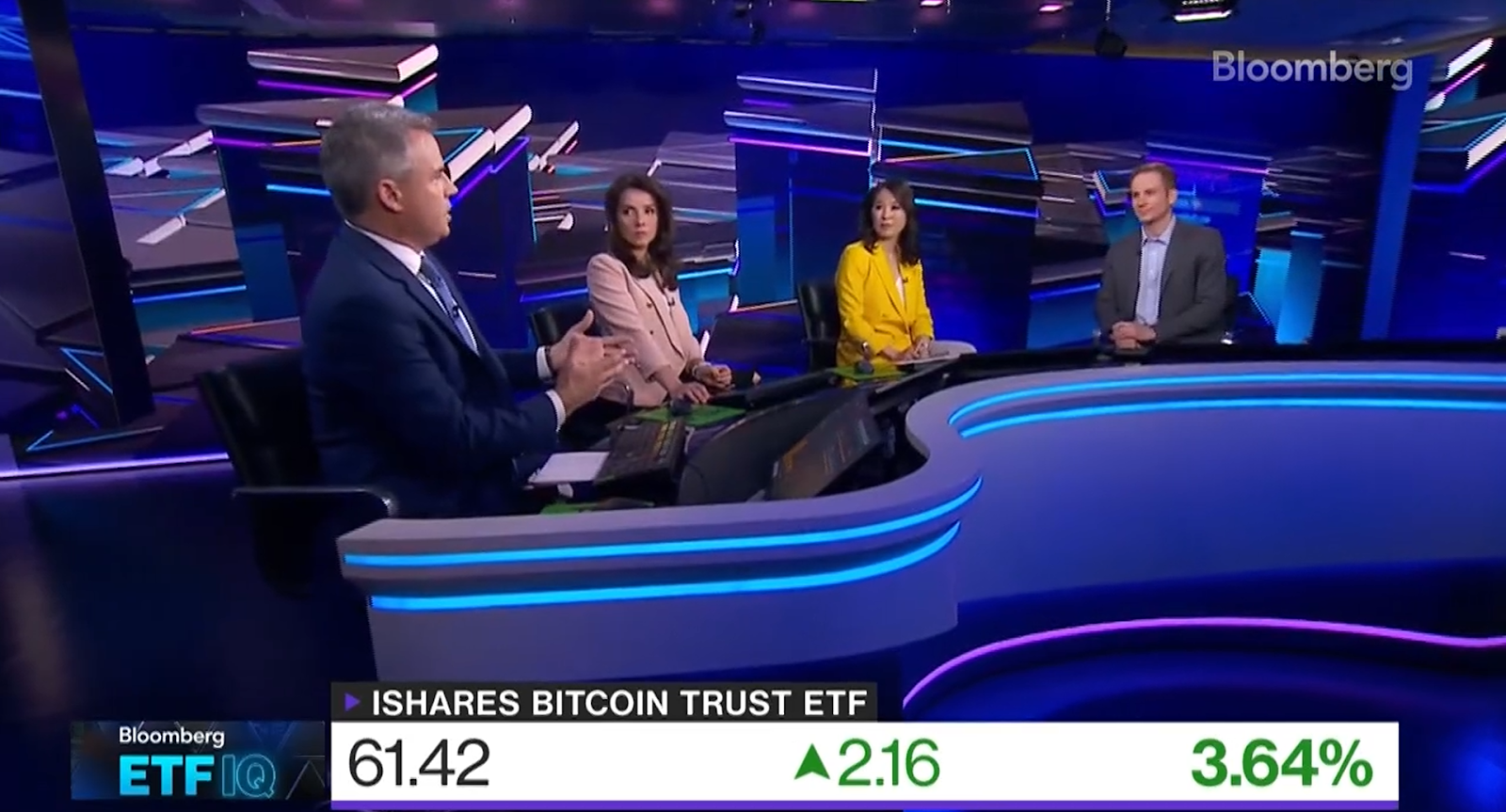
When it comes to institutional adoption, Mitchnick says we’re still early. ETF approvals usually take years, but some firms are fast-tracking the process.
“We’ve seen that fast tracked by a number of firms, and we talk about fast tracking,” stated Mitchnick. “We’re talking about, you know, quarters, not months. And slowly but surely, you’ve seen, I think, an acceleration, particularly in the last couple of months of more notable firms lowering barriers, granting approvals to their advisors to use these.”
Bitcoin’s volatility has declined recently, making it more appealing for institutions seeking diversification. However, it remains volatile, but its risk and return profile differs from traditional assets.
“There’s no question it’s relatively novel technology,” Mitchnick commented. “Even though the volatility has come down, it’s still volatile, but at the same time its risk and return drivers are markedly different from most of the rest of the assets in a traditional portfolio, and that’s important. And so when institutions are looking at this, they’re heavily focused on that correlation and whether it’s zero or even in some periods negative, because then the portfolio construction case is very compelling to them.”
About a dozen Bitcoin ETFs currently compete in the market, and demand remains strong.
“Well, a lot of them have been, you know, very successful, too,” stated Mitchnick. “Obviously, it has been the leader in the category by a fair margin. But there’s been such demand that, you know, it’s been exciting and there’s lots of products in the space and that’s a good thing.”
This post Robert Mitchnick Discusses BlackRock’s Bitcoin ETF IBIT Success On Bloomberg first appeared on Bitcoin Magazine and is written by Oscar Zarraga Perez.

 bitcoinmagazine.com

pic.twitter.com/UqiarMWEvV