The bitcoin price has been particularly volatile this year, shooting up to a record $109,000 in January at the start of President Donald Trump's administration in anticipation of a crypto-friendly regulatory environment and then tumbling to as low as $76,000 at the beginning of March on concerns related to Trump's tariff-based trade policy.
Retail investors tend to sell during periods of heightened volatility, reacting emotionally as they would with any risk asset.
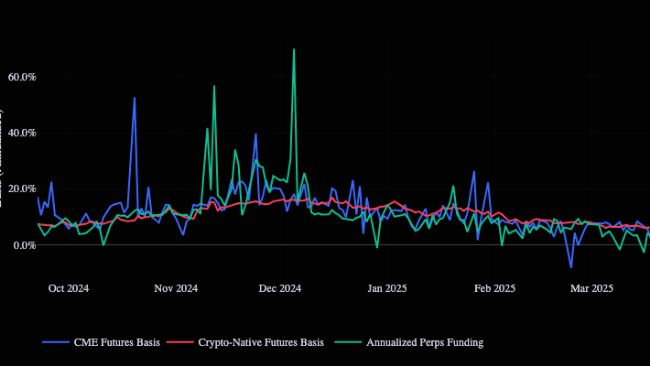
As for institutions, they are unwinding the basis — or cash-and-carry — trade, which is a strategy that involves taking a long position in the ETF while simultaneously shorting CME bitcoin futures. A short is a bet that the price will drop, and the position is delta neutral trade that capitalizes on the futures pricing trading at a premium to spot.
A delta neutral trade offsets price movements in the underlying asset by balancing positions, minimizing directional risk and maintaining market neutrality.
Currently, this arbitrage yields only around 2%, among the least since the ETFs were first approved. With U.S. Treasuries, among the safest investments available, offering higher yields, many investors are opting for the lower-risk alternative.
ETF inflows and outflows often signal market turning points. When outflows become particularly aggressive, they tend to coincide with local bottoms in bitcoin’s price, especially when viewed on a 30-day moving average. This pattern was observed recently when bitcoin hit its low in March, as well as during similar pullbacks in August 2024 and April 2024.

 coindesk.com