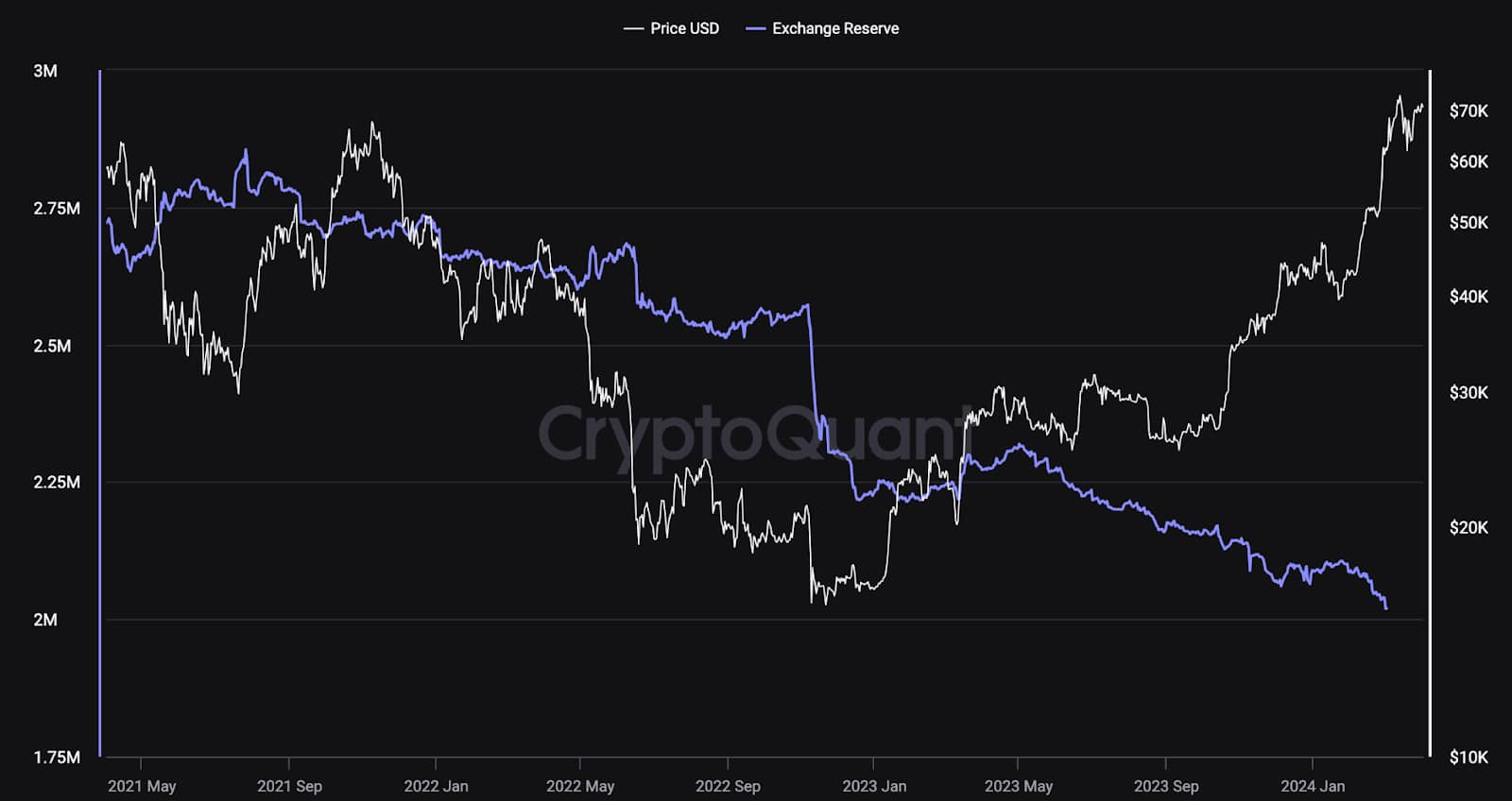
For that outcome, Bybit assumes a daily inflow of $500 million to Bitcoin Spot ETFs. This would hypothetically result in a 7,142 $BTC outflow from exchanges, ending within the 9-month suggested period.
Moreover, the company points out the Bitcoin halving effects over the newly issued supply of the maiden cryptocurrency. On this aspect, the block subsidy halving may diminish the reserves inflow from Bitcoin miners, fueling a potential supply shock.
Do exchange reserves only have nine months left of Bitcoin supply?
However, Bitcoin miners are not the single source of supply for $BTC inflows to exchange reserves. The cryptocurrency currently has 19.68 million $BTC already circulating, held by investors, traders, users, and institutions.
Most of these units are held liquid, which means they can become a supply inflow to exchanges at any moment.
Usually, the free market flows to find a balance within the supply and demand dynamics. Bitcoin is demanded and supplied all the time by a variety of entities with different goals and management strategies.
A diminishing supply facing an increased demand may cause prices to rise. Meanwhile, a rising price may encourage traders and investors to realize profits and deposit to exchanges to sell.
As observed in the chart, the exchange reserves have been kept between 2 million to 3 million $BTC since April 2021 – for over three years.
In closing, the Bitcoin halving could potentially intensify the current downtrend of exchange reserves, which may positively impact its price. Nevertheless, positive price action balances the suggested supply shock with a renewed inflow, following investors’ potential rising interest to sell and realize profits.
Despite the study’s forecast of only nine months left of Bitcoin reserves in exchanges, organic market dynamics may prevent that from happening.
Disclaimer: The content on this site should not be considered investment advice. Investing is speculative. When investing, your capital is at risk.

 finbold.com