
 news.bitcoin.com

As of the current moment, 93.6% of bitcoin’s total supply has already been mined, leaving only 1.34 million bitcoins remaining to be extracted. After the upcoming halving event, the issuance rate of the leading digital currency will decelerate, significantly reducing its availability more than ever before. Additionally, post the 2028 halving, miners will receive 1.5625 bitcoin per block as rewards, marking the final occasion that a whole bitcoin will be part of the reward subsidy following the 2032 halving.
Only 1.34 Million Bitcoins Left to Mine
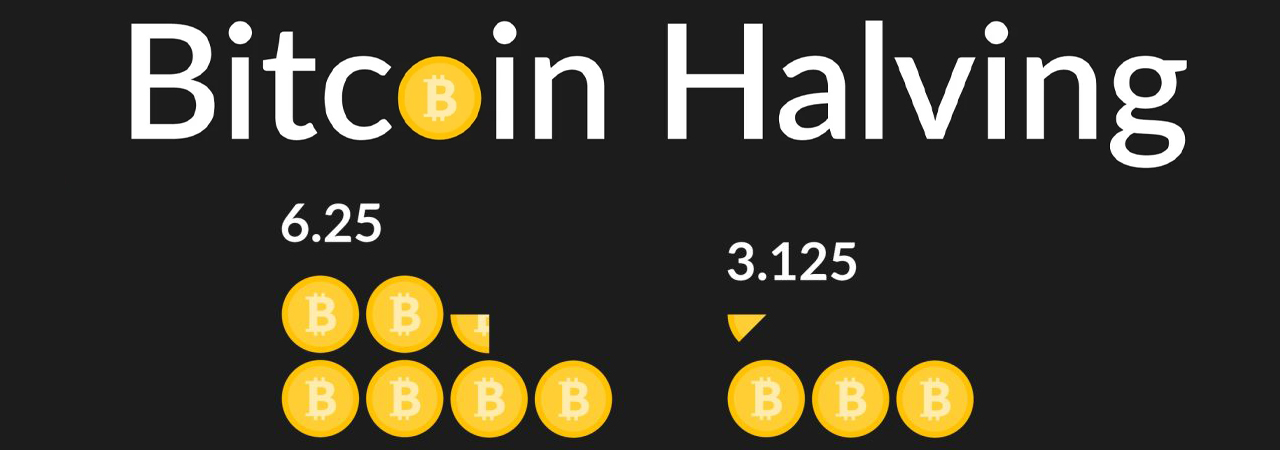
This year marks a significant milestone for bitcoin ($BTC), as its availability is set to decrease with the reward for mining a block dropping from 6.25 $BTC to 3.125 $BTC. This adjustment represents a drastic reduction from the 50 $BTC per block miners could earn from 2009 to 2012. By April 22, 2010, a quarter of bitcoin’s maximum 21 million supply had been mined. Fast forward to Dec. 14, 2011, and miners had extracted around half of all the $BTC. The three-quarters mark was reached on July 29, 2015. By Dec. 13, 2021, the mining process had released 90% of the total bitcoins into circulation.
Currently, 93.6% of bitcoin’s total supply has been issued, leaving only 1.34 million $BTC yet to be mined. The existing supply of $BTC stands at 19,656,761.74 $BTC, with a significant portion held by various entities such as public and private companies, governments, exchange-traded products and funds, as well as within decentralized finance (defi) and smart contracts. According to bitcointreasuries.net, these groups collectively possess 2,494,501 $BTC. Additionally, cryptoquant.com reports that slightly over 2 million $BTC are stored on exchange platforms, amounting to approximately 2,003,753.08 $BTC.
These holdings, however, are partially owned by customers using these exchanges and their custodial services. Bitcoins that have not moved from their wallets for an extended period, often years, are referred to as “zombie bitcoins.” These may include coins that are lost but cannot be definitively declared as such. Coin Metrics, in a 2019 study, estimated there are about 1.4 million zombie bitcoins, while a 2020 estimate by blockchaincenter.net puts the figure at around 1.7 million.
Current figures reveal that entities like public or private corporations, governments, and ETFs hold 11.88% of bitcoin’s total supply. About 9.54% is kept on centralized crypto exchanges, and 8.09% consists of zombie bitcoins, excluding Satoshi Nakamoto’s share, which represents 4.76% of the 21 million cap. With 6.39% of Bitcoin still to be mined, it suggests that 40.66% of the supply is beyond the reach of the average person. Assuming customers control 60% of the $BTC on exchanges, this reduces the accessible supply to 34.94%.
The halving event in 2028 will reduce mining rewards to 1.5625 $BTC per block. By Feb. 20, 2035, we expect 99% of Bitcoin’s 21 million supply cap to be mined, totaling approximately 20,790,000 $BTC in circulation. At that point, miners will receive 0.78125 $BTC per block, and in 2036, the reward will further decrease to 0.390625 $BTC at the seventh halving. As the horizon of bitcoin’s next mining epoch approaches, the cryptocurrency’s evolving landscape underlines a foundation in scarcity, altering the fabric of today’s contrasting fiat model.
What do you think about bitcoin’s scarcity? Let us know what you think about this subject in the comments section below.