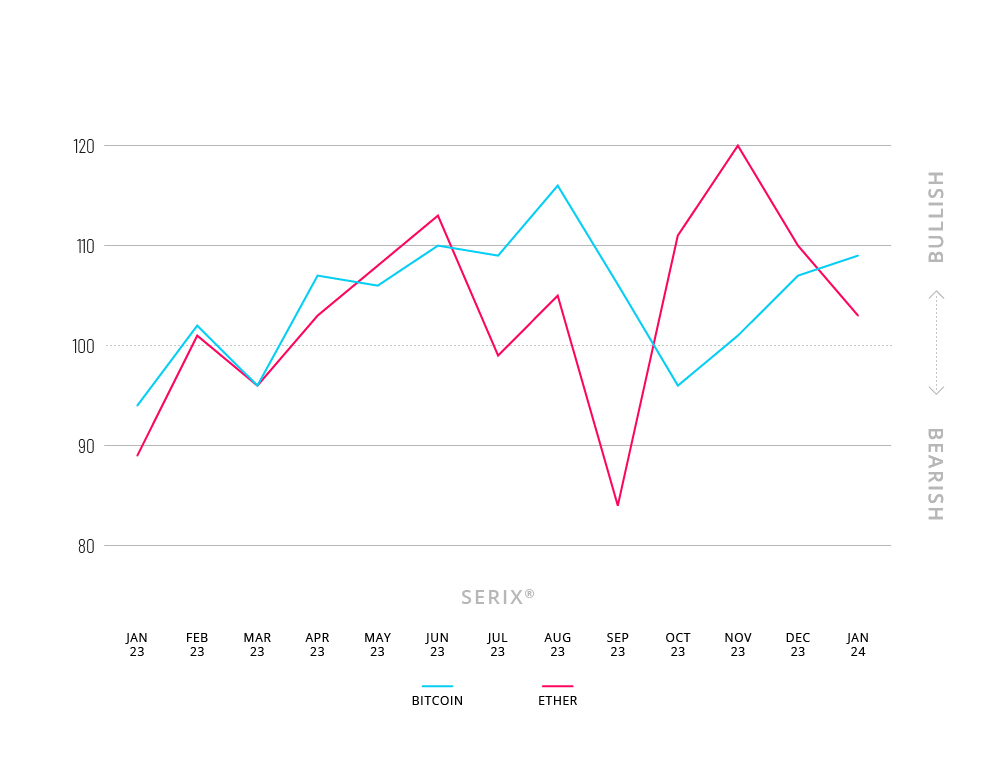
This shift coincided with the US Securities and Exchange Commission (SEC) approving several Bitcoin ETFs on January 11. The regulatory move opened Bitcoin investments to a wider range of investors. No similar approval has occurred yet for Ethereum products.
Michael Hall, the Head of Distribution at Spectrum Markets, commented that the SEC approval addresses demand for "enhanced regulatory standards" around cryptocurrencies.
“Meanwhile, in the EU, a bitcoin ETF is still not possible under existing regulation as UCITS regulations do not allow a single reference price for an ETF underlying,” Hall added. To stay competitive with the US, EU rules must be adjusted in order to prevent the diversion of flows, executed in Europe, abroad.”
Spectrum Markets began offering derivatives linked to both cryptocurrencies in May 2022, allowing traders to gain exposure without needing separate crypto wallets. The company said it saw a 2.5 times increase in Bitcoin trading volume in January 2024 compared to monthly averages for 2023.
Spectrum Reports Volume for January 2024
In January 2024, Spectrum's total order turnover reached €311.5 million, with 32.1% of trades taking place outside of traditional hours. The top three underlying assets traded were Germany's DAX 40 index, the US Nasdaq 100, and the Dow Jones Industrial Average.
“Looking at the SERIX data for the top three underlying markets, the DAX 40 sentiment increased slightly from 97 to 99,” the company commented. “Similarly, the NASDAQ 100 and DOW 30 both remained bearish at 98, from 98 and 96 respectively in the previous month.”
Amid challenging market conditions, the pan-European platform for securities trading, has set a new record for trading volume in 2023. The company revealed in its most recent report that its total order book turnover increased by 9% to €3.62 billion over the last year.
The volume of traded securities in 2023 surged by 14%, reaching 1.62 billion securities, a significant rise from 1.42 billion in the prior year. This activity spanned nearly 2.5 million transactions, with 33.9% of these trades executed outside conventional trading hours. This supports the previous year's finding that approximately one-third of all trades are conducted after normal trading hours.

 financemagnates.com