Oil Rebounds Toward $93 as Bitcoin and Tech Stocks Sink
coinedition.com
20 November 2026 22:49, UTC
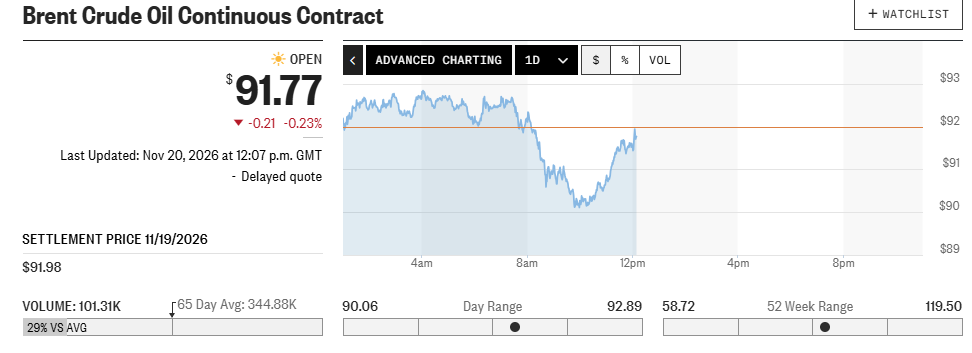
Brent crude oil has risen toward $93 a barrel amid renewed Middle East supply concerns, even as it remains on course for a weekly loss.
Meanwhile, Bitcoin ($BTC) and technology stocks are declining under hawkish Federal Reserve signals and growing concerns over fading artificial intelligence (AI) spending.
Brent Oil Rises Toward $93 Despite Heading for a Third Straight Weekly Loss
Brent crude futures edged higher on Friday, November 20, trading in a range between $ 92 and $ 93 amid renewed supply concerns. Prices then briefly tested levels around $92.77 as traders reacted to Houthi missile and drone attacks on Riyadh, including the destruction of the Public Investment Fund Tower in the financial district of the capital, and the alleged tanker attacks on the Strait of Hormuz.
Know when your coins move
Alerts, real-time prices, and market news — all in one app
Point your phone camera to install
4.8 based on 40K reviews in the App Store and Google Play
Source: MarketWatch
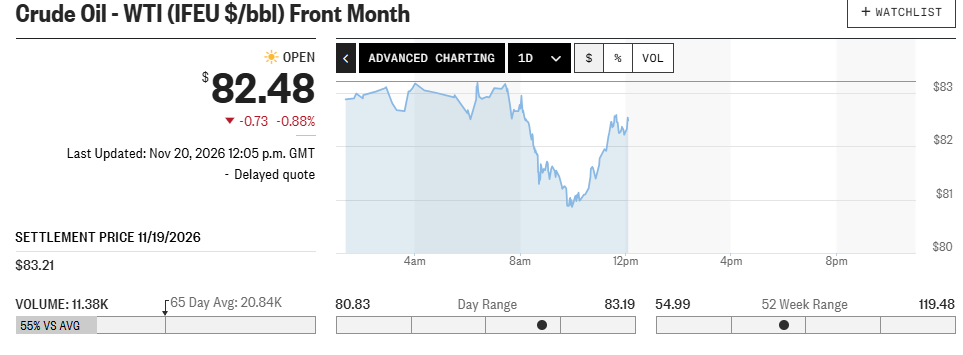
Despite the intraday support from geopolitics, Brent remained on track for a third consecutive weekly decline, with losses estimated in the 3.5–5% range for the week. Risk premium has been neutralized by strong Middle East export flows back to pre-conflict levels and wider demand concerns tied to equity market vulnerability. West Texas Intermediate (WTI) futures also traded at around $82-$83, while also heading for a weekly 7% drop.
Source: MarketWatch
Bitcoin and Tech Stocks Remain Under Pressure as Risk Appetite Weakens
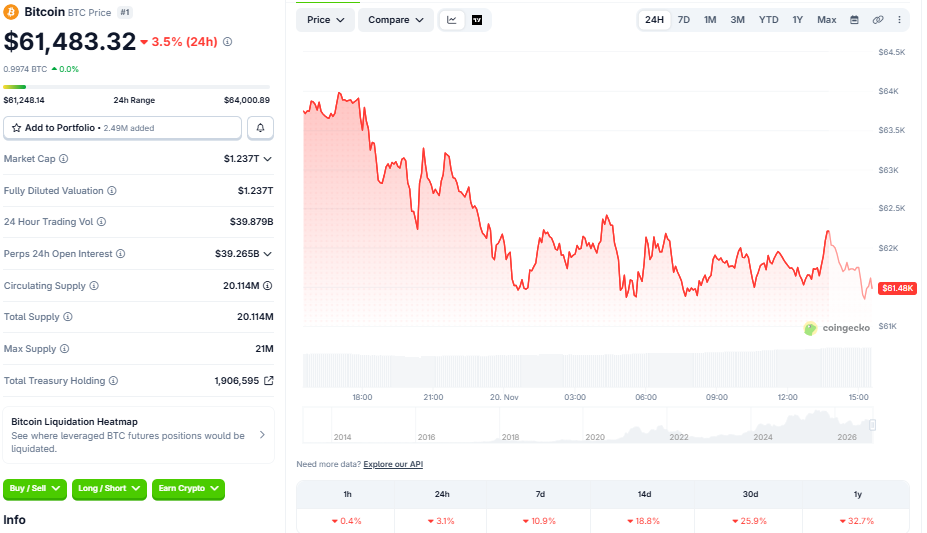
Meanwhile, crypto and technology stocks are still under pressure. At press time, $BTC was trading at $61.483.32, down 3.5% in the last 24 hours, extending a sharp decline that has taken it to four-month lows.
Bitcoin is down 10.9% in the last seven days and over 25% in the last month, pressured by leveraged liquidations of hundreds of millions of dollars, ongoing spot ETF outflows, and close correlation with stocks.
Source: CoinGecko
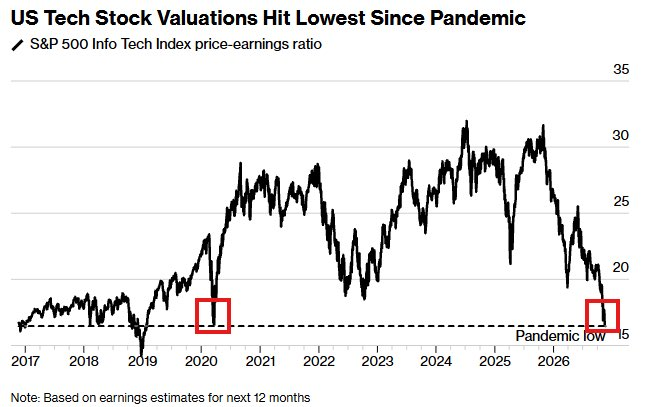
Technology stocks are also experiencing the same pressure. On November 19, the Nasdaq Composite and S&P 500 fell by 2.25% and 2.02% respectively, their sixth consecutive daily loss and back near pandemic lows in 2020.
Source: X
The declines are mostly dominated by semiconductor-related and AI-related names despite the high-profile IPO debut of Anthropic. The broader risk-off sentiment underscores stricter financial terms, increased volatility readings, and investor caution ahead of potential Fed policy moves.
Is Rising Oil Fueling Inflation Fears or Triggering Bitcoin Deleveraging?
The prospect of a supply-driven bounce in oil can complicate the expectations on rate cuts at a time when risk assets are signaling caution. Despite a cooling in energy prices from October’s highs, markets currently price a high chance, close to 95%, of a rate hike in December as core inflation remains sticky. This raises a key question about whether the recent oil volatility is significantly increasing inflation expectations.
That said, there is little evidence of a significant re-pricing of long-term inflation in available market measures, such as the 10-year breakeven inflation near 2.16%. Instead, Bitcoin’s downtrend seems more closely related to equity deleveraging and fading risk appetite: Bitcoin has been following the weakness in the Nasdaq, amplified by liquidations and fund outflows.
Within this environment, the oil rebound appears to be more of a short-term geopolitical risk premium than a general indication that stagflation is being actively priced into asset markets.
What Would Confirm a Stagflation Trap?
An isolated oil bounce is not sufficient evidence that markets are pricing a stagflation outcome of simultaneous high inflation and slowing growth. Confirmation would require a combination of factors, primarily including a sustained rise in oil prices that translates into actual and expected inflation, reflected in increasing breakeven rates and surveys of consumer inflation.
It would also require a clear deterioration of growth metrics beyond just the current equity and crypto slowdown as well as a market reaction in which bonds and the dollar would react with stagflation-like moves rather than risk-off or a monetary tightening.

 coinedition.com