Crypto liquidations surge past $1.9 billion as Bitcoin nears $63,000
cryptobriefing.com
11 m
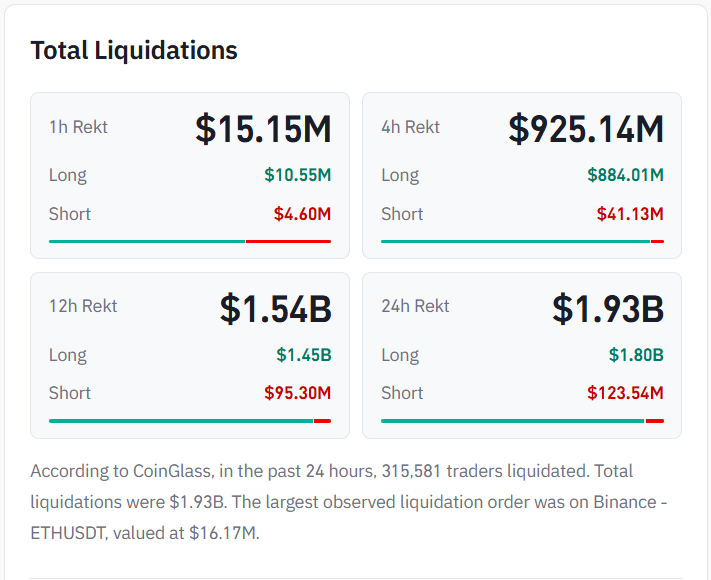
Crypto liquidations surged past $1.9 billion in the past 24 hours as Bitcoin plunged to $63,320, its lowest level since mid-August, extending a decline that took it below $69,000 on Friday.
Long positions accounted for roughly 93% of the $1.9 billion in liquidations, totaling $1.8 billion, while short liquidations reached $123.5 million, CoinGlass data shows. Selling accelerated over the final four hours of the period, when $925 million in positions were wiped out, almost all of them bullish bets.
Know when your coins move
Alerts, real-time prices, and market news — all in one app
Point your phone camera to install
4.8 based on 40K reviews in the App Store and Google Play
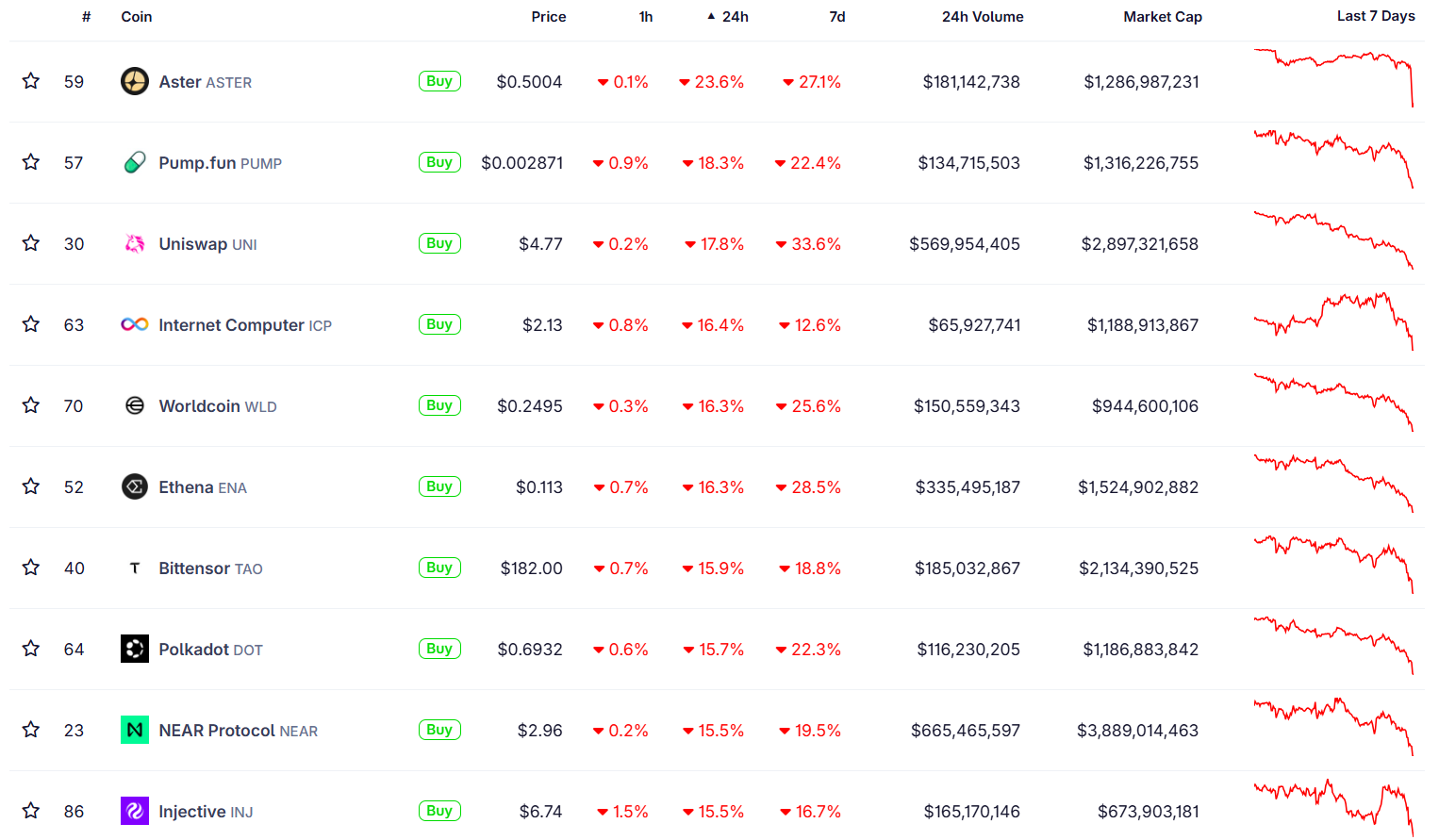
Crypto’s total market capitalization shed nearly 6% in 24 hours to $2.3 trillion as losses spread across major altcoins, per CoinGecko. Ether fell nearly 10% to below $1,800, BNB dropped 9%, XRP lost 11.5% and Solana slid 12%, with most digital assets recording double-digit declines.
Aster was among the hardest-hit tokens, plunging 24%. Pump.fun and Uniswap dropped 18% each, while Internet Computer, Worldcoin, Ethena and Bittensor were down about 16%.
Bitcoin’s resilience faces test as inflation revives aggressive Fed hike bets
Investor sentiment sank deeper into extreme fear as the Crypto Fear & Greed Index dropped to 13 on Saturday, down from 20 the previous day. The index was last below 20 in early July.
CoinShares’ James Butterfill warned that tighter monetary policy, renewed whale selling and weaker technology-sector sentiment could limit Bitcoin’s upside.
October’s CPI data showed a 0.4% monthly increase in headline prices, a 0.3% rise in core CPI and a 0.5% gain in services excluding rent, suggesting price pressures remain broad.
“More troubling was the composition. Food rose 0.5%, services remained firm and core CPI increased 0.3%, with services excluding rent, a gauge of domestic price pressure the Fed watches closely, rising 0.5%,” the research head said in a note. “The inflation problem is therefore no longer easily dismissed as an oil story. Some of the earlier energy shock appears to have bled into the broader economy.”
The figures revived debate over whether the Federal Reserve could raise rates by 50 basis points in December. Governor Christopher Waller had said another core inflation reading of around 0.3% or higher should make a half-point increase a consideration.
“We remain skeptical that 50bp is the most sensible response. Inflation data are backward-looking, oil has fallen close to a fifth from its recent peak and financial conditions have already tightened considerably following last week’s equity sell-off. Three firm core readings make a case for persistence, not for an emergency, and the Fed has little precedent for treating them as one,” Butterfill explained.
Butterfill said weaker sentiment across AI and technology stocks was also reducing risk appetite, while large Bitcoin holders had resumed selling after a brief accumulation period.
“Our base case remains that Bitcoin trades broadly between $60,000 and $90,000 until something materially changes,” the analyst said.
However, Butterfill noted that a sharp rise in Treasury yields toward 6% or 7% could eventually lead to more aggressive intervention in bond markets.
“At that point the conversation moves away from whether Bitcoin dislikes higher rates and towards whether investors trust the monetary response required to contain them. That would be a very different catalyst,” he added.

 cryptobriefing.com