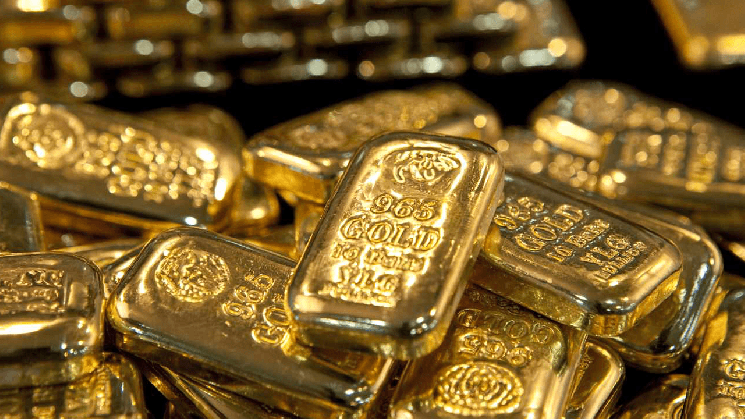
The bank explained that as gold involvement in trading markets grows, its correlation with the wider stock markets also grows. “With leveraged capital crowded into gold, tumbling stocks trigger margin calls that force investors to unwind positions to raise cash,” analysts wrote.
“So although gold looks to be a robust hedge against systemic risks in a ‘multi-polar’ world, it’s not guaranteed to work as a short-term volatility dampener,” analysts warned, explaining that gold cannot become the common diversifier in each portfolio to weather each kind of market stress. Using other diversifiers remains a sound strategy for investors facing today’s uncertain market conditions, they said.
Gold prices have been holding at a resistance level, remaining near $4,000 per ounce. Even so, central banks have been consistently amassing gold in 2026, with this demand providing a cushion for prices to hold at relatively higher levels.
Taking this into consideration, HSBC concluded that “demand for portfolio diversification, central bank purchases, and steady ETF inflows continue to support our bullish view on gold and its role as a diversifier against broader portfolio risks.” Analysts added that they expect gold to end 2026 at a higher price level.
Economists like Jim Rickards have thrown out wild price predictions for gold, suggesting that it could touch $10,000 not only of increased demand but also a policy of devaluing the U.S. dollar—a strategy President Donald Trump has stressed makes America more competitive.
“You make a hell of a lot more money with a weaker dollar—not a weak dollar, but a weaker dollar—than you do with a strong dollar,” Trump said in July.

 news.bitcoin.com