
 u.today
PumpFun's cumulative sell total has reached $848 million as it continues to offload significant amounts of $SOL as generated profit. On-chain data reveals another wave of sizable withdrawals to Kraken over the last two hours.
PumpFun's bearsh contibution
In just the most recent two-hour window, PumpFun's fee accounts sold about 47,994 $SOL (roughly $5.83M), with individual fee-account transfers to a Kraken deposit address ranging from less than 2,000 $SOL to a single 18,608 $SOL transfer worth more than $2.26 million.
The platform has sold 5,236,623 $SOL, valued at about $848 million, at an average execution price of $162 per $SOL since it started methodically converting its accumulated trading fees. The scale of sales reflects the amount of revenue generated by fees.
Every trade made on the platform results in fees that are paid in $SOL. Rather than holding the position, the protocol has been continuously sending these accumulated fees to centralized exchanges, chief among them Kraken.
Pressure or help?
Instead of one-time liquidations, the pattern of transfers, which occur from the same set of fee-collection wallets every few weeks, points to a methodical treasury management process. Notably, a significant increase in the price of $SOL has coincided with this intense and ongoing selling pressure rather than being derailed by it.
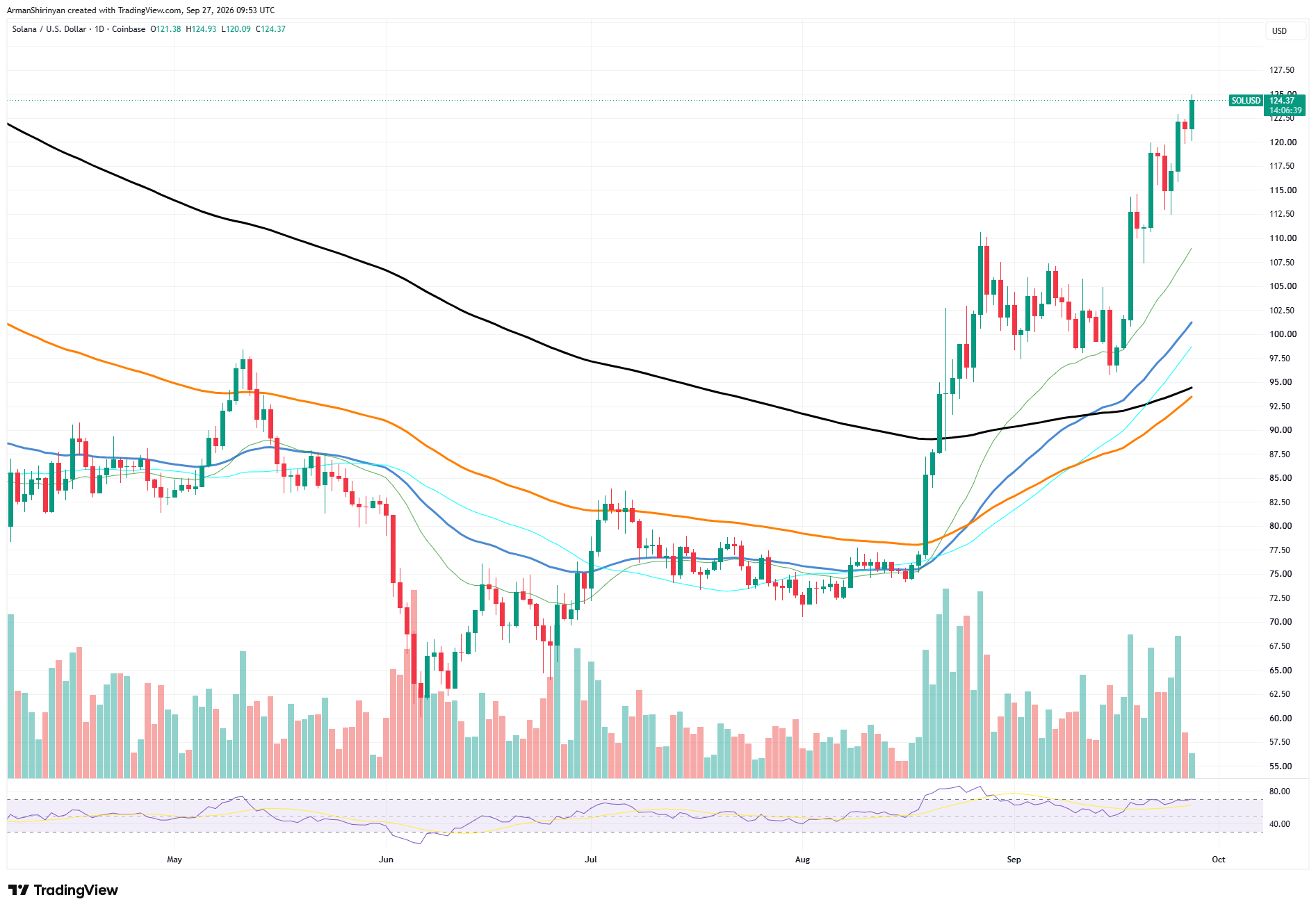
Solana has risen from about $75 in early August to over $123 at present, with the move picking up speed through September as the token broke above both its short- and long-term moving averages. The increase implies that the selling pressure has been more than offset by broader buying demand for $SOL.
If $SOL's price momentum starts to slow down and the market has less demand to absorb the ongoing liquidation, traders keeping an eye on on-chain flows will likely continue monitoring these Kraken-bound transfers as a recurrent data point.