
 coinpedia.org

Crypto markets came under heavy selling pressure after the US Senate failed to advance the CLARITY Act. It is significant, as it aimed to establish clearer rules for the digital-asset industry. The legislation fell short of the 60 votes required to move forward, adding a fresh layer of regulatory uncertainty for the crypto market.
Bitcoin, Ethereum and several major altcoins declined following the vote, raising a key question for investors: should you be worried about the crypto sell-off, or is this simply a short-term reaction to a regulatory setback?
CLARITY Act Fails to Attract the Mandatory 60 Votes
The US Senate failed to advance the CLARITY ACT after the bill received 49 votes in favour and 50 against, falling short of the 60 votes. The votes were required to reach the 60-vote threshold to clear the procedural hurdle. Although the vote was not a final rejection of the legislation, it effectively paused its progress at a time when the crypto industry was looking for clearer rules around digital assets.
The CLARITY Act was designed to establish a broader regulatory framework for cryptos and clarify the roles of the SEC and CFTC. Its failure to advance, therefore, matters because regulatory uncertainty remains unresolved.
Crypto Markets Slide as Bitcoin & Ethereum Lead the Sell-off
The crypto markets quickly reacted negatively, with Bitcoin dropping below $75,000 and Ethereum’s price falling to $3,358. The broader market also weakened, with Solana plunging below $96, Hyperliquid to $75, and Zcash to $1,086, while XRP plunged over 10% to hit lows of $1.26. The overall crypto market capitalisation dropped over 3% to $2.58 trillion, while the volume remained elevated above $220 billion.
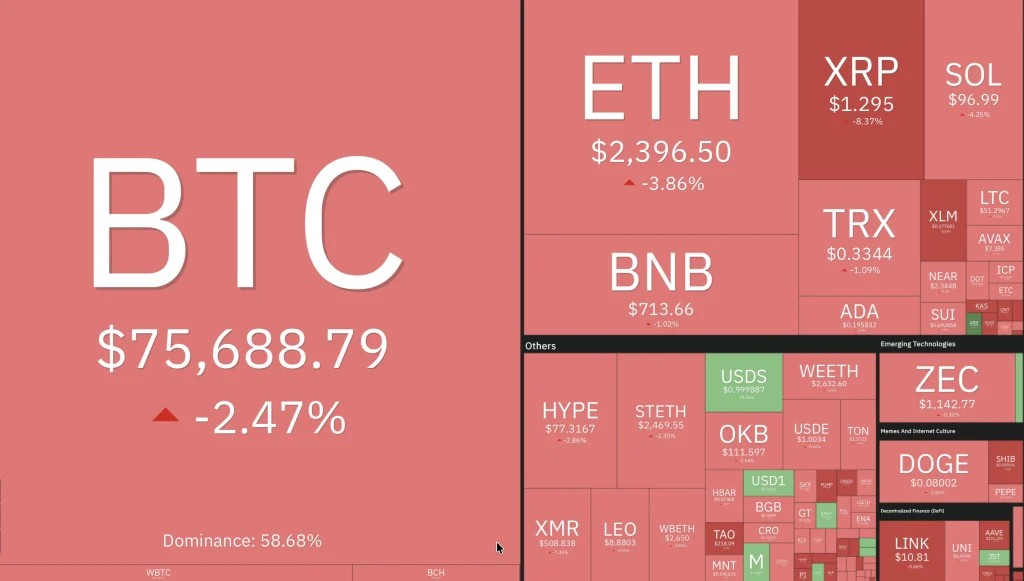
The scale of the move suggests that the volume became more than a regulatory headline, as the Act has been viewed as an important step toward defining the regulatory framework. For now, the key issue is whether the initial reaction fades or develops into sustained selling. The setback has increased regulatory uncertainty, but the price direction will also depend on leverage, broader risk sentiment and upcoming macroeconomic events.
Liquidation Adds Fuel to the Crypto Sell-off
The CLARITY Act setback triggered more than spot-market selling as Bitcoin and Ethereum moved lower. Leveraged positions across crypto derivatives were also liquidated, which amplified the selling pressure. Data from Coinglass indicates that more than $655 million in crypto positions were liquidated; $550 million accounted for the total longs.
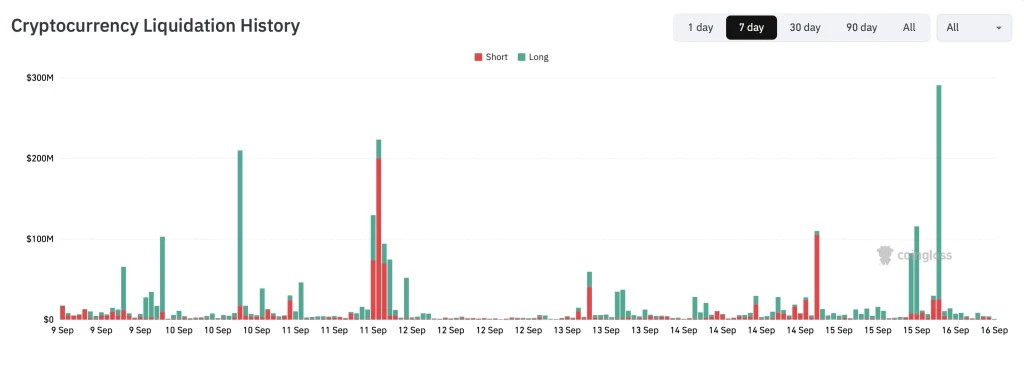
Bitcoin and Ethereum long positions accounted for roughly $226.72 million and $217 million, respectively. As prices fell through the key levels, exchanges automatically closed leveraged positions when traders no longer had enough margin.
What’s Next for Crypto Markets and the CLARITY Act?
Senator Thom Tillis changed his vote to no as part of a procedural move that keeps the door open for reconsidering the legislation. However, with the November midterm elections approaching, the timeline for reaching a broader agreement remains uncertain. For traders, it is important to closely monitor Bitcoin & Ethereum price movements, liquidation levels, volume and ETF flows. These indicate whether investors are absorbing the latest shock. Any fresh progress on the Act or new regulatory developments could also change the sentiment.
For now, the Senate vote has created another period of uncertainty rather than fundamentally changing the crypto market.