
 u.today

A local attempt to short $XRP on the one-hour timeframe triggered a wave of forced short-position closures. The asset not only held key support but also turned aggressive selling into fuel for a $2 million short squeeze, successfully neutralizing a critical imbalance in the derivatives market.
According to CoinGlass, cumulative liquidations across the crypto market exceeded $386.09 million over the past 24 hours, affecting 78,000 traders. The largest order, worth $11.76 million, was recorded in the ETH/USDT pair on Binance. However, the most abnormal dynamic developed within a single hour in $XRP derivatives.
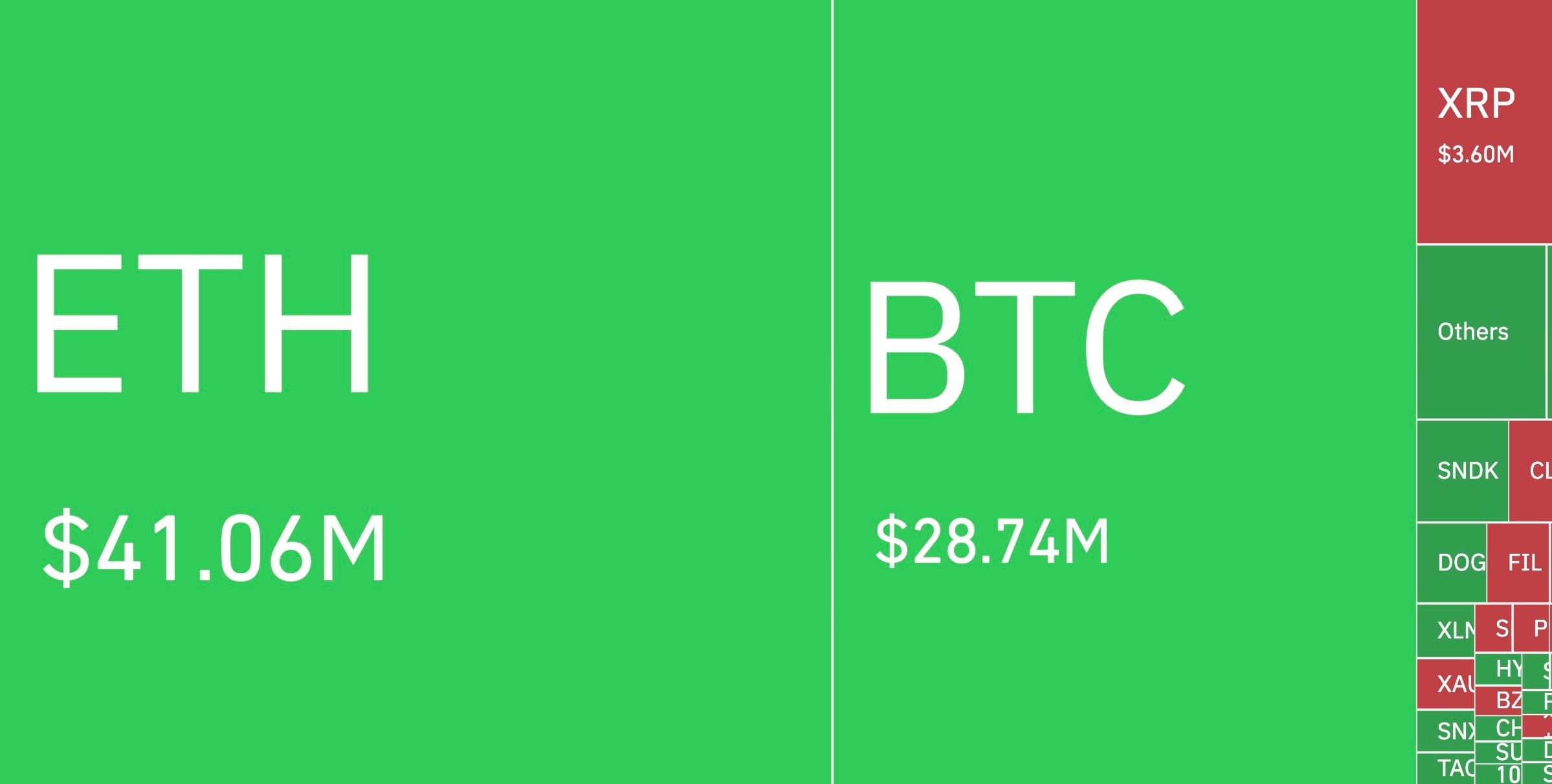
The volume of short-position liquidations during this narrow time window reached $2.02 million, while just $1.58 million in long positions was closed.
The forced-covering cascade among sellers created an hourly liquidation imbalance of 851%. Trapped by margin requirements, bears were forced to close their positions at market prices, which acted as a catalyst for the price increase.
On the TradingView chart, the price reaction was immediate:
- Around $1.38–$1.39, sellers ran into a dense wall of limit buy orders.
- The buying impulse triggered short sellers' stops and pushed the price to a local peak at $1.44.
- The Relative Strength Index (RSI) surged into overbought territory.
The attempt to push $XRP into a low-liquidity zone failed. Due to the absence of real supply, exchange algorithms executed market buy orders at increasingly higher prices.
Why shorting $XRP in September was a bad idea
The derivatives imbalance coincided with a strong news backdrop in mid-September. Bears underestimated external factors: the $XRP Ledger network is holding a record 8.57 million unique addresses.
At the same time, according to current SoSoValue data, cumulative net inflows into U.S. spot $XRP ETFs stood at $1.71 billion, while the total net assets under management by the funds amounted to $1.588 billion.
On the eve of key macroeconomic events this week — the U.S. Senate vote on the CLARITY Act and the Federal Reserve interest-rate meeting — any aggressive bearish bet against steady institutional accumulation carried elevated risks from the outset.