The situation might not be as dire as it appears, though, based on past behavior. The characteristics of the $XRP payment volume itself are a crucial component. A few large transfers between institutional participants, exchanges, or whale wallets frequently drive the metric's extreme volatility. Because of this, spikes and collapses often happen without having a long-term impact on the market value of $XRP or the overall health of the network.
Stabilization isn't happening
According to the chart, payment volume sharply increased around July 1 before quickly declining back to typical levels. Over the course of $XRP's history, these patterns have repeatedly emerged. They frequently signify the completion of a few exceptionally large transactions rather than a long-term decrease in network activity. Whether a recovery can happen in the next 24 hours is the current question.
Surprisingly, the answer is yes. In contrast to indicators like active addresses or wallet growth over the long term, payment volume can almost immediately increase. The number could return to the hundreds of millions of $XRP in a single day with a few significant transfers. Because whale activity has a significant impact on the metric, historically, abrupt declines in payment volume have frequently been followed by equally abrupt recoveries.
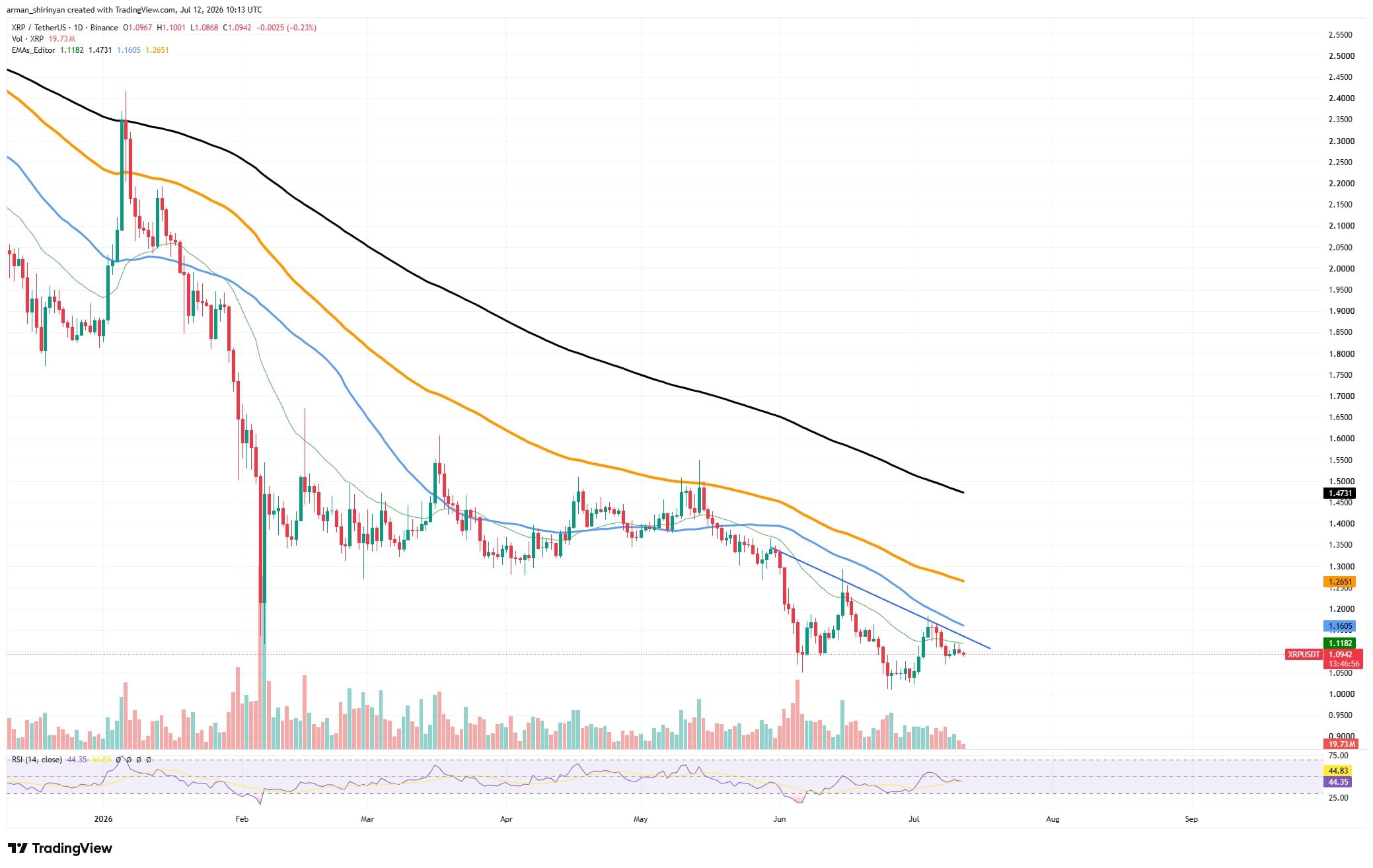
$XRP is still under pressure in terms of price. The asset is still trading below its main moving averages, and the overall trend is dominated by bearish momentum. However, the decline in payment volume does not necessarily indicate that the token itself will continue to decline.
For the time being, investors should view the near-zero payment volume reading as a cautionary signal worth monitoring rather than as conclusive evidence that $XRP network activity has begun a protracted decline. Determining whether this was just a brief lull or the start of a longer-term slowdown will be crucial over the next 24 to 48 hours.

 u.today