
 u.today

Although Shiba Inu is still trading under intense technical pressure, recent on-chain activity indicates that investors are buying the asset in spite of the descending movement on the market. Exchanges saw a net outflow of about 41.3 billion $SHIB over the course of the previous day, which means that a lot more tokens left trading platforms than came in.
Shiba Inu exchange flows flip
The most recent metrics show that outflows exceeded 134 billion $SHIB while exchange inflows were approximately 93 billion $SHIB. Investors withdrew about 41 billion $SHIB from exchanges, as evidenced by the significantly negative netflow. Practically speaking, this means that there is less sell-side liquidity available right now, and it frequently indicates that holders are becoming more confident.
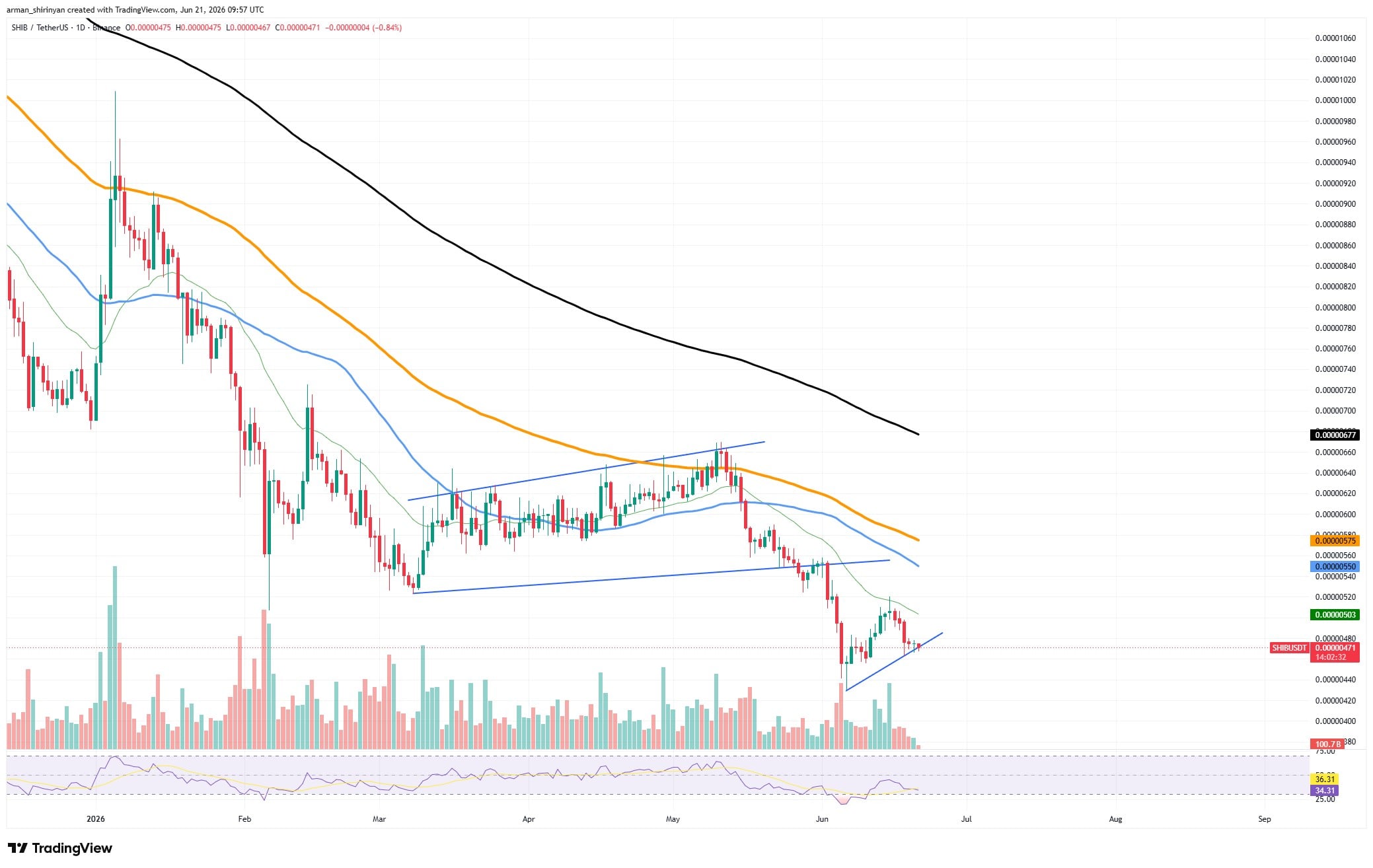
When coupled with dwindling exchange reserves, this trend becomes even more significant. At roughly 79.9 trillion tokens, the total amount of $SHIB held on exchanges is still declining. Selling pressure has historically decreased when exchange reserves decline, because fewer coins are available for liquidation.
The most likely outcome
During the most recent reporting period, active addresses increased by almost 1%. Despite the asset's recent correction, the growth indicates that network activity is still generally healthy, even though it was not an explosive jump. This is noteworthy since user participation in many speculative assets collapses during protracted declines. Bulls still face a tough obstacle on the chart, though. All of $SHIB's major moving averages are still pointing lower, and it is still locked below them.
The asset recently broke out of a multi-month consolidation structure and has not yet recovered any significant resistance levels. With the price returning to recent lows, the brief rebound that followed the June selloff is already losing steam. This leads to the traditional separation of technicals and fundamentals.
As investors maintain network activity and withdraw tokens from exchanges, on-chain data is becoming more and more useful. In the meantime, the market's general caution is still reflected in price action, which is still very bearish. Consolidation is most likely to continue in the near future.
Bulls must push $SHIB back above local moving-average resistance and set higher highs in order for the asset to stage a significant recovery. The market is still in a state of stabilization until that occurs. The good news for holders is that exchange activity appears to be much more supportive right now than the price chart would indicate, which could set the stage for a more robust recovery later in the cycle.