
 ambcrypto.com

One of the strongest bullish signals in any market is the return of liquidity.
Notably, that signal is becoming harder to ignore. For nearly two weeks, the crypto market has been stuck in a tight range around $2.15 trillion in total market cap.
This comes after four straight weeks of downside pressure that wiped more than $550 billion from the market. Against that backdrop, the steady buildup in liquidity is a constructive signal.
To start, the U.S. money supply has reached a new all-time high of $22.8 trillion, expanding by more than $400 billion since the start of 2026. In simple terms, there is more liquidity in the system than ever before.
Historically, excess liquidity tends to find its way into risk assets, making this a supportive backdrop for crypto heading into the second half of the year.
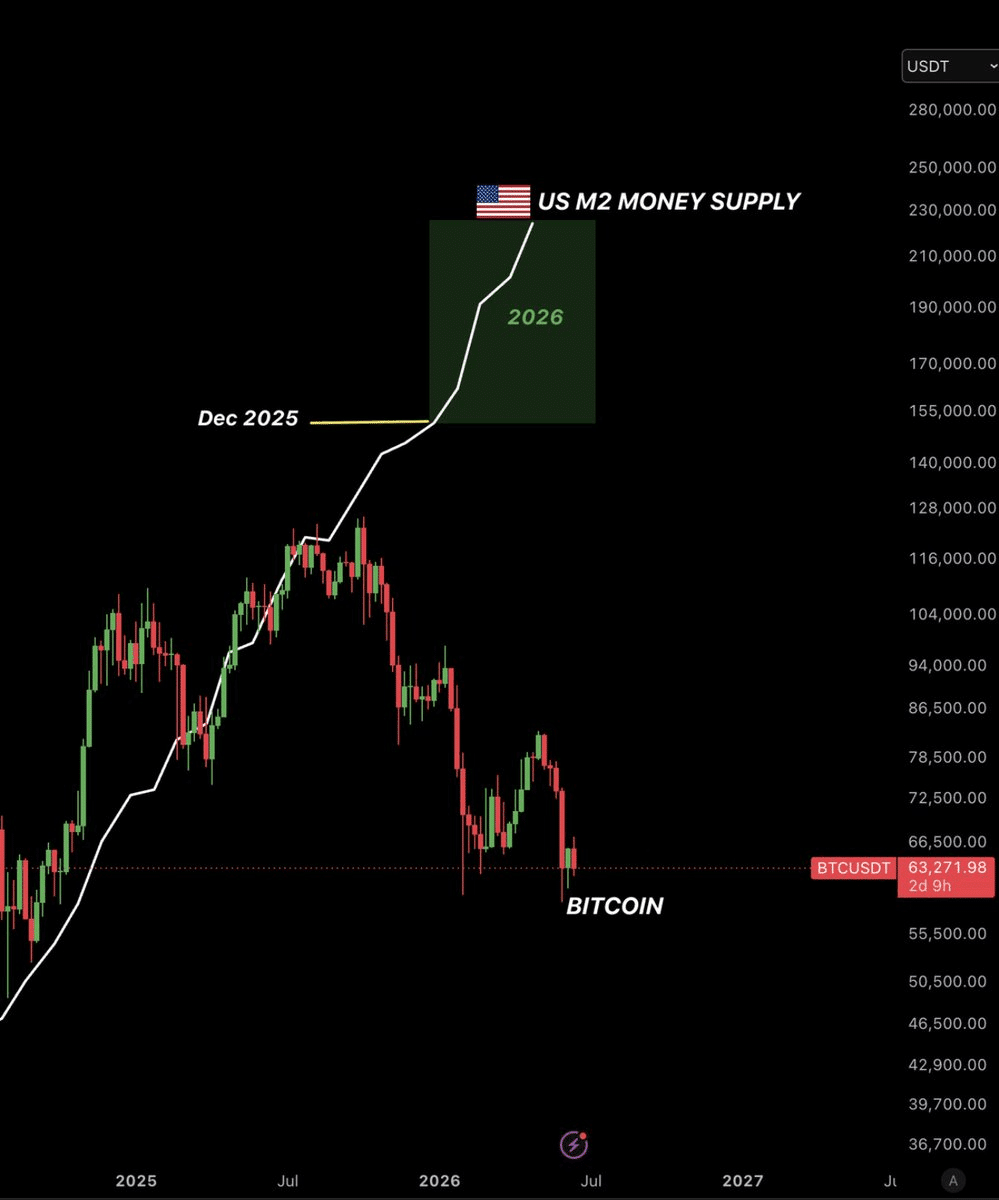
Adding to this narrative, the stablecoin market is also beginning to turn higher.
From a technical perspective, the total stablecoin market cap has posted more than $300 million in net inflows over the past week. This follows four consecutive weeks of decline, suggesting investors were largely sitting on the sidelines.
Now, with stablecoin liquidity expanding again, capital appears to be flowing back into the crypto ecosystem.
Taken together, the rise in both traditional and on-chain liquidity points to improving market conditions. While price action has yet to fully reflect this shift, the underlying flow of capital suggests the foundation for a broader recovery may already be forming.
Liquidity is rising, but crypto investors are still waiting
The missing ingredient for a durable crypto bottom is the return of FOMO.
However, key on-chain signals still suggest that FOMO is largely absent across the segments that have typically led strong recoveries. For example, the Bitcoin-to-altcoin rotation that previously drove full-blown alt seasons has weakened significantly.
$BTC-paired altcoin volume has been in a structural decline since 2021, showing that capital is no longer rotating through the market the way it used to.
Meanwhile, ETF flow data paints a similarly mixed picture. The only major provider with net inflows above $10 million this week has been Morgan Stanley, which accumulated $25.8 million in $BTC, while others saw about $201.7 million in net outflows.
The imbalance becomes even clearer in the chart below.
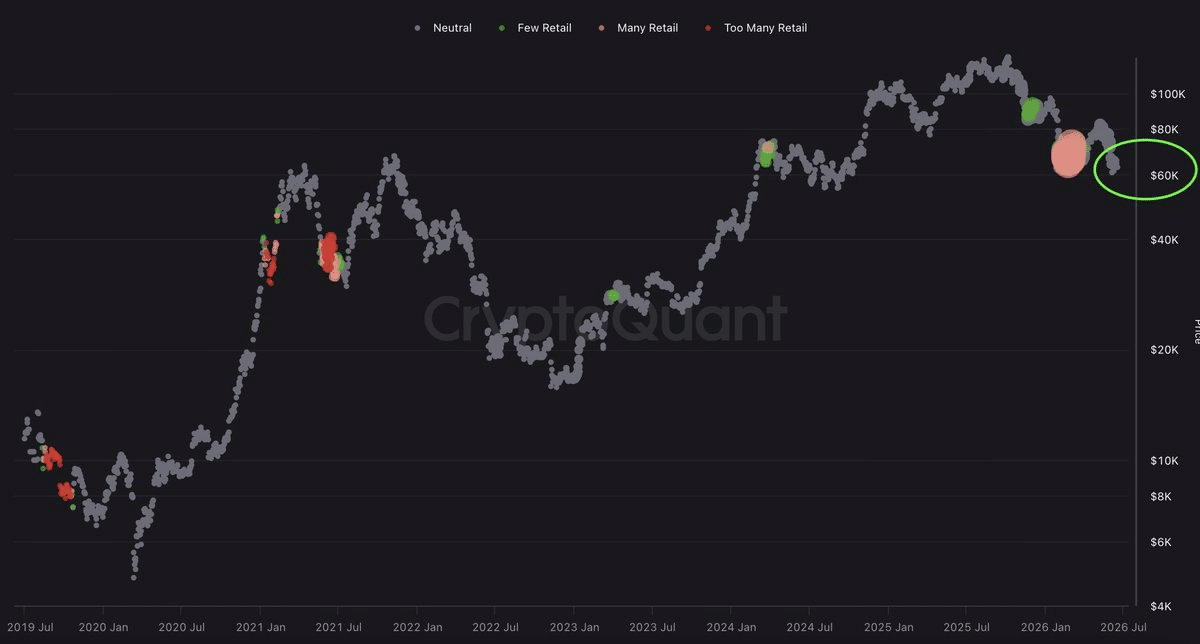
Despite Bitcoin [$BTC] revisiting a historically important price zone, retail activity has yet to show a meaningful pickup. The same level that fueled aggressive buying pressure earlier in the cycle is now being met with caution.
In short, Bitcoin is back at $60k, but retail FOMO is nowhere to be found.
Taken together, the setup suggests that liquidity is steadily returning to the market. The problem is that it is not being matched by a similar rise in risk appetite. Retail participation remains weak, ETF demand is uneven, and capital rotation into higher-risk segments is still limited.
As a result, the current crypto setup still appears far from a confirmed bottom.
Final Summary
- Liquidity is rising, with both money supply and stablecoin inflows moving higher.
- However, weak FOMO and limited capital inflows suggest the crypto bottom may not be in yet.