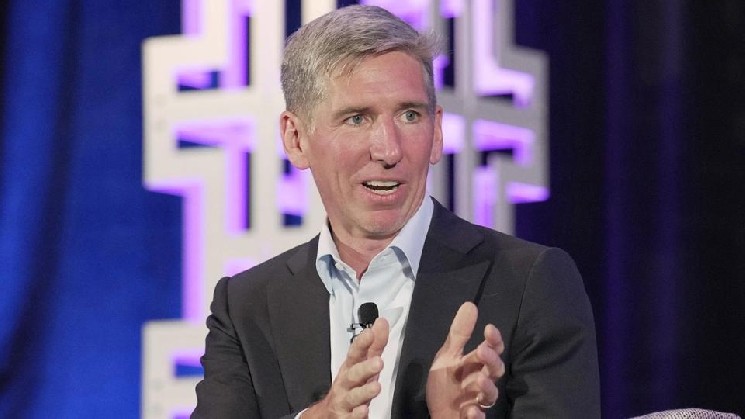
“Today’s prices suggest you’re being offered the second at the cost of the first,” Hougan said, referring to Hyperliquid’s ambitions to serve trading across crypto, equities, commodities, FX and prediction markets.
Hyperliquid is a decentralized trading platform best known for crypto perpetual futures, but it has recently expanded into equities, commodities and prediction markets, helping drive a surge in trading activity and investor interest.
Hougan estimated Hyperliquid is generating between $800 million and $1 billion in annualized revenue while trading at roughly 10–14 times its buyback stream. That compares favorably with traditional financial exchanges such as Robinhood (HOOD) and CME Group (CME), which trade at materially higher valuation multiples despite slower growth.
According to Hougan, Hyperliquid represents a new generation of crypto projects designed to directly accrue value to token holders. He noted that 99% of trading fees on the platform are used to buy back $HYPE tokens, creating what ihe described as a more direct relationship between platform growth and token value.
Bitwise also argued Hyperliquid is benefiting from a more favorable U.S. regulatory environment under SEC Chair Paul Atkins, whose recent comments have supported the idea of financial “super-apps” that can offer multiple asset classes under a single framework.
Hyperliquid’s new partnership with Coinbase (COIN) and Circle (CRCL) is redirecting stablecoin economics away from issuers and toward crypto trading venues, a shift analysts say could fuel sustained demand for the $HYPE token while pressuring Circle’s margins.
Read more: Hyperliquid's USDC deal could supercharge $HYPE, pressure Circle, Coinbase margins, analysts say

 coindesk.com