
 u.today

The Fear and Greed Index is currently printing single-digit values, indicating that the cryptocurrency market is deep in extreme fear. That type of reading indicates widespread risk aversion, forced selling and a lack of confidence among participants rather than mild uncertainty. Seldom do markets remain in this region for very long without either giving up or making a quick countermove.
Major assets follow fear
The sentiment is supported by price action across major assets. While Ethereum is perilously close to the $2,000 mark, Bitcoin has fallen toward the mid-$60,000 range after failing to maintain higher levels. After several breakdowns, $XRP is still trending lower and finding it difficult to sustain support. All three assets have the same structure: lower highs, pressure from declining moving averages and feeble, rapidly failing recovery attempts.
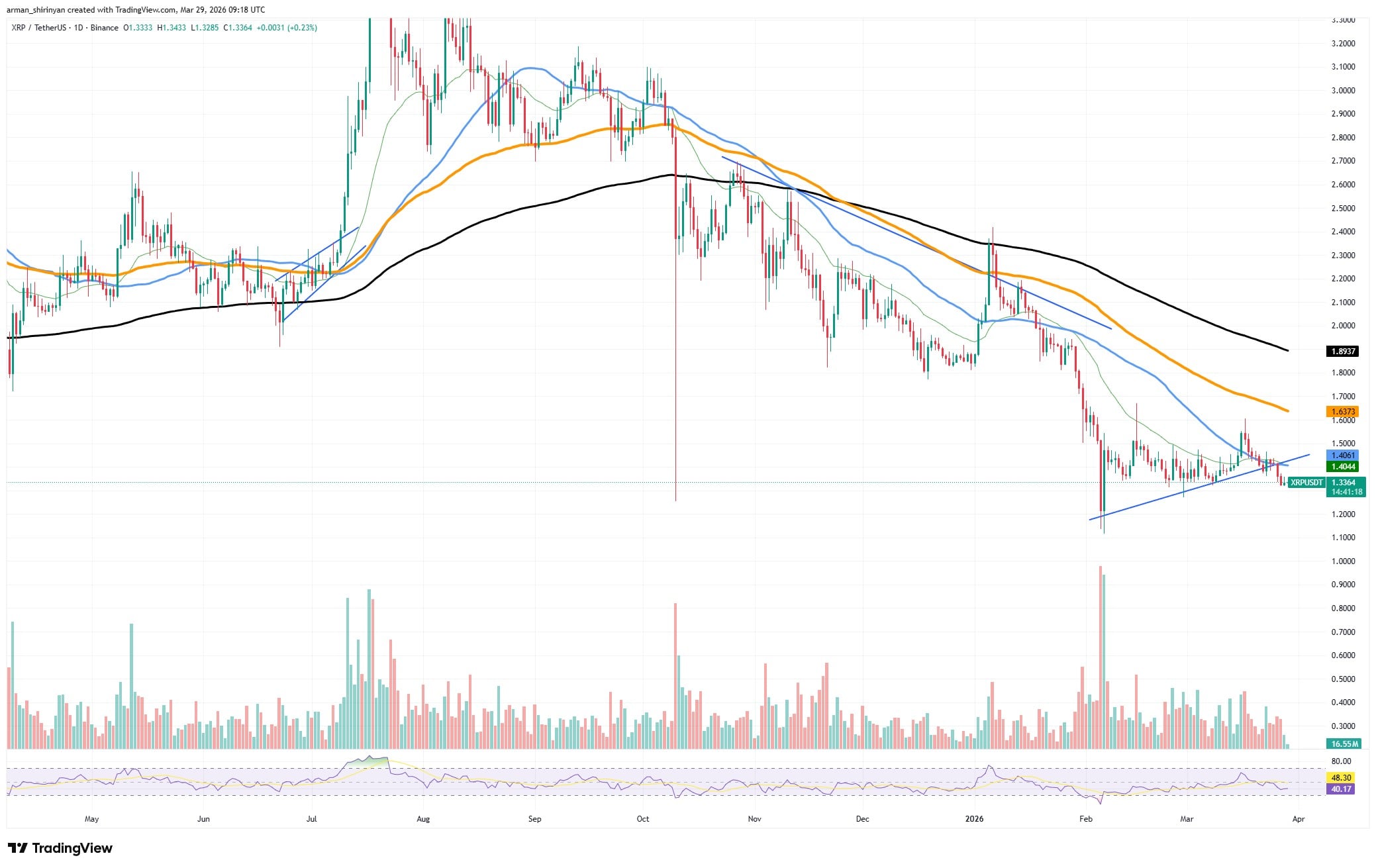
Market positioning and liquidity are impacted by extreme fear. Traders cut back on exposure, institutions retreat, and retail participation sharply declines when sentiment collapses to this degree. Price movements become more aggressive in both directions as liquidity thins out. Leverage is eliminated at the same time, as evidenced by recent spikes in liquidations. Short-term bearish momentum is strengthened, and downside volatility is amplified by this process.
Extreme fear, though, is not entirely pessimistic. In the past, these circumstances frequently arise close to local bottoms, because the majority of sellers have already taken action, rather than because fundamentals abruptly improve. The timing is the issue. Before any significant reversal starts, markets may grind lower or move sideways for longer than participants anticipate.
Market will not stabilize
With regard to $XRP in particular, the chart indicates ongoing compression close to local support without a significant bullish catalyst. Ethereum is attempting to defend $2,000, but it is being undermined by numerous tests.
Investors should anticipate ongoing volatility and erroneous signals. Reclaiming important moving averages and resistance levels will be necessary to validate the likelihood of short-term bounces. Without it, rallies are still corrective.