There is a reason for this discrepancy. It illustrates the current state of institutional conviction. The main way that money enters cryptocurrency markets is still through Bitcoin. Even in times of general market uncertainty, its ETF structure is now developed enough to support steady inflows.
Because of its significance to DeFi, staking and infrastructure narratives, Ethereum continues to garner attention despite recent outflows. $XRP is having trouble establishing itself as an essential asset for institutional portfolios.
Even Solana, which is frequently regarded as more speculative, attracted $21.10 million in inflows, which is more than 30 times more than $XRP. That alone provides enough information about the direction of attention.
Issues with lack of capital
This lack of capital inflow is significant from the perspective of market structure. Demand is directly reflected in ETF flows, which are more than just numbers. Weak inflows imply little accumulation, which lowers the likelihood of long-term upward trends.
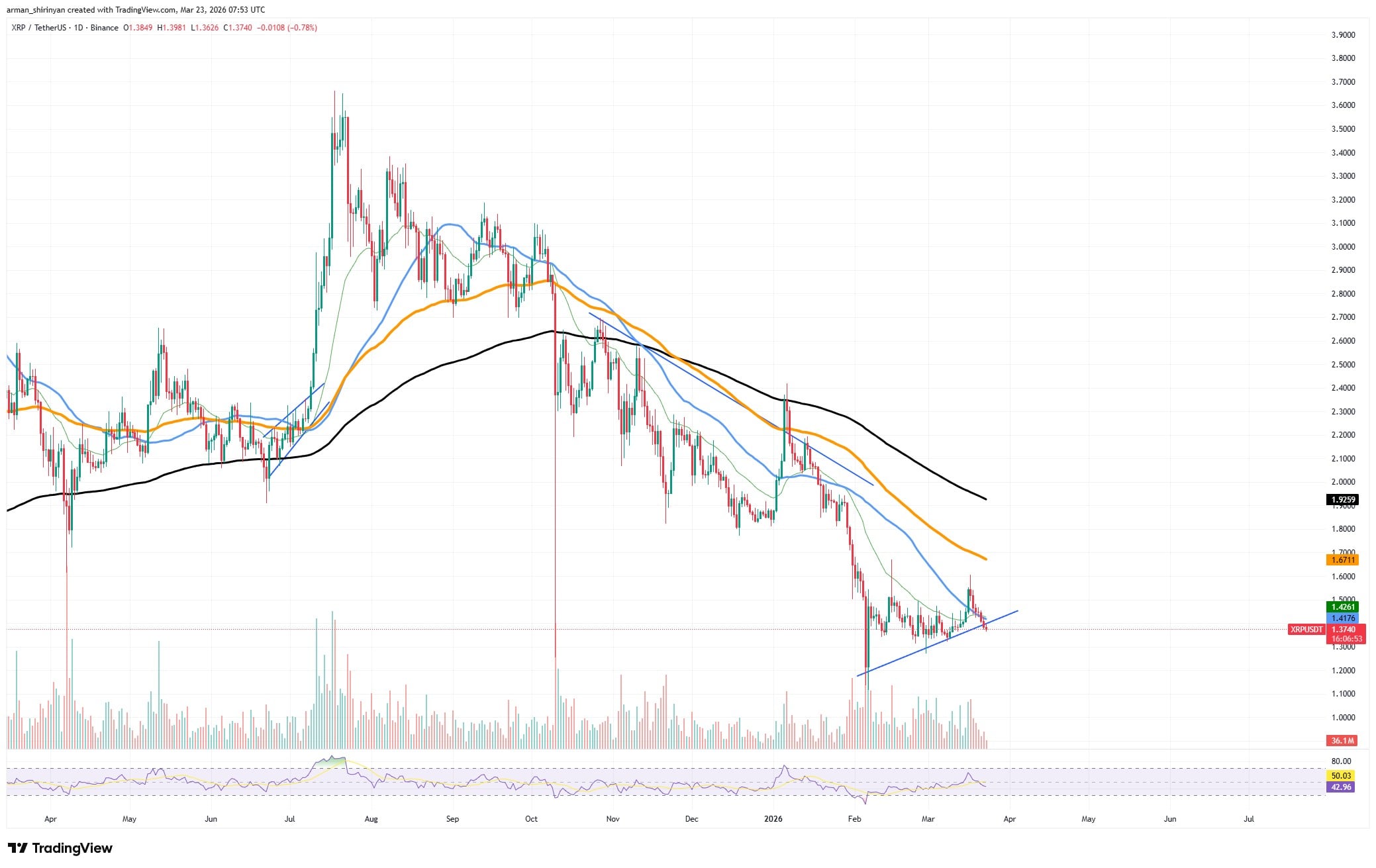
This reality is already reflected in $XRP’s price action, as the asset keeps getting rejected at crucial resistance levels and is unable to break out of its wider downtrend.
At the moment, $XRP is in a gray area, where it is too big to be disregarded but not strong enough to draw significant institutional funding on a large scale. The asset will probably continue to fall behind its rivals until that changes.
Markets are driven by capital flows, and at the moment, $XRP is not where the money is going.

 u.today