The more notable move, though, came from metals. Gold dropped 5% to around $4,500 an ounce, its lowest since early February, while silver fell 6.6%, extending a sharp unwind after weeks of outsized gains.
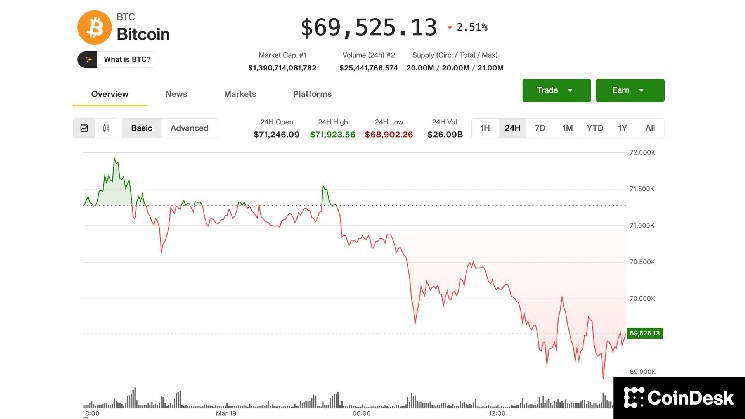
Crypto, by comparison, looked relatively steady. Bitcoin was last trading around $69,400, down about 2.6% on the day. Most major tokens, including ether (ETH), $XRP ($XRP), $BNB $BNB$648.35 and solana (SOL), were all down, but losses stayed under 3%, and the broader CoinDesk 20 Index was off about 2.1%.
Crypto-linked stocks also moved lower, though not to the same extent seen elsewhere. Crypto exchange Coinbase (COIN) slipped 1.7%, bitcoin treasury firm Strategy (MSTR) fell 2.6%, while stablecoin issuer Circle (CRCL) pulled back 6%, giving up some ground after more than doubling over the past three weeks.
Bitcoin holds ground in risk-off move
The simultaneous drop in both gold and bitcoin points to broad de-risking rather than a rotation into safe havens, said Alvin Kan, COO of Bitget Wallet. Rising energy prices are feeding into inflation expectations, reinforcing a "higher-for-longer" interest rate outlook and tightening liquidity — a difficult mix for risk assets, he added.
Still, bitcoin has outperformed gold by around 20% during the initial phase of the Iran conflict, noted Bryan Tan, trader at Wintermute, an unusual dynamic for an asset typically treated as a riskier tech name. But the lack of follow-through above $75,000 suggests markets remain cautious and rangebound.
"When sentiment swings on each headline about the conflict, and correlation to oil prices are so elevated, being flat is a strong position," he said. "We lean towards reserving dry powder until we see a meaningful confirmation in either direction or a material change in market conditions."

 coindesk.com